Rajasthan CMO: 25 Lakh Free Maize Seed Kits for Tribal Farmers
Synopsis
The Rajasthan CMO announced distribution of over 25 lakh free hybrid maize seed mini-kits to tribal farmers under a state scheme, with CM Bhajan Lal Sharma tagged. The programme targets tribal-belt districts like Banswara, Dungarpur and Udaipur, aiming to raise productivity among marginal cultivators.
Key Takeaways
The Chief Minister's Office of Rajasthan announced on November 16, 2026 , that over 25 lakh free hybrid maize seed mini-kits have been distributed to tribal farmers.
The distribution is under the state's Free Hybrid Maize Seed Mini Kit Programme , targeting marginal tribal cultivators.
Chief Minister Bhajan Lal Sharma , in power since December 2023 , was tagged in the announcement under the hashtag #आपणो_अग्रणी_राजस्थान .
The scheme focuses on tribal districts in southern Rajasthan — Banswara, Dungarpur, and Udaipur — where maize is a key kharif crop.
Seed distribution drives for tribal farmers in Rajasthan have roots in state agricultural plans going back to the early 2010s , supplementing central schemes like the National Food Security Mission .
The real measure of programme success will come from official maize acreage and yield data in upcoming seasons.
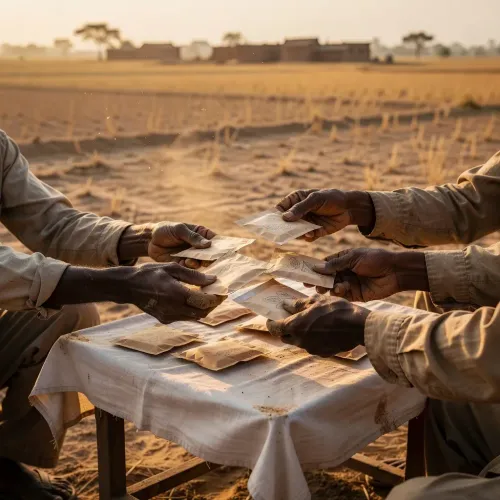
A quiet agricultural push in Rajasthan's tribal heartland is reaching scale — the Chief Minister's Office of Rajasthan announced on Monday, November 16, 2026, that more than 25 lakh free hybrid maize seed mini-kits have been distributed to tribal farmers under the state's Free Hybrid Maize Seed Mini Kit Programme, tagging Chief Minister Bhajan Lal Sharma in the post.
The original Hindi post reads: 'जनजातीय किसानों को सशक्त बनाने के लिए, निशुल्क संकर मक्का बीज मिनी किट कार्यक्रम के तहत 25 लाख से अधिक मिनी किट बांटे गए हैं।' — 'To empower tribal farmers, more than 25 lakh mini-kits have been distributed under the Free Hybrid Maize Seed Mini Kit Programme.' The post carried the hashtag #आपणो_अग्रणी_राजस्थान ('Our Leading Rajasthan'), the BJP government's signature campaign tagline.
Why Maize — and Why Tribal Belts
Maize is not incidental to this story. The crop is well-suited to the agro-climatic conditions of Rajasthan's southern tribal districts — particularly Banswara, Dungarpur, and Udaipur — where rainfall patterns and soil types make it one of the most viable kharif options for small cultivators. Hybrid seed varieties significantly lift yield potential over traditional open-pollinated seeds, but their higher cost has historically kept them out of reach for marginal tribal households.
That access gap is precisely what the mini-kit model targets. By distributing pre-packaged, farm-ready quantities of certified hybrid seed at zero cost, the programme lowers the entry barrier for farmers who might otherwise sow low-yield saved seed season after season.
A Line of Continuity from Earlier State Plans
Seed distribution and input subsidy drives for tribal and small farmers in Rajasthan date back to state agricultural plans from the early 2010s, run by the state agriculture department. The current BJP government, in power since December 2023 under Chief Minister Bhajan Lal Sharma, has carried forward and scaled such targeted drives, framing them under the broader 'Aapno Agrani Rajasthan' narrative of a development-forward state. These efforts run alongside central schemes such as the National Food Security Mission, which also includes components for seed replacement in key crops.
The figure of 25 lakh-plus kits — covering a substantial share of tribal farming households across affected districts — signals a programme that has moved beyond pilot phase into systematic rollout, though on-ground yield and acreage data from the upcoming seasons will be the real test of impact.
What the Numbers Will Need to Show
Distribution numbers are the first chapter, not the last. The meaningful metric — whether maize acreage expands and per-hectare yields rise in tribal districts — will emerge in official crop estimates for the kharif and subsequent rabi seasons. If productivity gains track the seed replacement, the programme becomes a replicable model for other input-scarce tribal farm belts across India. If uptake stalls at the soil level, the question turns to extension support and market linkage. Either way, Rajasthan's tribal farm corridor is being watched.
Point of View
Areas that have historically been contested political ground. The harder policy question the numbers cannot yet answer is whether seed distribution alone — without matching investments in extension, irrigation, and market linkage — translates into durable productivity gains. How yield data from Banswara, Dungarpur and Udaipur reads in the coming kharif assessments will determine whether this programme becomes a model or a milestone on paper.
NationPress
16 Nov 2026
Frequently Asked Questions
What is the Free Hybrid Maize Seed Mini Kit Programme in Rajasthan?
It is a Rajasthan state government scheme that provides free hybrid maize seed mini-kits to tribal farmers, particularly in southern districts like Banswara, Dungarpur and Udaipur, to help them access better-yielding varieties they could not otherwise afford.
How many maize seed kits have been distributed under this programme?
According to the Rajasthan Chief Minister's Office, more than 25 lakh free hybrid maize seed mini-kits have been distributed to tribal farmers under the programme.
Which districts in Rajasthan benefit the most from this scheme?
The programme primarily targets tribal-belt districts in southern Rajasthan, including Banswara, Dungarpur, and Udaipur , where maize is a key kharif crop and tribal farming communities are concentrated.
What is the significance of hybrid maize seeds for tribal farmers?
Hybrid maize varieties offer significantly higher yields compared to traditional open-pollinated seeds, but their cost puts them out of reach for marginal tribal households. Free distribution eliminates this barrier and can raise farm income if supported by proper extension services.
Who is the Chief Minister of Rajasthan in 2026?
Bhajan Lal Sharma of the BJP is the Chief Minister of Rajasthan, in office since December 2023 . He was tagged in the CMO's announcement about the maize seed kit distribution.