Rajasthan CM: PM Dhan-Dhanya scheme boosts desert crop output
Synopsis
The Chief Minister's Office of Rajasthan has credited the PM Dhan-Dhanya Krishi Yojana with boosting pulses, oilseeds and horticulture cultivation across eight desert districts — Bikaner, Jaisalmer, Barmer, Pali, Nagaur, Jalore, Churu and Jodhpur — signalling a push for crop diversification in the Thar belt.
Key Takeaways
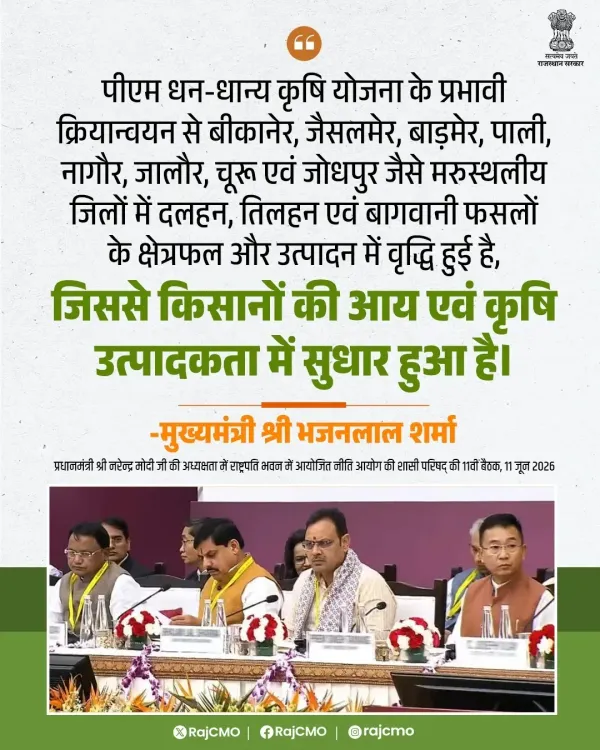
The Chief Minister's Office of Rajasthan posted on June 12, 2026 that the PM Dhan-Dhanya Krishi Yojana has increased crop area and production in eight arid districts.
The districts named are Bikaner, Jaisalmer, Barmer, Pali, Nagaur, Jalore, Churu and Jodhpur — all in western and central Rajasthan's desert belt.
Crops cited as expanding include pulses, oilseeds and horticulture — a diversification away from traditional coarse-cereal dependence.
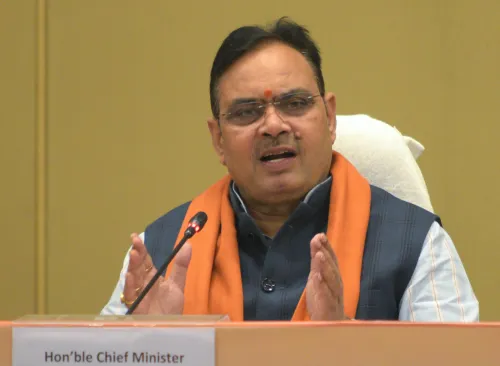
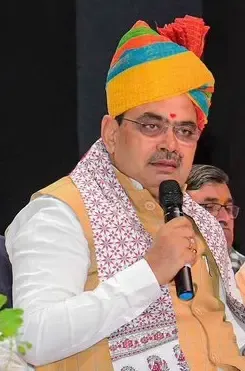
The post is attributed to Chief Minister Bhajan Lal Sharma , a BJP leader in office since December 2023 .
Rajasthan contributes significantly to India's mustard output, making arid-district performance relevant to national edible-oil supply.
Independent verification awaits the state agriculture department's district-wise production data for 2025-26 .
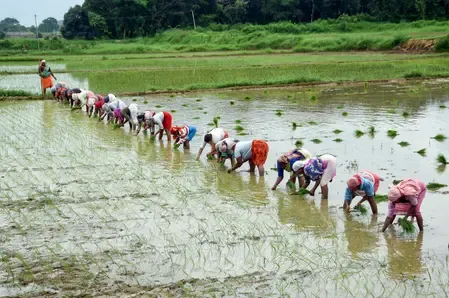
The Chief Minister's Office of Rajasthan on Friday, June 12, 2026 credited the PM Dhan-Dhanya Krishi Yojana with expanding the area under cultivation and raising production of pulses, oilseeds and horticultural crops across eight arid districts of the state, including Bikaner, Jaisalmer and Barmer.
Context
The post, attributed to Chief Minister Bhajan Lal Sharma via the official CMO handle, states that effective implementation of the PM Dhan-Dhanya Krishi Yojana has led to increases in the acreage and output of pulses, oilseeds and horticulture crops in the desert districts of Bikaner, Jaisalmer, Barmer, Pali, Nagaur, Jalore, Churu and Jodhpur. The post uses the hashtag #आपणो_अग्रणी_राजस्थान ('Our Pioneering Rajasthan'), a recurring slogan of the current state government.
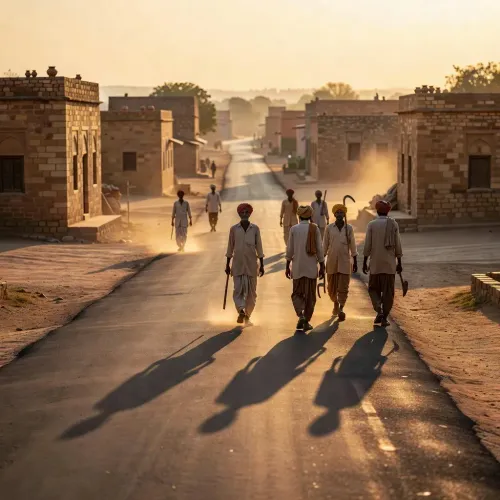
The eight districts named span western and central Rajasthan and are characterised by low and erratic rainfall, sandy soils and historically limited crop diversification. Farmers in these zones have traditionally depended on coarse cereals and limited horticulture, making any expansion into pulses and oilseeds a notable shift.
Policy Backdrop
The PM Dhan-Dhanya Krishi Yojana is the central scheme under which the state government is reporting these gains. India has run successive targeted programmes since the late 2000s to raise domestic pulses and edible-oil production and reduce import dependence, with particular emphasis on arid and semi-arid zones of western India. The National Food Security Mission, launched in 2007, was an early pillar of this effort, carrying components specifically designed for rainfed and arid districts in states like Rajasthan.
The Rashtriya Krishi Vikas Yojana, also introduced in 2007, gave state governments flexibility to promote crop diversification and horticulture investment, creating the institutional architecture that subsequent schemes have built upon. Rajasthan administrations across political cycles have cited these central frameworks as critical to improving farm output in the Thar desert belt.
Stakeholders and Impact
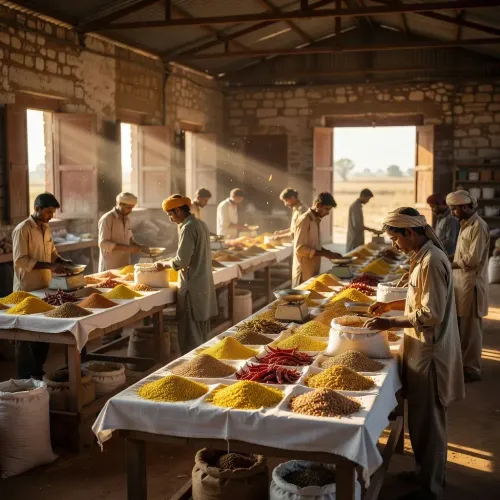
The primary beneficiaries, if the state's claims hold, are the arid-district farming communities of western Rajasthan — smallholders who grow pulses such as moong and moth bean, oilseeds such as mustard and groundnut, and horticulture crops including pomegranate and dates in pockets of Barmer and Jaisalmer. Expansion in these crops carries income diversification benefits and reduces dependence on a single monsoon-linked cereal harvest.
At the national level, higher pulse and oilseed output from Rajasthan — one of the largest contributors to India's mustard crop — is relevant to the government's broader goal of cutting edible-oil imports and stabilising retail prices. The state accounts for a significant share of India's total mustard production, making performance in its arid districts a matter of national supply-chain interest.
What's Next
Independent verification of the claimed gains will depend on the state agriculture department's release of district-wise production data for the 2025-26 kharif and rabi seasons. Any review meeting chaired by Chief Minister Bhajan Lal Sharma on scheme coverage and beneficiary reach will offer a clearer picture of the programme's ground-level footprint.
If district-level data corroborates the CMO's claims, Rajasthan's desert belt could emerge as a model for arid-zone agricultural diversification — a template that other states with similar agro-climatic conditions may seek to replicate under the same central scheme framework.
Point of View
Tying visible agricultural gains in electorally significant desert districts to a central scheme — a pattern that reinforces both the BJP's governance narrative at the state level and the Centre's flagship agricultural branding. The emphasis on eight specific districts, rather than a state-wide claim, suggests the government is working from granular data it is confident enough to publicise, even if the numbers themselves have not yet been independently verified. For Chief Minister Bhajan Lal Sharma, who took office in December 2023, demonstrating tangible farm-sector results in Rajasthan's arid west is politically important ahead of any future electoral cycle. The broader significance lies in whether sustained scheme implementation can structurally shift cropping patterns in the Thar belt — a goal that has eluded several previous policy cycles.
NationPress
26 Oct 2026
Frequently Asked Questions
What is the PM Dhan-Dhanya Krishi Yojana?
The PM Dhan-Dhanya Krishi Yojana is a central government agricultural scheme under which Rajasthan is reporting gains in pulses, oilseeds and horticulture cultivation; its full operational details are part of the current policy cycle. It builds on a long lineage of central schemes, including the National Food Security Mission launched in 2007, aimed at raising domestic production of pulses and edible oils in arid and rainfed regions.
Which Rajasthan districts are benefiting from the PM Dhan-Dhanya Krishi Yojana?
The Chief Minister's Office named eight arid districts: Bikaner, Jaisalmer, Barmer, Pali, Nagaur, Jalore, Churu and Jodhpur. These districts lie in western and central Rajasthan and are characterised by low rainfall and sandy soils.
What crops are expanding in Rajasthan's desert districts?
According to the state government, pulses, oilseeds and horticultural crops have seen increases in both cultivated area and production across the eight named desert districts.
Who is the Chief Minister of Rajasthan in 2026?
Bhajan Lal Sharma of the BJP has been Chief Minister of Rajasthan since December 2023 and is the official credited in the CMO post.
How does Rajasthan contribute to India's oilseed production?
Rajasthan is one of India's largest producers of mustard, a key oilseed crop. Performance in its arid western districts directly affects national edible-oil supply and the government's goal of reducing import dependence.