Rajasthan Expands Daytime Power Supply for Farmers to 24 Districts Including Dausa and Karauli
Synopsis
Rajasthan's Chief Minister Bhajanlal Sharma has expanded daytime electricity supply for farmers to Dausa and Karauli, enhancing agricultural productivity across 24 districts. This initiative aims to provide reliable irrigation support and reduce reliance on nighttime power by 2027.
Key Takeaways
Daytime electricity supply extended to **Dausa** and **Karauli**. **24 districts** now covered in Rajasthan.
Future plans to cover all **50 districts** by **2027**. **52,460** farmers in Dausa and **35,341** in Karauli will benefit.
Infrastructure improvements include new **substations** and increased power capacity.
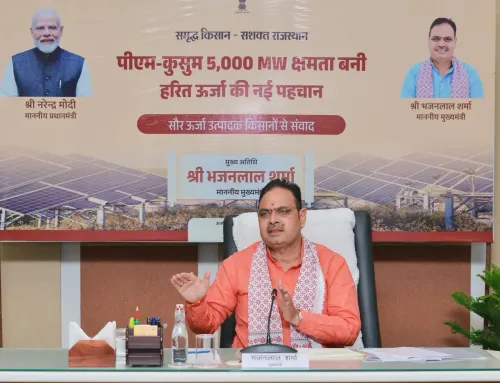
Jaipur, March 31 (NationPress) The Chief Minister of Rajasthan, Bhajanlal Sharma, has declared the expansion of daytime electricity supply for farmers to the districts of Dausa and Karauli, raising the total to 24 districts now benefitting from this service in the state.
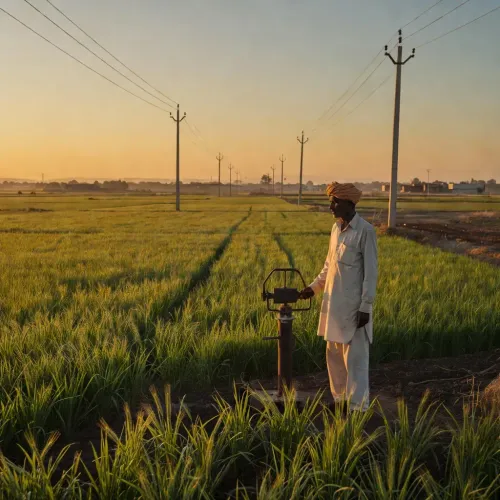
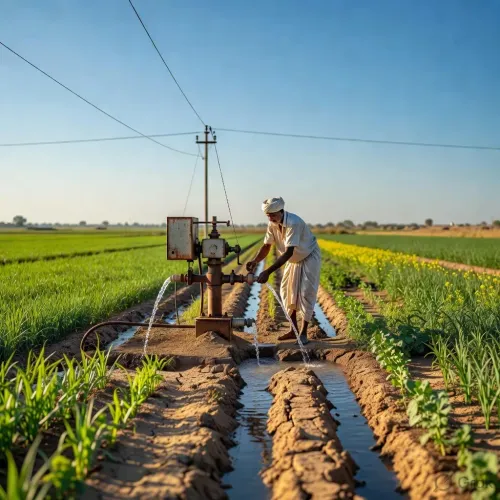
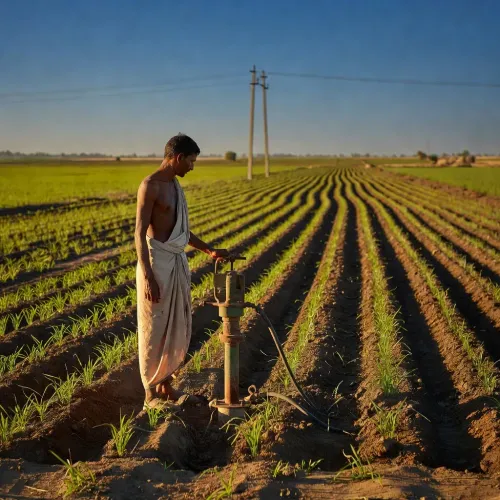
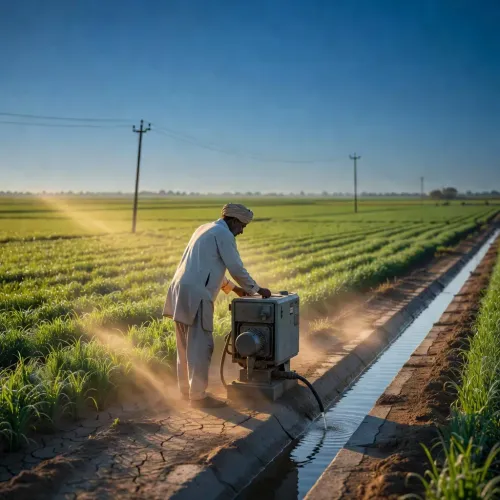
This initiative allows farmers to access electricity for irrigation during two daytime periods, thereby decreasing reliance on nighttime power.
The program is designed to eventually include all 50 districts in Rajasthan by 2027, as highlighted in the revised budget for 2024-25.
Previously, farmers in 22 districts were enjoying daytime power supply. With the addition of Dausa and Karauli, which are both served by the Jaipur Discom, the initiative has now reached 24 districts.
Currently, farmers under the Jaipur Discom are receiving daytime electricity in Dholpur, Bundi, Kota, Jhalawar, Jaipur, Deeg, Bharatpur, and now Dausa and Karauli.
In the Ajmer Discom, 12 districts including Ajmer, Beawar, Bhilwara, Didwana-Kuchaman, Udaipur, Salumbar, Rajsamand, Banswara, Jhunjhunu, Sikar, Chittorgarh, and Dungarpur are included, while the Jodhpur Discom covers Jalore, Sirohi, and Pali.
To support this initiative, the power infrastructure in Dausa and Karauli has been extensively improved.
In Dausa, the establishment of 18 new 33 kV substations has been completed, and the transformer capacity at 47 substations has been increased by 128.95 MVA.
Karauli has seen the setup of 6 new 33 kV substations, with capacity boosted by 49.45 MVA across 15 substations.
Additionally, a total of 17 solar power plants with a combined capacity of 32 MW have been installed in both districts under the PM-KUSUM scheme.
This initiative is set to benefit 52,460 farmers in Dausa and 35,341 farmers in Karauli, ensuring reliable daytime power for their irrigation needs.
The change is anticipated to relieve pressure on farmers by removing the necessity for nighttime irrigation, especially during extreme weather, while also minimizing risks from wildlife and enhancing their overall quality of life.
Point of View
The extension of daytime electricity to more districts in Rajasthan marks a significant step in supporting the agricultural sector. By focusing on enhancing infrastructure and reducing nighttime power dependency, the government is not only improving farmers' productivity but also addressing broader issues of sustainability and quality of life in rural areas.
NationPress
1 Oct 2026
Frequently Asked Questions
What is the total number of districts now benefiting from daytime electricity supply in Rajasthan?
With the recent extension, the total number of districts now benefiting from daytime electricity supply in Rajasthan is **24**.
How does the daytime electricity supply benefit farmers?
Daytime electricity supply allows farmers to irrigate their crops more efficiently during the day, reducing their reliance on nighttime power, which can be less reliable.
What is the government's plan for the future regarding this initiative?
The government plans to extend daytime electricity supply to all **50 districts** in Rajasthan by **2027**.
How many farmers will benefit from this initiative in Dausa and Karauli?
The initiative will benefit **52,460 farmers** in Dausa and **35,341 farmers** in Karauli.
What improvements have been made to the power infrastructure in Dausa and Karauli?
In Dausa, **18 new substations** have been established, while in Karauli, **6 new substations** have been set up, significantly increasing the power capacity.