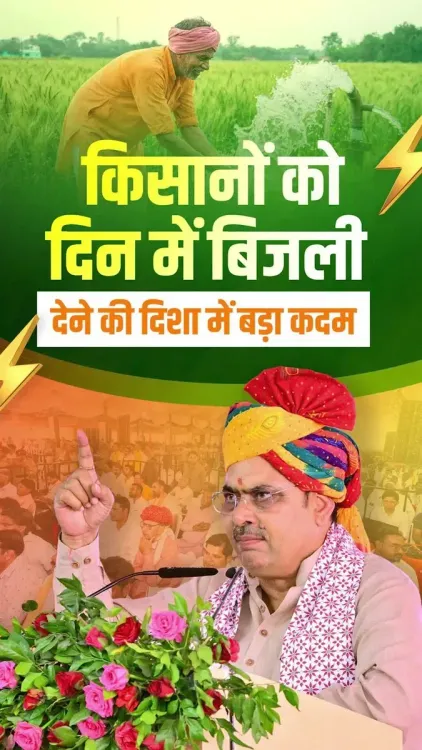
CM Bhajanlal: Daytime Power for Farmers in 26 Rajasthan Districts
Synopsis
Chief Minister Bhajanlal Sharma announced at Kekri in Ajmer district on 11 July 2026 that Rajasthan is providing daytime electricity to farmers in 26 districts, with a statewide target set for 2027, backed by feeder separation and renewable integration.
Key Takeaways
CM Bhajanlal Sharma made the announcement at a development works ceremony in Kekri, Ajmer district on 11 July 2026 .
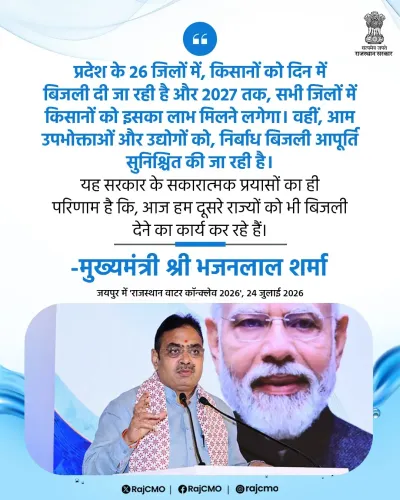
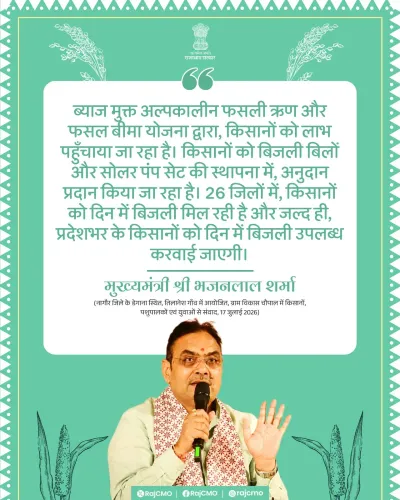
Daytime electricity is currently being supplied to farmers in 26 districts of Rajasthan.
The state government has set a target to provide daytime power to all farmers by 2027 .
The programme relies on agricultural feeder separation, aligned with the central Deen Dayal Upadhyaya Gram Jyoti Yojana framework.
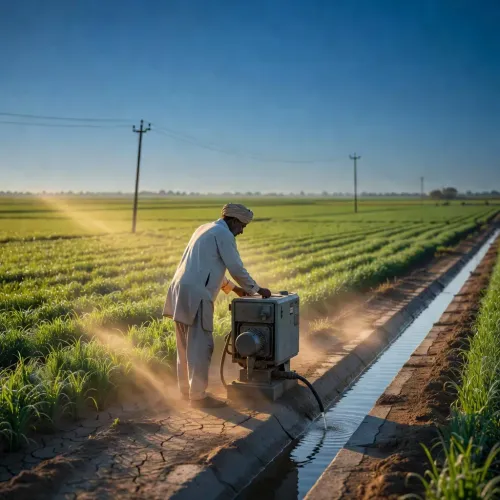
Daytime supply reduces farmers' dependence on diesel pump-sets and lowers irrigation costs.
Rajasthan's high solar potential supports integrating renewable energy into the daytime agricultural power model.
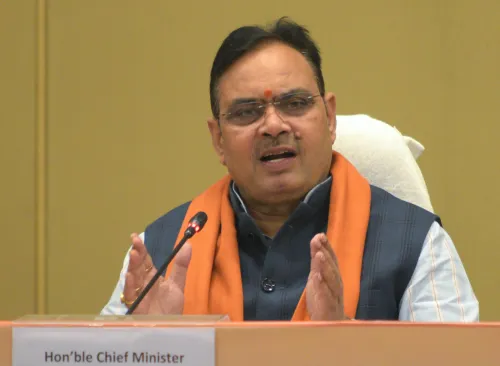
Chief Minister Bhajanlal Sharma on Saturday, 11 July 2026, addressed a foundation-stone laying and inauguration ceremony for various development works in Kekri, Ajmer district, announcing that the state government is actively supplying daytime electricity to farmers across 26 districts of Rajasthan. He reaffirmed a firm state target to extend this facility to all farmers by 2027.
Context
Speaking at the event, CM Bhajanlal Sharma said — translated from Hindi — 'Rajasthan ke 26 zilon mein kisanon ko din mein bijli dene ka kaam hamari sarkar kar rahi hai' ('Our government is providing daytime electricity to farmers in 26 districts of Rajasthan'). He added that work is progressing rapidly towards the goal of making daytime power available to all farmers by 2027. The announcement was made under the campaign hashtag #AapnoAgraniRajasthan ('Our Leading Rajasthan'), reflecting the state government's broader branding of its development agenda.
Policy Backdrop
Rajasthan's push for daytime agricultural power is rooted in a structural challenge that has long plagued rural electricity distribution: farmers have historically received power during late-night or early-morning hours when grid demand is low, making irrigation inconvenient and unsafe. The state has been implementing agricultural feeder separation — physically segregating farm-supply lines from domestic ones — under the framework of the centrally sponsored Deen Dayal Upadhyaya Gram Jyoti Yojana (DDUGJY), launched in 2015, which provided the infrastructure backbone for such reforms.
Feeder separation, combined with the integration of solar-powered pumps and renewable energy into the grid, allows states to align agricultural electricity supply with peak solar generation hours. This reduces distribution losses, cuts subsidy burdens on state utilities, and directly benefits farmers who can irrigate fields during daylight. Rajasthan, with its high solar irradiance, is particularly well-positioned to leverage this model.
Stakeholders and Impact
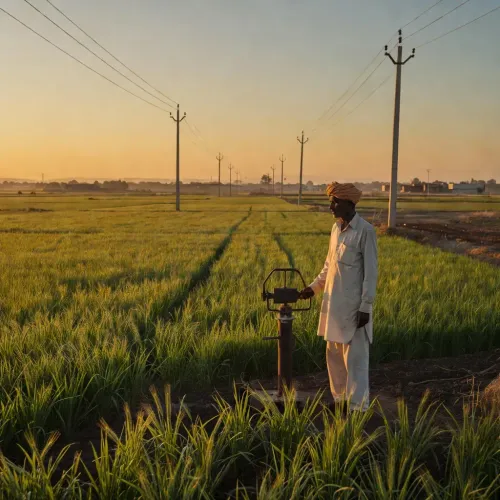
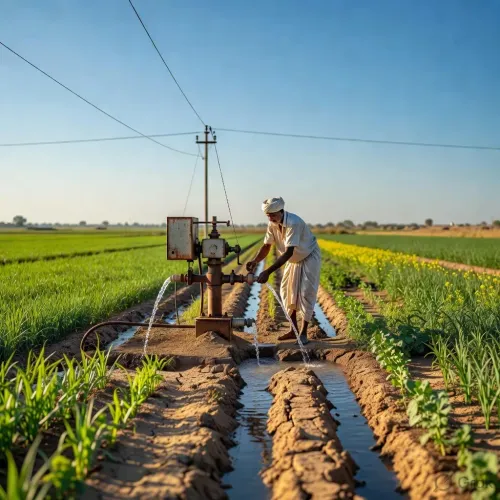
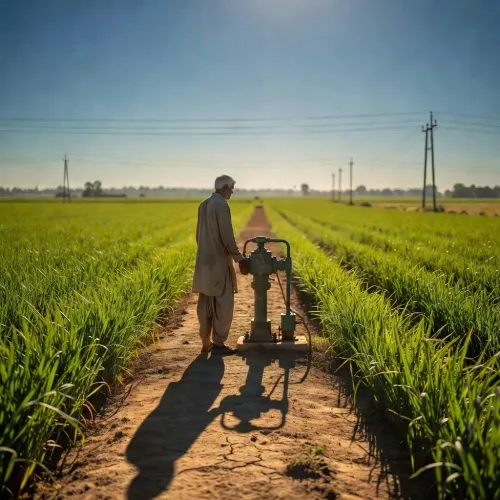
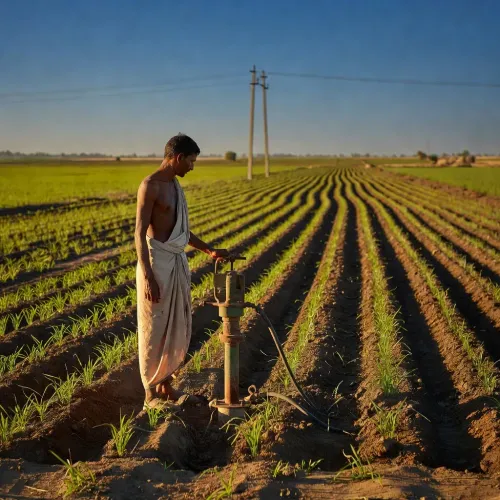
The primary beneficiaries are Rajasthan's farming communities, who depend on reliable irrigation to protect crop cycles against the state's semi-arid conditions. Daytime power supply reduces dependence on diesel pump-sets, lowers input costs, and improves agricultural productivity. Rural power consumers in the covered districts also stand to benefit from a more stable and separated grid.
The broader pattern mirrors efforts across Indian states — including Madhya Pradesh, Gujarat, and Maharashtra — that have pursued dedicated daytime agricultural feeders and solar pump schemes to modernise rural electricity infrastructure. CM Sharma, who took office in December 2023, has positioned power sector reform as a central pillar of the Bharatiya Janata Party government's rural development agenda in Rajasthan.
What's Next
With the 2027 deadline set as the completion target, the government's pace of district-wise rollout will be closely watched. Progress on feeder separation works, budget allocations, and tender activity for the districts not yet covered will determine whether the target is met on schedule. The Kekri event itself — combining foundation-stone layings with inaugurations — signals that infrastructure spending in Ajmer district is being accelerated as part of this broader push. Future announcements on district-level coverage milestones are expected to follow as the state moves deeper into the programme's execution phase.
Point of View
The government is setting a public accountability benchmark that will be difficult to walk back. This fits a broader national pattern of BJP-governed states using power sector modernisation as a visible rural development dividend, especially in states with large farming constituencies. The 2027 timeline, coinciding with the approach of the next Rajasthan assembly election cycle, gives the programme both policy urgency and political salience.
NationPress
10 Oct 2026
Frequently Asked Questions
How many districts in Rajasthan are getting daytime electricity for farmers?
As of July 2026, the Rajasthan government is providing daytime electricity to farmers in 26 districts , with a target to cover all districts by 2027 .
What is the 2027 daytime power target for Rajasthan farmers?
The Bhajanlal Sharma government has set a target to make daytime electricity available to all farmers across Rajasthan by 2027 , through feeder separation and renewable energy integration.
What is agricultural feeder separation and how does it help farmers?
Agricultural feeder separation physically segregates farm electricity lines from domestic supply lines, enabling dedicated daytime power for irrigation — reducing diesel costs and improving crop productivity.
What central scheme supports Rajasthan's daytime power for farmers programme?
Rajasthan's programme is aligned with the Deen Dayal Upadhyaya Gram Jyoti Yojana (DDUGJY) , launched in 2015 , which funds rural feeder separation and electrification infrastructure.
Why did CM Bhajanlal Sharma visit Kekri in Ajmer?
CM Bhajanlal Sharma visited Kekri in Ajmer district on 11 July 2026 to address a foundation-stone laying and inauguration ceremony for various local development works.