CM Bhajanlal: Rajasthan farmers get daytime power in 26 districts
Synopsis
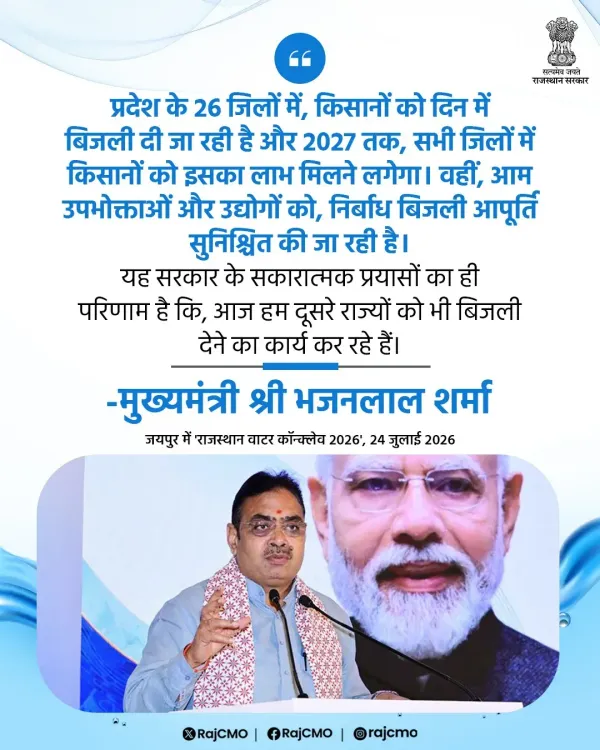
The Chief Minister's Office of Rajasthan announced that farmers in 26 districts now receive daytime electricity, with CM Bhajan Lal Sharma committing to extend the benefit statewide by 2027 through ongoing feeder infrastructure upgrades.
Key Takeaways
Farmers in 26 of Rajasthan's 33 districts are currently receiving daytime electricity supply for agricultural use.
Chief Minister Bhajan Lal Sharma has committed to extending daytime power to all districts by 2027 .
The shift from night-time to daytime agricultural supply improves farmer safety and operational efficiency.
The rollout builds on feeder segregation infrastructure supported by the central government's Deen Dayal Upadhyaya Gram Jyoti Yojana (DDUGJY) launched in 2015.
Potential integration with the PM-KUSUM solar scheme could further support the 2027 statewide target.
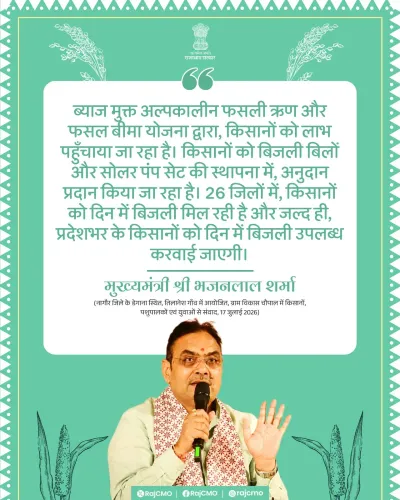
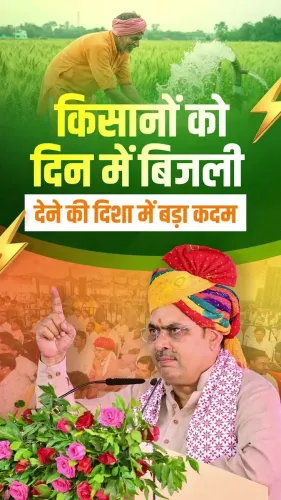
The Chief Minister's Office of Rajasthan announced on Saturday, 25 July 2026, that farmers across 26 districts of the state are now receiving daytime electricity supply, with the government committing to extend this benefit to all districts by 2027.
The post, attributed to Chief Minister Bhajan Lal Sharma, stated in Hindi: 'प्रदेश के 26 जिलों में, किसानों को दिन में बिजली दी जा रही है' ('In 26 districts of the state, farmers are being given electricity during the day'), adding that by 2027, all districts would benefit from this arrangement. The announcement was tagged with the hashtag #आपणो_अग्रणी_राजस्थान ('Our Leading Rajasthan'), the state government's ongoing branding campaign.
Context
For decades, agricultural electricity supply in Rajasthan — a predominantly agrarian state in western India — has largely been scheduled during night hours to manage grid load. This arrangement forced farmers to operate irrigation pump-sets in darkness, raising safety risks and reducing productivity. Shifting to daytime supply addresses a long-standing demand from the farming community. The current rollout in 26 of Rajasthan's 33 districts represents a significant coverage milestone. The state government has framed the 2027 statewide deadline as a firm policy commitment under Chief Minister Bhajan Lal Sharma, who took office in December 2023 following the BJP's return to power in the state.Policy Backdrop
The technical foundation for this shift was laid in part by the Deen Dayal Upadhyaya Gram Jyoti Yojana (DDUGJY), launched by the central government in 2015, which promoted the separation of agricultural feeders from domestic and commercial lines. Feeder segregation allows utilities to schedule dedicated power windows for farm use without disrupting household supply. Several Indian states have pursued similar programmes, linking agricultural feeder upgrades with the integration of solar and renewable energy into rural grids. In Rajasthan, this effort aligns with the broader PM-KUSUM scheme, which supports solar pump installations and solarisation of agricultural feeders — a natural complement to reliable daytime supply windows.Stakeholders and Impact
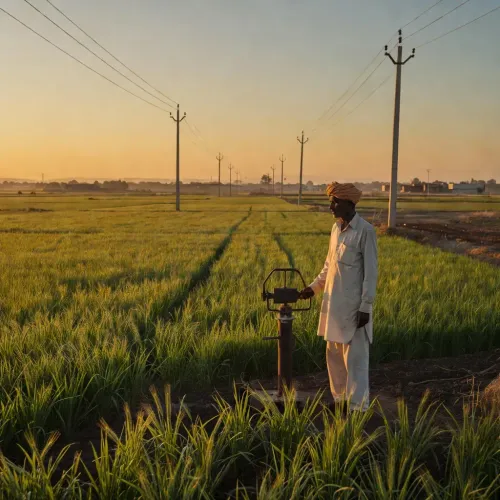
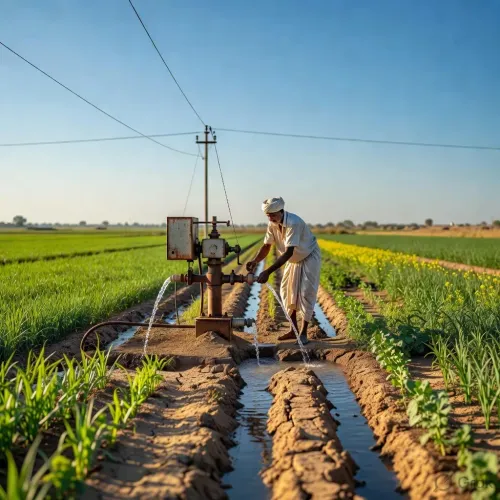
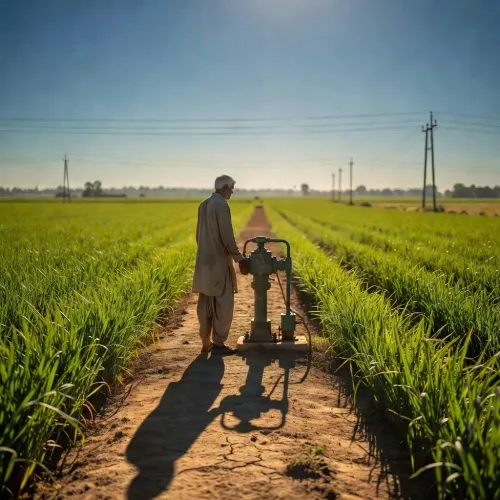
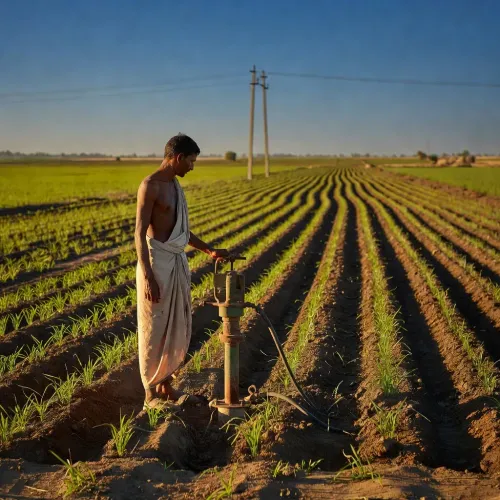
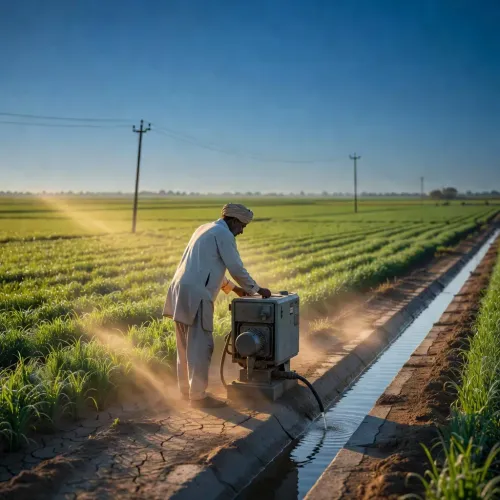
The primary beneficiaries are Rajasthan's farming households, who depend on electric pump-sets for irrigation. Daytime supply enables safer operation, reduces crop loss from erratic night-time pumping, and allows farmers to monitor their fields during working hours. For the state's power distribution companies, feeder segregation and scheduled agricultural supply can help reduce aggregate technical and commercial losses by making consumption more predictable. Rural electrification quality is also a key metric under central government assessments of state power sector performance. The remaining districts — those not yet covered under the current phase — are expected to benefit from continued infrastructure investment ahead of the 2027 target.What's Next
The government's 2027 deadline will require sustained budget allocations for feeder upgrades, transformer capacity additions, and grid reinforcement in the districts not yet covered. Progress reports on this rollout are likely to feature in upcoming state budget sessions and power department reviews. Any expansion of solar feeder programmes under PM-KUSUM in Rajasthan could accelerate the timeline and reduce the cost burden on the state exchequer. The 2027 statewide completion target, if met, would mark a structural shift in how agricultural electricity is delivered across one of India's largest states by area.Point of View
The 2027 deadline is as much a political signal as an infrastructure target — a concrete deliverable ahead of the next electoral cycle. The framing under the hashtag 'Our Leading Rajasthan' reflects a deliberate effort to build a governance narrative around measurable outcomes. Whether the remaining districts are covered on schedule will depend on budget discipline and the pace of central scheme disbursements, making this a benchmark to watch.
NationPress
23 Oct 2026
Frequently Asked Questions
Which districts in Rajasthan are getting daytime electricity for farmers?
The Rajasthan government has announced that farmers in 26 districts are currently receiving daytime electricity supply, though the specific districts have not been individually named in the official post. The remaining districts are expected to be covered by 2027.
When will all of Rajasthan's farmers get daytime power supply?
Chief Minister Bhajan Lal Sharma has stated that all districts in Rajasthan will receive daytime electricity for farmers by 2027, as part of an ongoing phased infrastructure rollout.
What is the Deen Dayal Upadhyaya Gram Jyoti Yojana and how does it relate to this?
The Deen Dayal Upadhyaya Gram Jyoti Yojana (DDUGJY), launched by the central government in 2015, promoted separation of agricultural electricity feeders from household lines, enabling states like Rajasthan to schedule dedicated daytime power windows for farmers.
Why is daytime electricity important for farmers in Rajasthan?
Daytime power supply allows farmers to operate irrigation pump-sets safely and efficiently during working hours, reducing the risks associated with night-time field operations and improving crop management.
Is PM-KUSUM scheme linked to Rajasthan's farm electricity expansion?
While the official post does not mention PM-KUSUM directly, the scheme — which supports solar pump installations and solarisation of agricultural feeders — is a complementary central programme that could support Rajasthan's goal of statewide daytime agricultural power supply by 2027.