Gujarat CM Office: Sanand Chip Plant Begins Production
Synopsis
The Chief Minister's Office of Gujarat confirmed on 4 July 2026 that the Sanand semiconductor plant has begun manufacturing, less than two and a half years after PM Modi's foundation-stone ceremony. The facility spans over 75,000 sq ft, targets 20 crore chips annually for export, and is expected to create over 5,000 jobs in five years.
Key Takeaways
Manufacturing commenced at the Sanand semiconductor plant on 4 July 2026 , confirmed by the Chief Minister's Office of Gujarat.
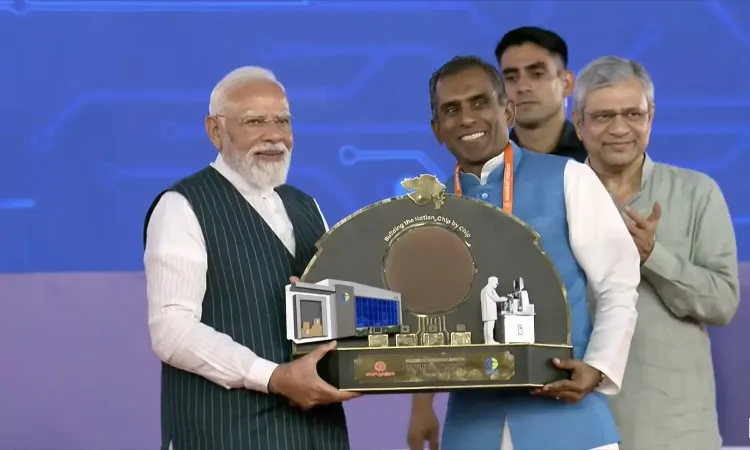
The plant was inaugurated via a foundation-stone laying by PM Narendra Modi in 2024 ; production began in under two and a half years.
The facility covers more than 75,000 square feet of built-up area.
Annual production capacity is projected at 20 crore chips , to be exported to multiple countries.
More than 5,000 direct and indirect jobs are expected to be created over the next five years.
The project aligns with the central government's India Semiconductor Mission , launched in 2021 to build domestic chip manufacturing capacity.
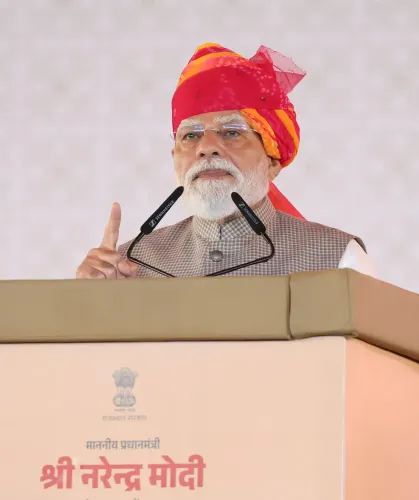
The Chief Minister's Office of Gujarat announced on Saturday, 4 July 2026 that manufacturing operations have formally commenced at a new semiconductor plant in Sanand, Gujarat, less than two and a half years after Prime Minister Narendra Modi laid its foundation stone in 2024.
The CMO's post, written in Gujarati, notes that the plant has completed its journey 'from scratch to scale' (સ્ક્રેચથી સ્કેલ) in record time. The facility, spread across more than 75,000 square feet of built-up area, is designed to produce approximately 20 crore chips annually, which will be exported to multiple countries.
Context
The Sanand plant's inauguration marks a concrete milestone in India's push to develop domestic semiconductor manufacturing. The CMO stated that the plant will generate more than 5,000 direct and indirect employment opportunities in the next five years, while also accelerating local and economic development in the region.
Sanand has emerged as one of Gujarat's flagship industrial corridors, hosting large-scale manufacturing units across sectors. The commencement of chip production here adds a high-technology dimension to the area's industrial profile.
Policy Backdrop
The plant is part of India's broader semiconductor strategy anchored by the India Semiconductor Mission (ISM), launched by the central government in 2021. The ISM offers financial incentives — including fiscal support for capital expenditure — to attract both domestic and foreign investment into chip fabrication and assembly units.
Under the Atmanirbhar Bharat framework, reducing dependence on imported semiconductors has been a stated priority. India imports the vast majority of its chips, making indigenous production capacity a strategic economic and national-security objective. Gujarat has been among the states most aggressively courting semiconductor investments under this policy architecture.
Stakeholders and Impact
The semiconductor industry stands to gain a new domestic supply node, while the local workforce in and around Sanand is the most immediate beneficiary of the projected job creation. The plant's export orientation — chips shipped to 'various countries,' as stated in the post — positions Gujarat as a potential node in global semiconductor supply chains.
For the broader Indian electronics manufacturing ecosystem, a functioning chip plant reduces the import bill for downstream industries such as consumer electronics, automotive, and telecommunications equipment. State-level industrial development agencies in Gujarat are also likely to cite this project when attracting further investment.
What's Next
Attention will now shift to actual production ramp-up: whether the plant reaches its stated annual capacity of 20 crore chips, when the first export shipments leave Sanand, and whether the 5,000-job target is met within the five-year window. The central government's ISM monitoring framework will track these metrics as part of its broader semiconductor investment scorecard.
If Sanand delivers on its targets, it could serve as a template for similar facilities planned or under construction in other Indian states, reinforcing India's ambition to become a credible alternative to established chip-manufacturing hubs in Asia.
Point of View
Which has faced scepticism about execution timelines since its 2021 announcement. By completing the journey from foundation stone to first chip in under two and a half years, Gujarat's government is signalling administrative delivery speed — a metric that matters to global investors still weighing India against Taiwan, South Korea, and Vietnam. The export orientation of the facility also suggests India is not merely targeting import substitution but is positioning itself within global supply chains, a more ambitious and harder-to-achieve goal. Whether the 20-crore-chip annual output and 5,000-job projections are met will be the real test of whether this milestone translates into lasting industrial momentum.
NationPress
3 Oct 2026
Frequently Asked Questions
Where is the new semiconductor plant in Gujarat located?
The plant is located in Sanand , an industrial area in Gujarat that hosts several large-scale manufacturing facilities.
When did PM Modi lay the foundation stone of the Sanand chip plant?
Prime Minister Narendra Modi laid the foundation stone of the Sanand semiconductor plant in 2024 , and manufacturing commenced less than two and a half years later in July 2026.
How many chips will the Sanand semiconductor plant produce every year?
According to the Chief Minister's Office of Gujarat, the plant is designed to produce approximately 20 crore (200 million) chips annually , which will be exported to multiple countries.
How many jobs will the Sanand chip plant create?
The CMO of Gujarat stated that the plant is expected to generate more than 5,000 direct and indirect employment opportunities over the next five years.
What is the India Semiconductor Mission?
The India Semiconductor Mission (ISM) is a central government programme launched in 2021 that offers financial incentives for setting up chip fabrication and assembly units in India, aiming to reduce the country's dependence on imported semiconductors.