PM Modi inaugurates Sanand semiconductor plant, hails India's chip revolution
Synopsis
India's semiconductor ambitions got their most visible proof point yet — PM Modi inaugurated the CG Semi OSAT plant in Sanand, Gujarat, just two years after its foundation stone was laid. The facility's most striking detail: tribal women from rural Gujarat, trained in Malaysia, are now manufacturing world-class chips — a workforce story that reframes what 'Make in India' can actually mean on the ground.
Key Takeaways
PM Modi inaugurated the CG Semi OSAT facility in Sanand, Gujarat on 4 July .
The plant went from foundation stone ( 2024 ) to chip testing ( August 2025 ) to full commercial production in roughly two years.
The facility is backed by an Indo-Japanese-Thai partnership , described by Modi as a model of international technological trust.
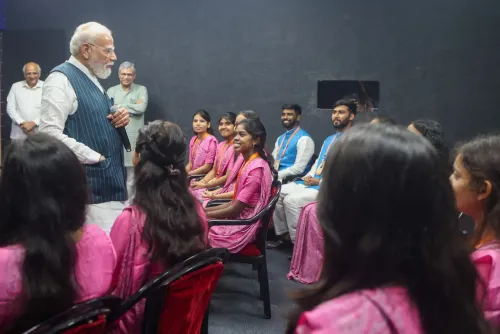
Young tribal women from Gujarat , trained in Malaysia , are now employed in chip manufacturing at the plant.
Modi envisioned Sanand evolving into a full semiconductor cluster on the lines of Silicon Valley , Hsinchu , and Tsukuba .
The inauguration reinforces India's broader ₹76,000 crore semiconductor incentive programme targeting a Viksit Bharat by 2047 .
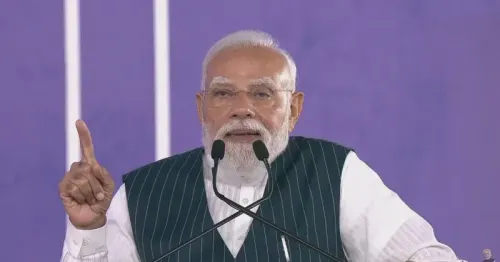
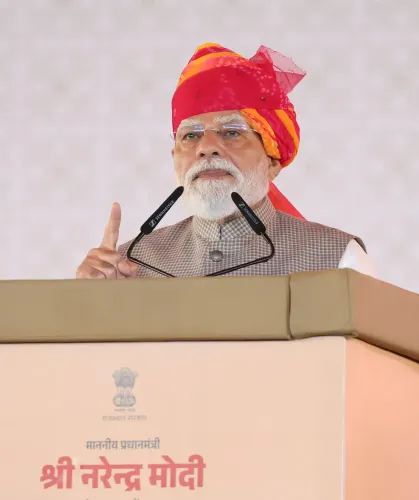
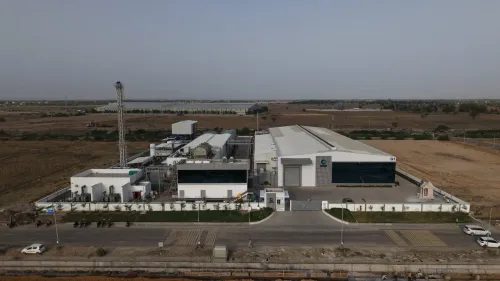
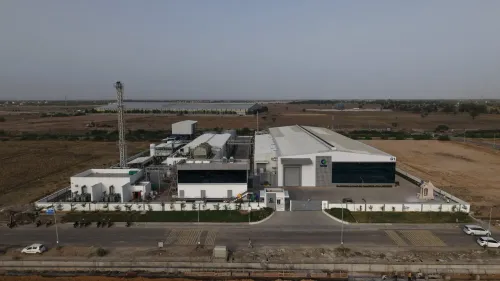
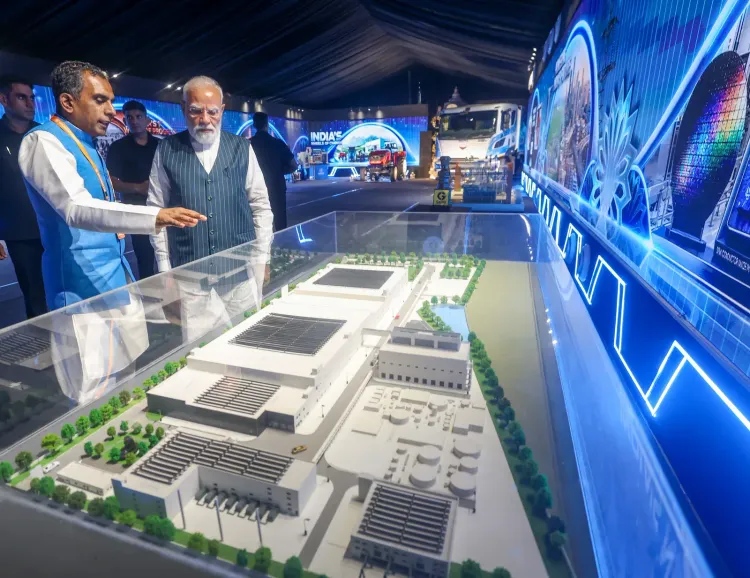
Prime Minister Narendra Modi on Saturday, 4 July inaugurated the CG Semi OSAT (Outsourced Semiconductor Assembly and Test) facility in Sanand, Gujarat, marking a milestone in India's push to establish itself as a credible player in global semiconductor manufacturing. Modi declared that Sanand is rapidly positioning itself as India's answer to Silicon Valley, backed by the speed at which the plant has scaled up operations.
From Foundation Stone to Full Production in Two Years
The CG Semi OSAT facility was conceptualised and its foundation stone laid in 2024. Within roughly a year, the plant had commenced chip testing by August 2025 and has now entered full commercial production — a timeline that officials and industry observers have noted as unusually swift for semiconductor infrastructure. 'This is what happens when India resolves to do something,' Modi said during the inauguration, crediting the 'Design in India, Make in India' vision for driving the transformation.
An Indo-Japanese-Thai Partnership at the Core
The Prime Minister highlighted the facility's unique tri-nation ownership structure — an Indo-Japanese-Thai partnership — describing it as more than a commercial arrangement. Modi called it a model of international technological trust that could accelerate India's broader semiconductor ambitions. The collaboration reflects a global shift in chip supply-chain diversification, with partners seeking alternatives to established East Asian manufacturing corridors.
Tribal Women from Gujarat Now Making Chips Trained in Malaysia
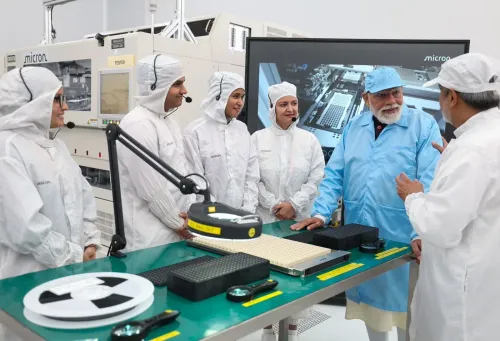
Among the most-cited details of the inauguration was Modi's account of young tribal women from rural Gujarat — many of whom had reportedly never left their home districts — who received advanced semiconductor training in Malaysia and are now employed in chip manufacturing at the Sanand plant. The Prime Minister said he was moved by the confidence and capability of the young workforce he interacted with during a walkthrough of the facility. This workforce pipeline, drawing from ITI (Industrial Training Institute) classrooms and vocational programmes, is being positioned as a replicable model for inclusive high-tech employment.
Sanand as India's Semiconductor Cluster: The Ecosystem Vision
Modi drew comparisons between Sanand and established global technology clusters — Silicon Valley in the United States, Hsinchu Science Park in Taiwan, and Tsukuba Science City in Japan — and articulated a vision for Sanand to evolve into a full-spectrum semiconductor ecosystem. Chemical plants, testing laboratories, design centres, and semiconductor-focused startups are expected to follow, creating what Modi described as a multiplier effect where 'one industry gives birth to ten more.' He also stressed the importance of self-reliance in high-tech materials and critical minerals to secure the entire semiconductor value chain.
Message to Global Investors: Policy Stability and Fast Execution
Addressing international investors, Modi reaffirmed India's commitment to ease of doing business and pledged policy continuity. The inauguration was framed as evidence that India can deliver on its semiconductor promises with speed and scale. The broader goal, he said, remains building a Viksit Bharat (Developed India) by 2047, with 'Made in India' chips powering the country's artificial intelligence and robotics ambitions. The Sanand facility adds to a cluster of semiconductor investments in Gujarat that have been announced under India's ₹76,000 crore semiconductor incentive programme.
Point of View
But the harder question is whether one OSAT facility — however symbolically powerful — can anchor a genuine semiconductor cluster. OSAT is the downstream, lower-margin end of the chip value chain; the upstream design and fabrication capabilities that define Silicon Valley or Hsinchu remain largely absent in India. The tribal-women-trained-in-Malaysia narrative is compelling, but sustainable workforce depth requires domestic semiconductor engineering programmes at scale, not just overseas finishing courses. India's ₹76,000 crore incentive programme has attracted announcements; the test now is whether those announcements translate into the kind of dense, interlocking supplier ecosystems that took Taiwan and South Korea decades to build.
NationPress
3 Oct 2026
Frequently Asked Questions
What is the CG Semi OSAT facility inaugurated by PM Modi in Sanand?
The CG Semi OSAT facility is an Outsourced Semiconductor Assembly and Test plant located in Sanand, Gujarat, inaugurated by Prime Minister Narendra Modi on 4 July. It is backed by an Indo-Japanese-Thai partnership and began full commercial chip production after commencing testing in August 2025, roughly a year after its foundation stone was laid in 2024.
Why is Sanand being compared to Silicon Valley?
PM Modi drew the comparison to highlight Sanand's potential to become a full-spectrum semiconductor cluster, similar to Silicon Valley in the US, Hsinchu Science Park in Taiwan, and Tsukuba Science City in Japan. The vision includes chemical plants, testing labs, design centres, and startups co-locating around the OSAT facility to create a multiplier effect.
Who are the tribal women mentioned in PM Modi's speech at Sanand?
They are young women from tribal communities in Gujarat who had reportedly never left their home districts before receiving advanced semiconductor manufacturing training in Malaysia. They are now employed at the CG Semi OSAT plant in Sanand, producing chips for commercial use.
What countries are involved in the CG Semi OSAT partnership?
The CG Semi OSAT facility is the product of an Indo-Japanese-Thai partnership. PM Modi described the collaboration as a model of international technological trust, reflecting the global trend of diversifying semiconductor supply chains away from traditional East Asian hubs.
How does the Sanand plant fit into India's broader semiconductor strategy?
The plant is part of India's ₹76,000 crore semiconductor incentive programme aimed at building domestic chip manufacturing capacity. The Sanand facility represents the assembly and testing stage of the chip value chain and is intended to anchor a wider semiconductor ecosystem in Gujarat, supporting India's goal of a developed economy by 2047.