PM Modi lauds women workforce at Sanand chip plant, calls them India's semiconductor strength
Synopsis
Behind India's semiconductor milestone at Sanand is a quieter story: tribal and rural women from Jharkhand, J&K, and beyond are now packaging chips for automotive and consumer electronics markets. Modi's X post and shop-floor interactions put a human face on the ₹7,500 crore CG Semi OSAT plant — India's third under the India Semiconductor Mission — and signal that the country's chip ambitions are also reshaping social mobility on the ground.
Key Takeaways
PM Modi inaugurated the CG Semi OSAT facility in Sanand, Gujarat on 5 July 2025 , India's third semiconductor plant under the India Semiconductor Mission .
The plant was built with an investment of approximately ₹7,500 crore and has commenced commercial production.
A significant share of the workforce comprises women from tribal and remote communities who underwent specialised semiconductor training.
The facility packages and tests chips for automotive , industrial , and consumer electronics sectors.
Modi shared his interactions with workers in a post on social media platform X , calling it 'one of the most special moments' of the visit.
Prime Minister Narendra Modi on Sunday, 6 July 2025, spotlighted the contributions of young women from remote and tribal communities to India's emerging semiconductor sector, a day after inaugurating the CG Semi Outsourced Semiconductor Assembly and Test (OSAT) facility in Sanand, Gujarat. In a post on social media platform X, Modi called his interaction with the plant's workforce 'one of the most special moments' of the visit.
What Modi Said
Sharing his impressions from the facility, Prime Minister Modi wrote: 'They hail from remote parts of India, many of them are from tribal backgrounds. But their remarkable spirit ensured that they learnt about semiconductors. They went for training and here they are, adding strength to India's semiconductor journey.' He signed off the post with, 'Proud of our Yuva Shakti!'
Modi noted that a significant share of the CG Semi workforce comprises women from rural and tribal belts who underwent specialised training before joining semiconductor manufacturing — a sector that, until recently, India had virtually no domestic production capacity in.
Voices From the Shop Floor
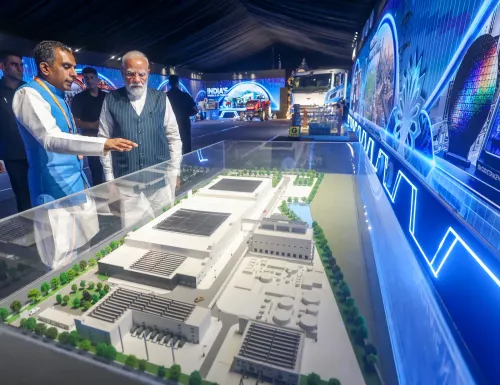
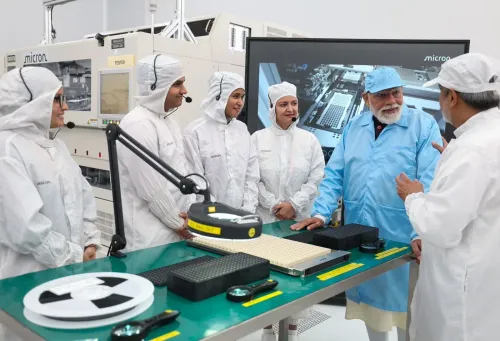
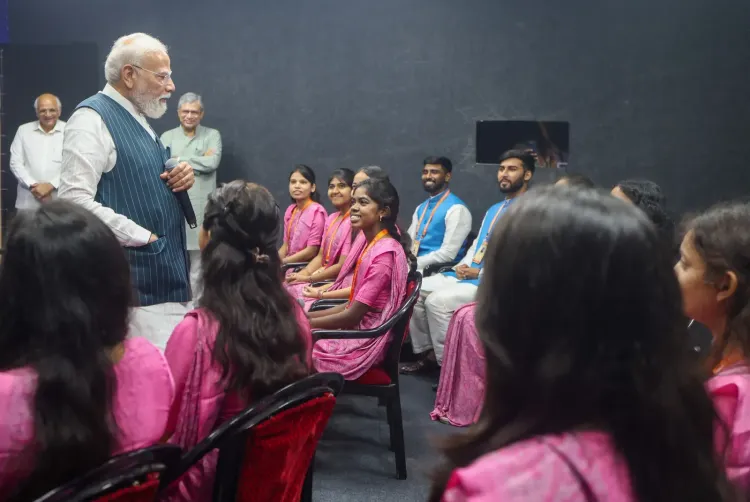
During his walkthrough of the Sanand plant on Saturday, 5 July, Modi interacted directly with several employees. One young woman described how her employment at the facility had shifted attitudes in her village, where families traditionally discouraged daughters from leaving home for education.
'In my village, no family sends their daughter out for studies. But when I go back home now, everyone is amazed. They ask where I live and study. I tell them I work at CG-SEMIs, and it's a great opportunity. They are very happy that I am self-dependent. My friends ask me if they can also get admission here, and I tell them yes, come and work,' she told the Prime Minister.
Another employee, from Giridih district in Jharkhand, shared that she had completed Class 12 at Kasturba Gandhi Balika Vidyalaya in Birni before pursuing an Industrial Training Institute (ITI) course, which led to her placement at CG Semi. She added that the job had also given her an opportunity to travel abroad. When Modi asked whether ITI qualifications were looked down upon, she replied: 'Earlier, people thought I was just a village girl who went away to study and wouldn't be able to achieve anything. When I was in Ranchi, they said I was just passing time. But now they realise I am actually doing something.'
Modi also spoke with Kaushal Kumar, an employee from Kathua district in Jammu and Kashmir, asking whether it was his first visit to Gujarat and remarking on the state's summer heat. Kumar confirmed it was his first time in the state.
About the CG Semi OSAT Facility
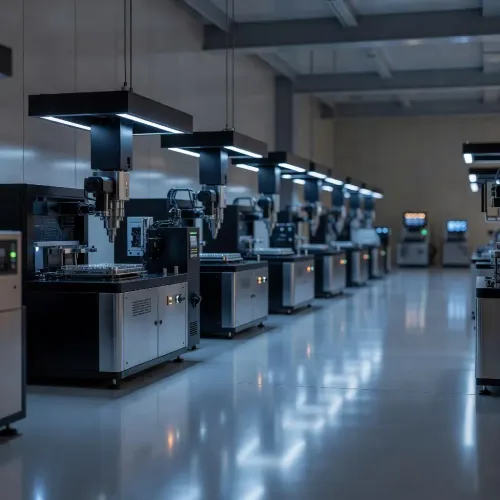
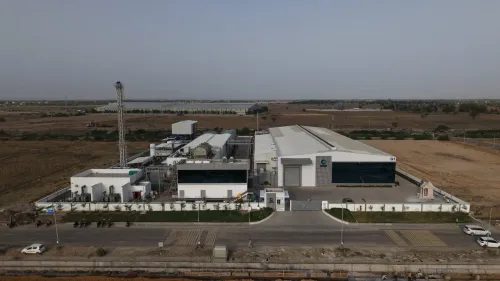
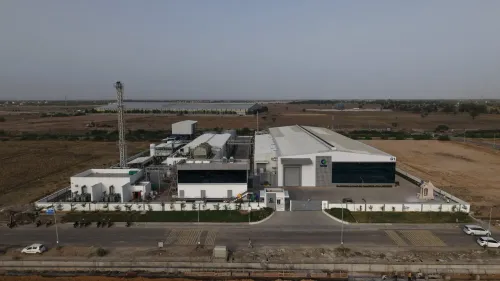
The CG Semi OSAT plant, built with an investment of approximately ₹7,500 crore, has commenced commercial production and is India's third semiconductor manufacturing facility to go live under the India Semiconductor Mission. The plant is designed to package and test semiconductor chips for the automotive, industrial, and consumer electronics sectors.
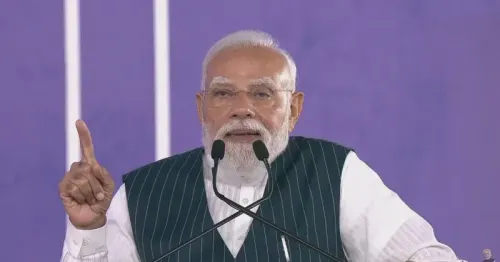
Addressing the gathering at the inauguration on Saturday, Modi said the confidence of the young workforce had left a strong impression on him, describing the employees as 'full of self-confidence.' He reiterated the government's ambition to build a complete semiconductor ecosystem — spanning chip design, fabrication, packaging, and testing — as part of India's broader advanced electronics manufacturing push.
Why This Matters
India's semiconductor ambitions have long been constrained by a near-total dependence on imports. The commissioning of a third OSAT facility marks a tangible step toward domestic capability, even as chip fabrication — the more capital-intensive and technologically demanding link in the chain — remains nascent. Notably, the workforce story carries its own significance: the inclusion of women from tribal and rural districts in high-skill manufacturing roles signals a potential shift in both industrial geography and gender participation in India's technology sector.
With global semiconductor supply chains under sustained pressure, India's push to develop indigenous capacity — backed by state incentives and mission-mode execution — is being watched closely by industry and policymakers alike. The next phase will test whether early production milestones can scale into globally competitive volumes.
Point of View
But the structural signal is more consequential: India now has three OSAT facilities in commercial production, and the workforce pipeline is drawing from districts — Giridih, Kathua — that rarely feature in India's technology narrative. The ITI-to-semiconductor pathway, if institutionalised, could be a genuine social mobility lever. The harder question is whether OSAT capacity alone moves India up the semiconductor value chain, or whether it remains an assembly and test outpost while design and fabrication stay offshore. Modi's 'complete ecosystem' rhetoric has a long road between aspiration and execution.
NationPress
5 Oct 2026
Frequently Asked Questions
What is the CG Semi OSAT facility in Sanand?
The CG Semi Outsourced Semiconductor Assembly and Test (OSAT) facility in Sanand, Gujarat is India's third semiconductor manufacturing plant to commence commercial production under the India Semiconductor Mission. Built at an investment of approximately ₹7,500 crore, it packages and tests semiconductor chips for automotive, industrial, and consumer electronics sectors.
Why did PM Modi highlight women workers at the Sanand plant?
During his visit on 5 July 2025, Modi interacted with employees and found that a large share of the workforce comprises women from tribal and remote communities who underwent specialised training to join semiconductor manufacturing. He shared the interactions on X, calling them 'one of the most special moments' of the visit and expressing pride in what he called 'Yuva Shakti.'
Which states do the CG Semi workers come from?
Workers at the Sanand facility hail from several states, including Jharkhand (Giridih district) and Jammu and Kashmir (Kathua district), among other remote and tribal regions of India. Many completed ITI courses before securing placement at the plant.
What is India's broader semiconductor goal?
India aims to build a complete semiconductor ecosystem covering chip design, fabrication, packaging, and testing as part of its advanced electronics manufacturing push. The India Semiconductor Mission is the policy framework driving this, with the Sanand OSAT plant being the third facility to go into production under it.
How does the Sanand plant affect India's semiconductor import dependence?
The CG Semi OSAT facility adds domestic capacity for chip packaging and testing, sectors where India previously had negligible presence. However, chip fabrication — the more complex upstream link — remains nascent, meaning India's dependence on imported wafers and finished chips has not yet materially changed.