Sanand semiconductor hub: India to produce 1.5 crore chips daily, says PM Modi
Synopsis
India's third semiconductor plant is now live at Sanand — and it is just the beginning. With a target of 1.5 crore chips daily, a scale-up to 500 crore chips annually, and four more facilities due in 2026, Gujarat is being positioned as Asia's next semiconductor cluster. The real question is whether India can move beyond packaging and testing to own the full wafer-to-chip value chain.
Key Takeaways
PM Modi inaugurated India's third semiconductor plant — the CG Semi OSAT facility — at Sanand, Gujarat on 5 July 2025 .
The plant has commenced commercial production and is projected to produce 20 crore chips annually in its initial phase, scaling to 500 crore chips per year .
Modi announced a target of 1.5 crore chips per day from the Sanand semiconductor cluster.
The facility is built with US-based Renesas Electronics and Thailand's Stars Microelectronics , focusing on semiconductor packaging and testing.
India is now the second-largest mobile phone manufacturer in the world, with electronics production up 7 to 11 times since 2014.
Four more semiconductor facilities are expected to begin operations in 2026 .
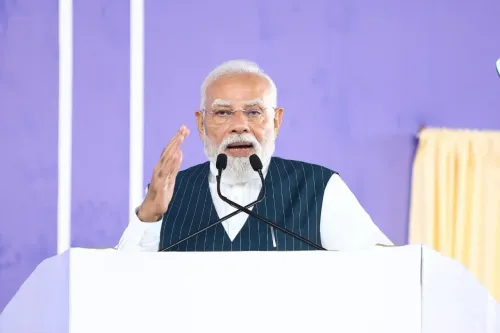
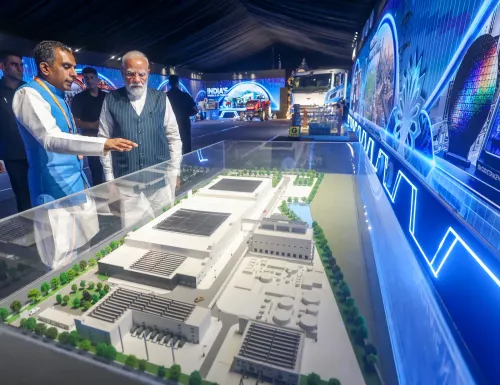
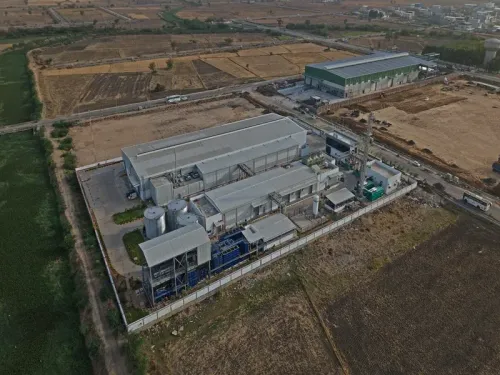
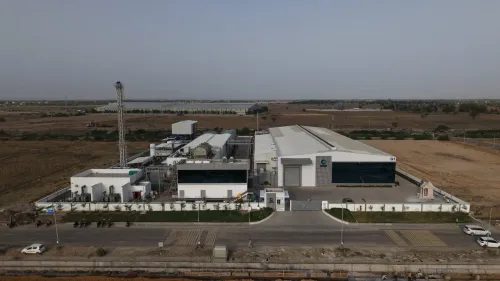
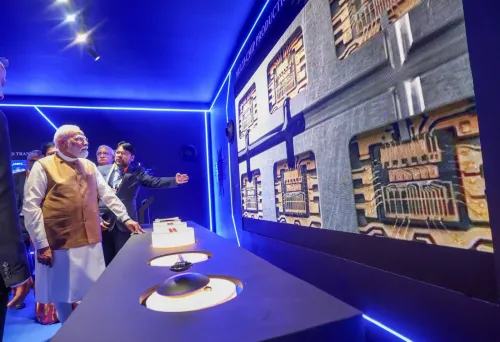
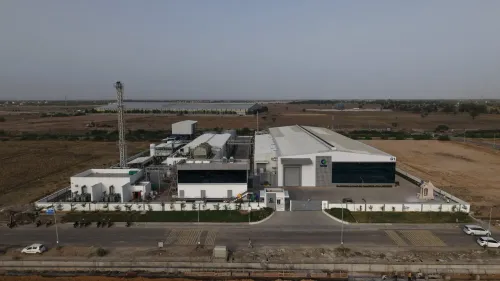
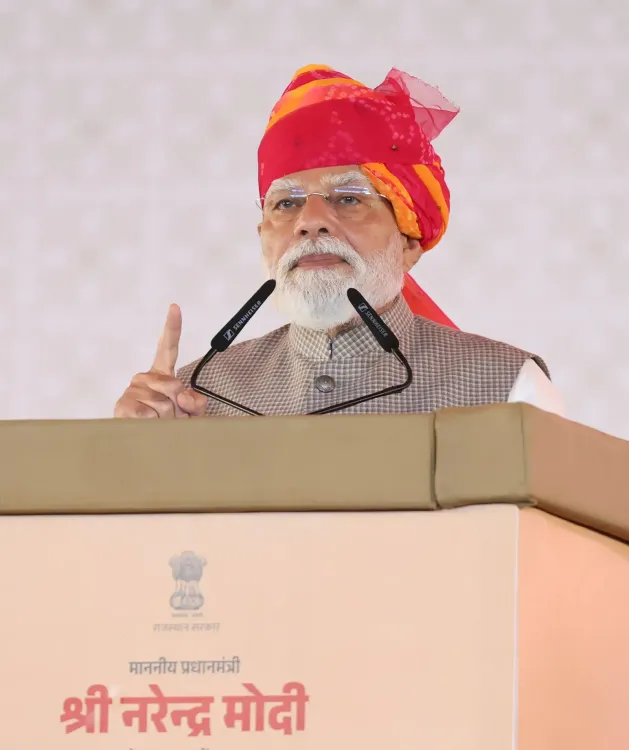
Prime Minister Narendra Modi on 5 July 2025 inaugurated India's third semiconductor plant at Sanand, Gujarat, announcing that the region will soon produce 1.5 crore (15 million) chips per day as it takes shape as a full-fledged semiconductor cluster. The inauguration of the CG Semi OSAT facility marks a significant leap in India's ambition to anchor itself in the global semiconductor supply chain.
What the CG Semi Plant Will Produce
The CG Semi OSAT facility has commenced commercial production of semiconductor packaging and testing. In its initial phase, the plant is expected to produce 20 crore chips annually, with a stated scale-up target of 500 crore chips per year. The facility is built in collaboration with US-based Renesas Electronics and Thailand's Stars Microelectronics, handling the packaging and testing of semiconductor wafers.
'This journey from foundation stone to commercial production is the result of the hard work of many youngsters,' Modi said, crediting industry partners, the Gujarat government, and the plant's workforce. He added, 'You are not going to stop here… I have faith that more than 1.5 crore chips will be produced from here every day.'
Sanand's Rise as a Semiconductor Cluster
Modi recalled earlier plans to allocate 300–400 acres of land near Gandhinagar and Sanand for semiconductor projects. With this plant now operational, a semiconductor cluster is formally taking shape in Gujarat. Future plans for the cluster include the arrival of additional production companies, new testing laboratories, and supporting industries for machinery and services.
Notably, four semiconductor facilities are set to begin operations in 2026, signalling an accelerated national rollout. Modi described the sector's development as part of a broader value-chain strategy: 'Our strategy is not limited to making finished products. We aim to develop the entire value chain of semiconductors and electronics within India' — covering design, manufacturing, packaging, and testing.
India's Electronics Manufacturing Surge
The Prime Minister placed the semiconductor push within a wider industrial transformation. Mobile phone manufacturing in India has grown 33 times since 2014, making India the second-largest mobile phone manufacturer in the world. Overall electronics production has increased 7 to 11 times during the same period.
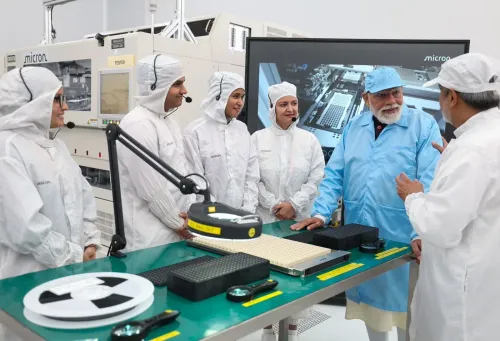
Modi highlighted the human story behind the numbers, pointing to young women from Jharkhand, Madhya Pradesh, Kerala, Chhattisgarh, and other states who received advanced training in Malaysia and are now manufacturing semiconductor chips in Gujarat. 'Their journey reflects India's rising confidence,' he said.
Political Context and Past Criticism
Modi argued that India's semiconductor ambitions could not be realised earlier due to what he described as a 'lack of will' in the previous UPA-led Central government. Critics have in the past questioned the pace of semiconductor policy implementation, though the commissioning of three plants within a short window has drawn broad industry acknowledgement.
Union Railway Minister Ashwini Vaishnaw and Gujarat Chief Minister Bhupendra Patel also addressed the event. The development is being positioned as a major reinforcement of the Make in India and Atmanirbhar Bharat initiatives.
What Comes Next
With the Design in India initiative now yielding operational plants, attention turns to whether India can sustain the momentum through consistent policy support, skilled workforce pipelines, and global partnerships. Industry observers note that packaging and testing — the current focus — is an entry point; moving up the value chain to wafer fabrication will be the more demanding test of India's semiconductor ambitions.
Point of View
But the harder metric is what kind of semiconductor work India is doing. Packaging and testing — the current focus at Sanand — sits at the lower end of the value chain; the margins and strategic leverage lie in wafer fabrication and chip design. India's mobile manufacturing boom, often cited as a parallel, was largely assembly-led and import-dependent for components. The semiconductor story will be meaningfully different only when India begins producing wafers domestically at scale. Until then, the cluster is a foundation, not a destination.
NationPress
3 Oct 2026
Frequently Asked Questions
What is the CG Semi OSAT facility inaugurated at Sanand?
The CG Semi OSAT facility is India's third semiconductor plant, located at Sanand in Gujarat, inaugurated by PM Modi on 5 July 2025. It handles semiconductor packaging and testing, built in collaboration with US-based Renesas Electronics and Thailand's Stars Microelectronics, with an initial production target of 20 crore chips annually scaling to 500 crore chips per year.
How many chips will India produce per day at Sanand?
PM Modi announced a target of 1.5 crore (15 million) chips per day from the Sanand semiconductor cluster. He expressed confidence the output would exceed even that figure as the cluster expands with additional facilities and supporting industries.
Which companies are involved in the CG Semi plant?
The CG Semi OSAT facility has been built in collaboration with US-based Renesas Electronics and Thailand's Stars Microelectronics. The plant focuses on packaging and testing of semiconductor wafers.
How many semiconductor plants does India have now, and how many are coming?
India now has three operational semiconductor plants, with the Sanand facility being the latest. Four more semiconductor facilities are expected to begin operations in 2026, according to PM Modi's address at the inauguration.
Why is the Sanand semiconductor cluster significant for India?
Sanand is emerging as India's first full-fledged semiconductor cluster, combining production, testing, and supporting industries in one region. It reinforces the Make in India and Atmanirbhar Bharat goals, and positions India as a growing player in the global semiconductor supply chain at a time when countries worldwide are racing to reduce dependence on a handful of chip-producing nations.