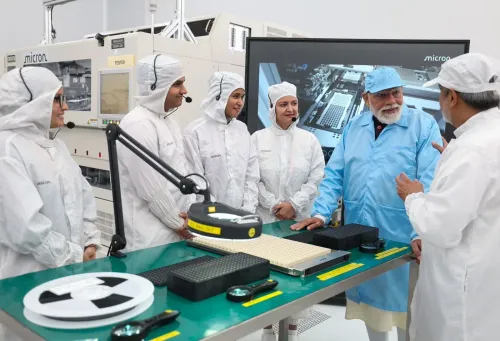
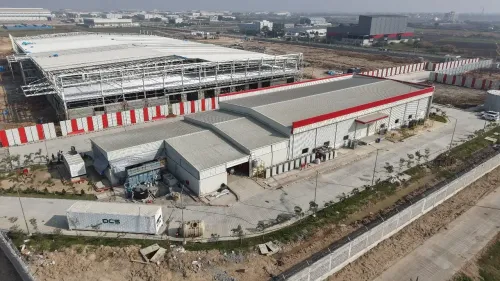
PM Modi launches CG Semi chip facility in Sanand, Gujarat's semiconductor hub grows
Synopsis
Sanand, once India's auto-manufacturing heartland, is fast becoming its first chip-packaging cluster. With CG Semi's ₹7,500 crore OSAT facility going live on 4 July — joining Micron and Kaynes already operational — and six projects worth USD 14.7 billion approved in Gujarat alone, India's semiconductor bet is moving from policy paper to production floor.
Key Takeaways
PM Modi will inaugurate CG Semi 's OSAT chip facility in Sanand, Gujarat on 4 July .
The plant involves a ₹7,500 crore investment by CG Power and Industrial Solutions , in partnership with Japan's Renesas Electronics and Thailand's Stars Microelectronics .
Combined output from two CG Semi plants is expected to reach 1.5 crore chips per day , with 5,000 jobs projected over five years.
Gujarat has six semiconductor projects approved, representing a total investment of USD 14.7 billion .
India Semiconductor Mission 2.0 has been announced, expanding the programme's scope across the full chip value chain.
Sanand is now home to facilities from Micron Technology , Kaynes Semicon , and CG Semi , cementing its status as India's first chip-packaging cluster.
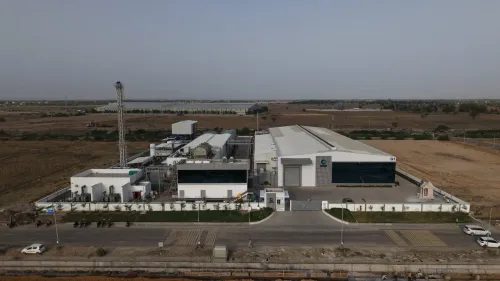
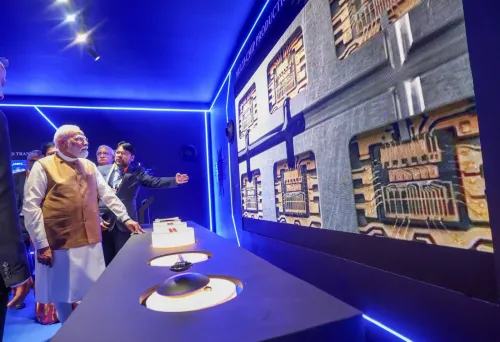
Prime Minister Narendra Modi is set to inaugurate commercial chip production at CG Semi's Outsourced Semiconductor Assembly and Test (OSAT) facility in Sanand, Gujarat, on 4 July, marking a significant milestone in India's accelerating semiconductor manufacturing drive. The plant, backed by a ₹7,500 crore investment and approved under the India Semiconductor Mission in February 2024, is poised to supply chips to customers both domestically and internationally.
What the CG Semi Facility Will Produce
CG Semi Pvt. Ltd., a subsidiary of CG Power and Industrial Solutions Limited, developed the Sanand plant in partnership with Japan's Renesas Electronics and Thailand's Stars Microelectronics. The facility will manufacture both legacy chip packages — QFN and QFP — and advanced formats including FC-BGA and FC-CSP, serving sectors such as automotive, electronics, industrial equipment, 5G infrastructure, and power applications.
A second CG Semi plant is currently under construction. Together, the two OSAT facilities are expected to produce a combined 1.5 crore chips per day once fully operational.
Jobs and Economic Impact
The facility currently employs more than 300 people and is projected to generate around 5,000 direct and indirect employment opportunities over the next five years. This positions the project as a meaningful contributor to India's broader goal of building domestic semiconductor talent and supply chains, not merely production capacity.
What PM Modi Said
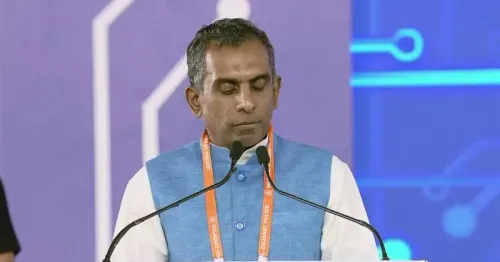
Modi described India's semiconductor drive as a defining phase for the country's technological trajectory. 'Sanand has made a place for itself on the world map, synonymous with cutting-edge innovation and growth,' he said, calling the CG Semi launch 'a momentous occasion for India's efforts in semiconductor manufacturing.'
Articulating the broader ambition, Modi said: 'Our objective is not limited to setting up just one factory, but to creating an entire ecosystem. India is now focusing on the entire semiconductor value chain, from design engineers to machine manufacturers and logistics. The announcement of India Semiconductor Mission 2.0 is a major step in this direction.' He added that growing manufacturing would increase domestic demand for materials and components, creating 'the biggest opportunity for domestic industries.'
Sanand's Rise as India's Chip-Packaging Cluster
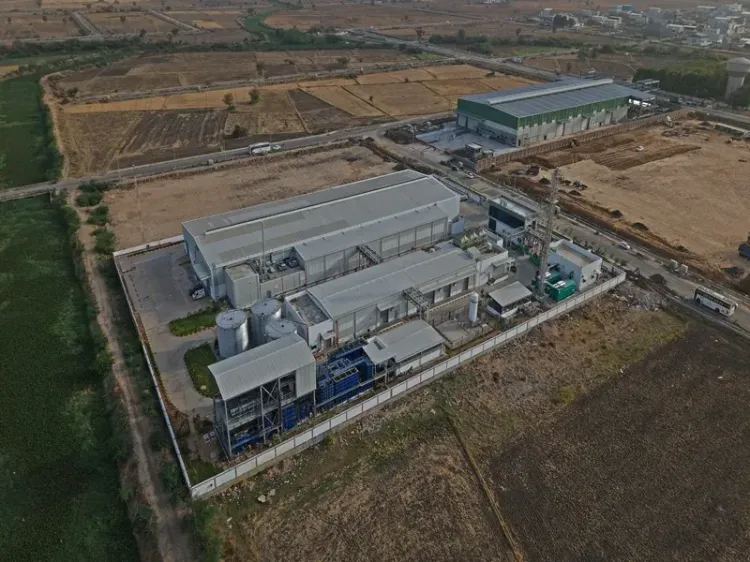
The CG Semi launch adds to a rapidly thickening semiconductor ecosystem in Sanand. Micron Technology's ATMP facility and Kaynes Semicon's OSAT plant have already commenced operations in the region. Once associated almost exclusively with automobile manufacturing, Sanand is increasingly recognised as India's first chip-packaging cluster and a node in the global semiconductor value chain.
Gujarat was the first Indian state to announce a dedicated semiconductor policy and has so far seen six projects approved under the India Semiconductor Mission — Tata Electronics, Micron Technology, CG Semi, Kaynes Semicon, Suchi Semicon, and Crystal Matrix — representing a combined investment of USD 14.7 billion. The state government attributes this momentum to dedicated policies, faster approvals, modern infrastructure, and business-friendly governance.
What Comes Next
With India Semiconductor Mission 2.0 now announced, the policy framework is expanding beyond assembly and testing toward design, logistics, and research. The Sanand cluster's trajectory will be closely watched as a test case for whether India can build a self-sustaining semiconductor value chain — or whether it remains anchored at the lower-complexity end of chip packaging. Industry observers note that the real measure of success will be how quickly domestic chip demand absorbs locally produced output.
Point of View
But the Sanand cluster remains concentrated at the assembly-and-test end of the value chain — the lower-complexity, lower-margin segment. The real strategic leap will come when domestic design and fabrication capacity catches up with packaging. Gujarat's six-project pipeline is impressive on paper, but USD 14.7 billion spread across OSAT and ATMP facilities does not yet constitute a full-stack semiconductor industry. The announcement of Mission 2.0 signals awareness of this gap; the question is whether policy ambition will be matched by the decade-long investment cycles that chip fabrication actually demands.
NationPress
2 Oct 2026
Frequently Asked Questions
What is the CG Semi OSAT facility in Sanand?
It is an Outsourced Semiconductor Assembly and Test (OSAT) plant developed by CG Semi Pvt. Ltd., a subsidiary of CG Power and Industrial Solutions Limited, with a ₹7,500 crore investment. The facility assembles, tests, and packages semiconductor chips for supply to customers in India and overseas, and was approved under the India Semiconductor Mission in February 2024.
When will PM Modi inaugurate the CG Semi chip facility?
PM Modi is scheduled to launch commercial chip production at the Sanand facility on 4 July. The inauguration marks the formal start of commercial operations at the plant.
How many chips will the facility produce and how many jobs will it create?
The CG Semi facility, along with a second plant currently under construction, is expected to produce a combined 1.5 crore chips per day once both units are operational. The project is projected to generate around 5,000 direct and indirect jobs over the next five years; the plant currently employs more than 300 people.
Which companies are partnering on the CG Semi project?
CG Semi Pvt. Ltd. developed the facility in partnership with Japan's Renesas Electronics and Thailand's Stars Microelectronics. CG Semi is a subsidiary of CG Power and Industrial Solutions Limited.
Why is Sanand significant for India's semiconductor ambitions?
Sanand is emerging as India's first chip-packaging cluster, hosting OSAT and ATMP facilities from Micron Technology, Kaynes Semicon, and now CG Semi. Gujarat has approved six semiconductor projects worth a combined USD 14.7 billion, and was the first Indian state to announce a dedicated semiconductor policy.