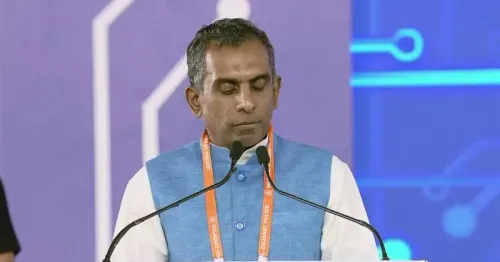
CM Bhupendra Patel Hails Gujarat's Semiconductor Push at Sanand
Synopsis
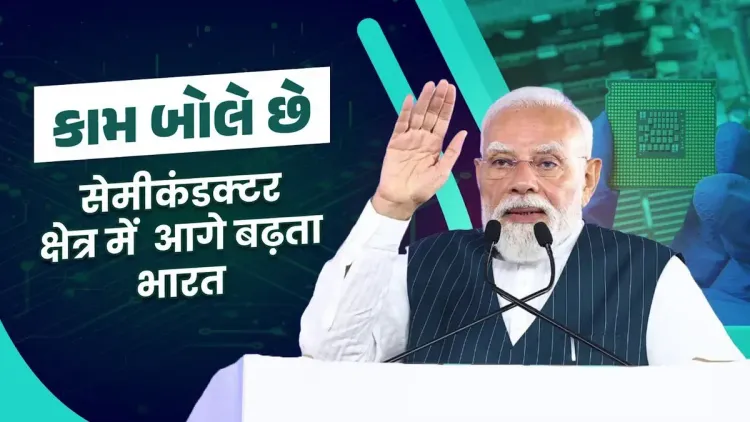
Gujarat CM Bhupendra Patel on 4 July 2026 saluted India's semiconductor drive at Sanand, linking PM Modi's leadership to the country's record-setting infrastructure and technology ambitions under the India Semiconductor Mission.
Key Takeaways
CM Bhupendra Patel posted on 4 July 2026 backing India's bid to become a global semiconductor hub, tagging #PMinSanand .
The post referenced the Statue of Unity — the world's tallest statue, inaugurated in Gujarat in 2018 — as a symbol of India's capacity to meet ambitious targets.
The India Semiconductor Mission , launched in 2021 , offers capital support of up to 50 per cent for chip-related manufacturing projects.
Sanand in Ahmedabad district is Gujarat's primary candidate for semiconductor assembly, testing, and packaging investment.
The hashtag #PMinSanand signals a visit or event by PM Narendra Modi in Sanand , likely tied to an industrial or technology announcement.
Gujarat competes alongside other Indian states for semiconductor units under the Atmanirbhar Bharat industrial framework.
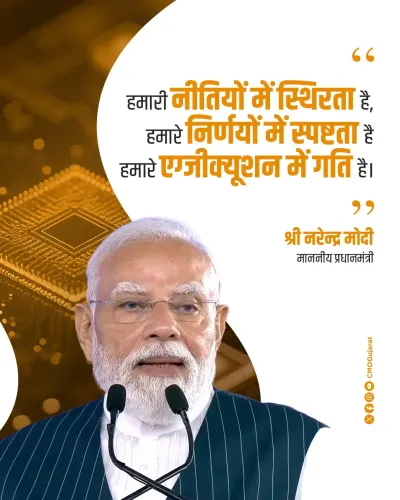
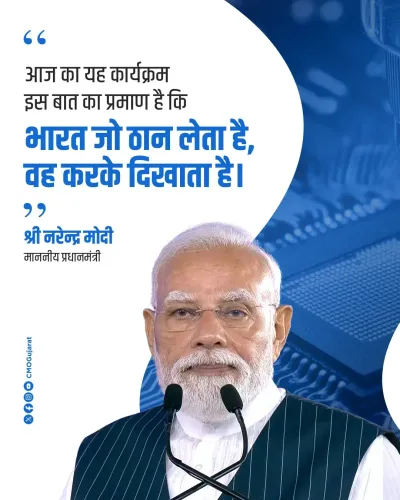
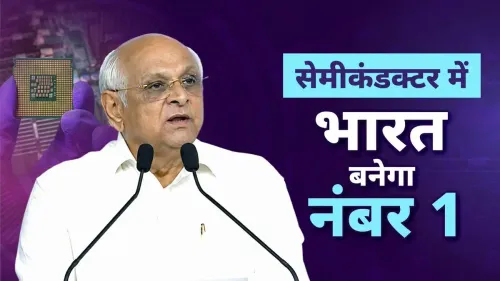
Gujarat Chief Minister Bhupendra Patel on Saturday, 4 July 2026, invoked the Statue of Unity and India's semiconductor ambitions in a post on X, framing both as proof that the country now sets — and clears — the highest bars under Prime Minister Narendra Modi. The post, tagged #SemiconHubBharat and #PMinSanand, signals a high-profile visit or event in Sanand, Gujarat's fast-growing industrial corridor.
Context
Writing in Gujarati, CM Patel stated: 'માનનીય મોદીજીના નેતૃત્વમાં ભારત ઊંચા લક્ષ્યો પાર પાડે છે' ('Under the honourable Modi-ji's leadership, India achieves high goals'). He cited two markers of national ambition: the world's tallest statue — a reference to the Statue of Unity inaugurated in Gujarat in 2018 — and India's drive to become a global semiconductor hub. 'The people of India will no longer aim low,' he wrote, tagging @narendramodi directly.
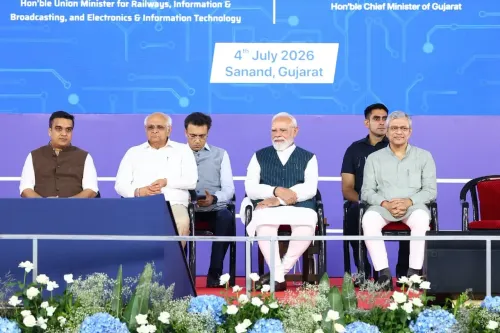
The hashtag #PMinSanand points to a visit by PM Modi to Sanand, the industrial township in Ahmedabad district that has become a focal point for electronics and semiconductor-related manufacturing in western India.
Policy Backdrop
India's push for domestic chip capacity dates to the India Semiconductor Mission (ISM), launched in 2021 under the broader Atmanirbhar Bharat framework. The policy offers capital support of up to 50 per cent for eligible semiconductor fabrication, assembly, testing, and packaging projects. The initiative was designed to reduce dependence on imported chips — a vulnerability exposed by global supply-chain disruptions — and to attract multinational firms looking to diversify away from concentrated production hubs in East Asia.
Gujarat has positioned itself as a frontrunner under this framework. Sanand, which already hosts large-scale automotive and electronics plants, has been earmarked for semiconductor-adjacent investment, with state and central governments offering complementary incentive packages to prospective investors.
Stakeholders and Impact
The primary beneficiaries of a semiconductor cluster in Sanand would be domestic electronics manufacturers seeking locally sourced components, global chip firms seeking a cost-competitive and incentive-rich base, and the broader workforce in Gujarat's industrial belt. Assembly, testing, and packaging units — the segments most likely to be established first — are labour-intensive and could generate significant direct employment.
For the BJP government in Gujarat, visible progress on semiconductor investments also carries political weight, reinforcing the state's identity as a model for industrial policy ahead of future electoral cycles. CM Patel's post, by linking the Statue of Unity's symbolic scale with a technology-sector milestone, deliberately connects infrastructure achievement with economic aspiration.
What's Next
Attention will now turn to any formal announcements — investment commitments, ground-breakings, or policy expansions — that may emerge from PM Modi's engagement in Sanand. Progress on units already approved under the India Semiconductor Mission and any new entrants to Gujarat's semiconductor ecosystem will be the concrete metrics to watch. Whether India can move beyond assembly and packaging toward full-scale fabrication remains the longer-term test of the ambition CM Patel has publicly championed.
Point of View
Making it part of a coordinated communication exercise rather than a standalone opinion. This pattern — Gujarat CM publicly aligning with PM Modi on flagship missions — has been consistent since Patel took office in 2021 and reinforces the state's positioning as the preferred proving ground for Atmanirbhar Bharat's industrial ambitions. The broader test, however, remains whether the assembly and packaging investments taking shape in Sanand can eventually anchor deeper fabrication capacity, the segment that would truly validate the 'global hub' claim.
NationPress
3 Oct 2026
Frequently Asked Questions
What is the India Semiconductor Mission?
The India Semiconductor Mission is a government programme launched in 2021 that offers financial incentives, including capital support of up to 50 per cent, to attract semiconductor fabrication, assembly, testing, and packaging investment into India as part of the Atmanirbhar Bharat initiative.
Why is Sanand important for India's semiconductor plans?
Sanand, located in Ahmedabad district, Gujarat, is an established industrial corridor that already hosts automotive and electronics manufacturers, making it an attractive location for semiconductor-adjacent facilities backed by both state and central government incentives.
What did Gujarat CM Bhupendra Patel say about semiconductors?
CM Patel wrote in Gujarati that under PM Modi's leadership India achieves high goals, citing the Statue of Unity and the push to become a global semiconductor hub as evidence that 'the people of India will no longer aim low.'
What is the Statue of Unity and why is it referenced here?
The Statue of Unity, inaugurated in Gujarat in 2018, is the world's tallest statue and is frequently cited by BJP leaders as a symbol of India's capacity to execute large-scale, record-setting projects under PM Modi's government.
What does #PMinSanand mean?
The hashtag #PMinSanand indicates a visit by Prime Minister Narendra Modi to Sanand, Gujarat, likely connected to an industrial or technology-sector announcement related to the semiconductor mission.