Rijiju Hails PM Modi's Inauguration of CG Semi OSAT Facility in Sanand
Synopsis
Prime Minister Narendra Modi inaugurated the CG Semi OSAT semiconductor facility in Sanand, Gujarat on 4 July 2026, a milestone under India's Rs 76,000 crore Semiconductor Mission aimed at building a domestic chip-making ecosystem under Atmanirbhar Bharat.
Key Takeaways
PM Narendra Modi inaugurated the CG Semi OSAT facility in Sanand, Gujarat on 4 July 2026 .
The facility handles semiconductor chip packaging, assembly, and testing — the final stages of chip production — reducing India's dependence on overseas OSAT capacity.
The project is backed by the India Semiconductor Mission , approved in December 2021 with an outlay of Rs 76,000 crore .
Sanand has emerged as Gujarat's — and one of India's — primary destinations for high-technology and electronics manufacturing investment.
The inauguration advances India's goal of building an end-to-end domestic semiconductor supply chain under the Atmanirbhar Bharat and Make in India frameworks.
Downstream sectors including consumer electronics, automotive, defence, and telecom are expected to benefit from shorter, more resilient domestic supply chains.
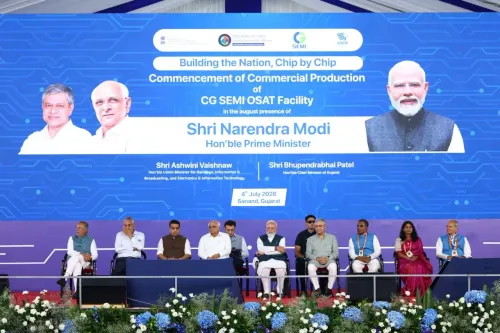
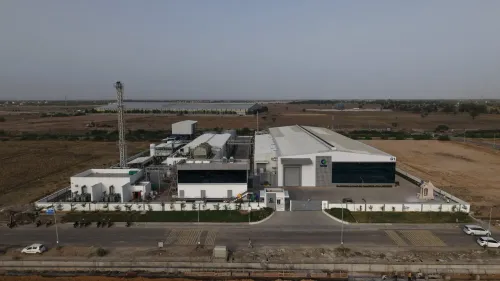
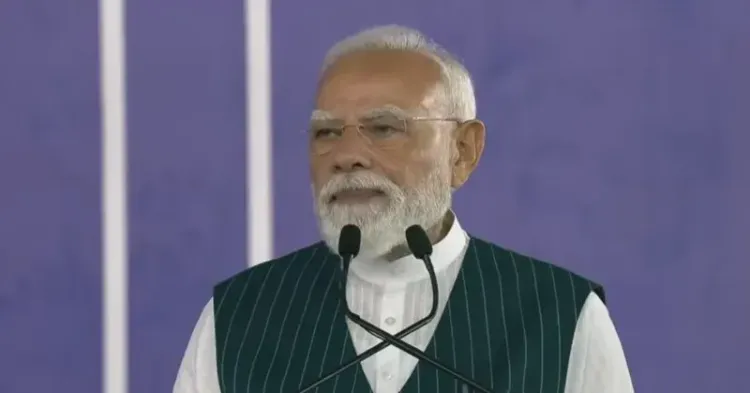
Union Parliamentary Affairs Minister Kiren Rijiju on Saturday, 4 July 2026 shared a live broadcast link as Prime Minister Narendra Modi inaugurated the CG Semi Outsourced Semiconductor Assembly and Test (OSAT) facility in Sanand, Gujarat, marking a significant milestone in India's semiconductor manufacturing drive.
Context
The inauguration of the CG Semi OSAT facility at Sanand adds a new node to India's rapidly expanding semiconductor ecosystem. Sanand has emerged as one of Gujarat's most active industrial corridors, already hosting major automobile and electronics manufacturers, and the addition of a semiconductor assembly and test unit deepens its strategic industrial profile.
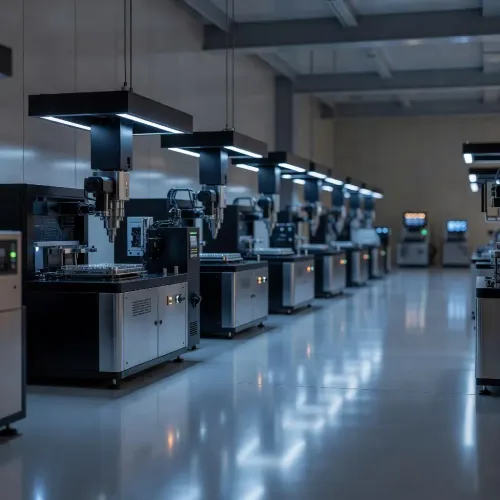
An OSAT facility handles the packaging, assembly, and testing of semiconductor chips — the final stages of the chip-making process — and is critical for building an end-to-end domestic supply chain. Until now, Indian electronics manufacturers have largely depended on overseas OSAT capacity, primarily in Taiwan, South Korea, and Malaysia.
Policy Backdrop
The facility's inauguration is a direct outcome of the India Semiconductor Mission (ISM), approved in December 2021 with a total outlay of Rs 76,000 crore to attract investments in semiconductor and display manufacturing. The mission operates under the broader Atmanirbhar Bharat and Make in India frameworks championed by the Modi government since 2014.
Under the ISM, the central government offers fiscal support covering a substantial share of project costs for approved semiconductor units. Gujarat has been among the most proactive states in facilitating land, utilities, and regulatory clearances to attract these capital-intensive projects, positioning itself as India's primary semiconductor investment destination.
The commissioning of an OSAT unit is seen as a foundational step: while full-scale chip fabrication (fab) requires far greater capital and technology depth, OSAT capacity allows India to participate meaningfully in global semiconductor supply chains in the near term and build indigenous technical expertise.
Stakeholders and Impact
The electronics and semiconductor manufacturing industry stands to gain immediate upstream support, as domestic OSAT capacity reduces dependence on foreign assembly and test services, shortening supply chains and lowering logistics costs. Consumer electronics, automotive electronics, defence, and telecom sectors — all heavy consumers of packaged chips — are among the primary downstream beneficiaries.
For Gujarat, the facility reinforces the state's reputation as a preferred destination for high-technology investment and is expected to generate skilled employment in precision manufacturing and quality engineering. Broader spillover effects in ancillary industries — specialised chemicals, precision tooling, logistics — are also anticipated for the Sanand region.
India's ambition to become a credible alternative to established Asian semiconductor hubs also carries geopolitical weight, as global supply-chain diversification pressures — accelerated by recent disruptions — push multinational chipmakers and their customers to seek new assembly and test partners.
What's Next
Attention will now turn to the commissioning timelines and ramp-up of capacity at the CG Semi facility, as well as the progress of other semiconductor projects approved under the India Semiconductor Mission. Analysts and industry stakeholders will also watch for any additional production-linked incentives or budgetary support in upcoming Union Budgets to sustain investment momentum.
With India's semiconductor ambitions firmly embedded in long-term industrial policy, the Sanand inauguration signals that the country's transition from a chip-consuming nation to a chip-making one — however gradual — is now moving from blueprint to brick and mortar.
Point of View
If incremental, proof-of-concept for the India Semiconductor Mission — converting a five-year-old policy commitment into operational infrastructure. Gujarat's repeated emergence as the preferred host for such flagship investments underscores the interplay between central incentives and state-level execution capacity. For the Modi government, the optics of a PM-inaugurated semiconductor facility carry strategic value at a moment when global supply-chain realignment is actively rewarding countries that can offer credible chip-making alternatives. The broader test, however, will be whether OSAT capacity can catalyse the deeper, costlier investment in front-end fabrication that would make India a full-spectrum semiconductor nation.
NationPress
3 Oct 2026
Frequently Asked Questions
What is the CG Semi OSAT facility inaugurated in Sanand?
The CG Semi OSAT (Outsourced Semiconductor Assembly and Test) facility in Sanand, Gujarat is a plant that handles the packaging, assembly, and testing of semiconductor chips — the final stages of chip manufacturing — and is one of the first such dedicated facilities to come up in India under the India Semiconductor Mission.
What is the India Semiconductor Mission?
The India Semiconductor Mission is a central government programme approved in December 2021 with an outlay of Rs 76,000 crore to attract investments in semiconductor and display manufacturing, aiming to build a domestic end-to-end chip-making ecosystem under Atmanirbhar Bharat.
Why is Sanand, Gujarat significant for semiconductor manufacturing?
Sanand is a well-developed industrial corridor in Gujarat with existing automobile and electronics manufacturing clusters, strong infrastructure, and proactive state-level support for land and regulatory clearances, making it a preferred destination for high-technology investments including semiconductors.
What does an OSAT facility do?
An OSAT (Outsourced Semiconductor Assembly and Test) facility performs the back-end stages of chip production — packaging the bare semiconductor die, assembling it into a usable component, and testing it for quality — before the chip is shipped to electronics manufacturers.
How does the CG Semi facility fit into India's Atmanirbhar Bharat goals?
The facility directly advances Atmanirbhar Bharat by reducing India's dependence on foreign semiconductor assembly and testing capacity, building domestic technical expertise, and strengthening supply-chain resilience for sectors like consumer electronics, automotive, defence, and telecom.