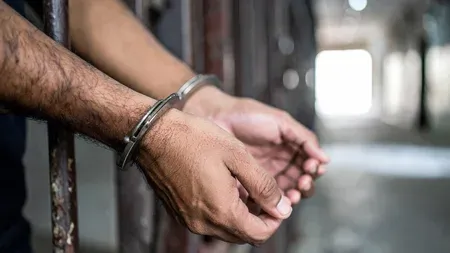
10 Bangladeshi nationals arrested in Raidighi, Bengal; pushback to begin

Synopsis
A family of 10 Bangladeshi nationals — who had lived illegally in India for six years and worked as bricklayers in Bengaluru — were tracked down to a relative's house in Raidighi after fleeing a wider crackdown in Karnataka. Their arrest is the latest in a string of detentions across multiple West Bengal districts since the state government changed, pointing to a sustained enforcement push along one of India's most porous borders.
Key Takeaways
10 Bangladeshi nationals — 5 men, 3 women, 2 children — arrested in Raidighi, South 24 Parganas on 20 August .
The family is from Ferozepur, Bangladesh and had been living illegally in India for six years , working as bricklayers in Bengaluru .
They fled Bengaluru after learning of arrests of other Bangladeshi migrants there, and hid at a relative's house in Nagendrapur for a week.
All 10 possessed Bangladeshi national ID cards , confirmed after police investigation.
They have been sent to a holding centre in Lakshmikantapur, Diamond Harbour ; pushback to Bangladesh is underway.
Similar arrests have been made across Murshidabad, Malda, North 24 Parganas, Cooch Behar , and Jalpaiguri since the change of government in West Bengal.
Police in South 24 Parganas district arrested 10 Bangladeshi nationals from Raidighi on Wednesday night, 20 August, after a tip-off led officers to a relative's house in Nagendrapur where the group had been sheltering for a week. All 10 have been sent to a holding centre in Lakshmikantapur in the Diamond Harbour area, and authorities have initiated the process to push them back to Bangladesh.
Who Was Arrested
The 10 individuals — comprising five men, three women, and two children — are members of the same family, according to police. They are originally from Ferozepur, Bangladesh, and had illegally entered India approximately six years ago, eventually settling in Bengaluru where they worked as bricklayers.
Why They Fled Bengaluru
The family's arrest followed a chain of events triggered by a broader crackdown on undocumented Bangladeshi migrants in Bengaluru. Fearing detention after learning of arrests of other Bangladeshi nationals in the city, the family fled and made their way to Raidighi roughly a week before their own arrest, taking refuge at a relative's residence in Nagendrapur.
How the Arrest Unfolded
Acting on a tip-off, officers from Raidighi police station conducted a late-night raid on Wednesday and detained all 10 at the relative's house. Police confirmed the group possessed Bangladeshi national ID cards. During interrogation, they acknowledged working as bricklayers in Bengaluru. A senior officer of Sundarban Police District said the family had hidden in Raidighi after 'fearing arrest by the police there,' and that following a physical examination, they were transferred to the holding centre in Lakshmikantapur.
Part of a Wider Crackdown
This arrest is part of a pattern of intensified enforcement since the change of government in West Bengal. Undocumented Bangladeshi nationals have been detained on multiple occasions across districts including Murshidabad, Malda, North 24 Parganas, South 24 Parganas, Cooch Behar, and Jalpaiguri. The Raidighi case adds to a growing list of such detentions, underscoring the scale of illegal cross-border movement through Bengal's porous border zones.
What Happens Next
The Raidighi police have formally initiated the pushback process, with the family set to be returned to Bangladesh at a designated time from the Lakshmikantapur holding centre. Authorities have not disclosed the specific date or border crossing point to be used.
Point of View
Exploiting kinship networks and border-adjacent geography. The real question is systemic: six years of undetected residency and formal employment as bricklayers in a major city points to significant gaps in local verification mechanisms, not just border security. A pushback resolves the immediate case but leaves the structural entry point — and the network of relatives and contacts that facilitated the move — entirely intact.
NationPress
20 Aug 2026
Frequently Asked Questions
Who were the 10 Bangladeshi nationals arrested in Raidighi?
They are members of a single family from Ferozepur, Bangladesh, comprising five men, three women, and two children. They had illegally entered India six years ago and were working as bricklayers in Bengaluru before fleeing to Raidighi in South 24 Parganas.
Why did the family flee Bengaluru?
The family left Bengaluru after learning that other Bangladeshi nationals were being arrested there in a police crackdown. Fearing detention, they travelled to Raidighi and took shelter at a relative's house in Nagendrapur.
What will happen to the arrested Bangladeshi nationals?
All 10 have been transferred to a holding centre in Lakshmikantapur in the Diamond Harbour area. The Raidighi police have initiated the formal pushback process to return them to Bangladesh, though the specific date and border point have not been disclosed.
How did police identify and arrest them?
Raidighi police received a tip-off about the family's presence and conducted a late-night raid on Wednesday at the relative's house in Nagendrapur. Their Bangladeshi national ID cards were recovered, and their identities were confirmed before the arrest was formalised.
Is this part of a larger crackdown on illegal Bangladeshi migrants in West Bengal?
Yes. Since the change of government in West Bengal, undocumented Bangladeshi nationals have been arrested on multiple occasions across districts including Murshidabad, Malda, North 24 Parganas, South 24 Parganas, Cooch Behar, and Jalpaiguri. The Raidighi case is the latest in this series of detentions.