J&K LG Manoj Sinha: Border villages are India's first, not last
Synopsis
J&K LG Manoj Sinha's visit to Kathua's border villages wasn't ceremonial — it came with data: incomes up 30%, migration halved, 2,000+ bunkers built, and 1,300 self-help groups active. The Centre's Vibrant Village Programme is repositioning frontier settlements from neglected periphery to the 'first chapter' of India's development story.
Key Takeaways
LG Manoj Sinha visited six border villages in Kathua district on 20 August under the Vibrant Village Programme Phase-2 (VVP-2) .
All 216 border villages of Kathua are now road-connected, fully electrified, and have telecom and TV access.
Rural incomes have risen by 30 per cent , migration to cities has halved , and unemployment is down to nearly half of earlier levels since 2019.
More than 2,000 individual and community bunkers have been built to protect border families.
Over 1,300 self-help groups under the National Rural Livelihood Mission benefit more than 12,000 families .
Sinha visited the Karol Krishna BOP and commended jawans for their service during Operation Sindoor .
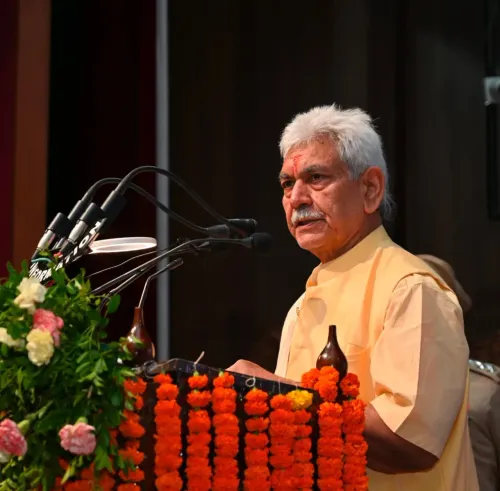
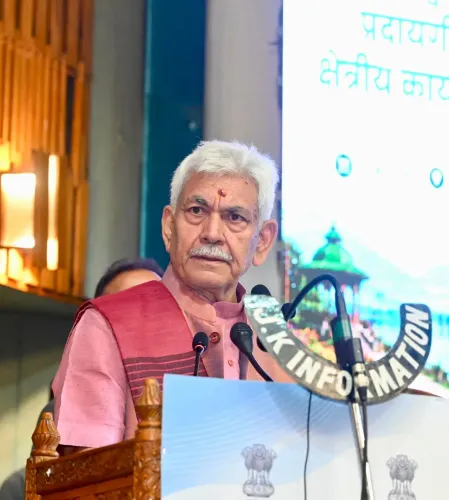
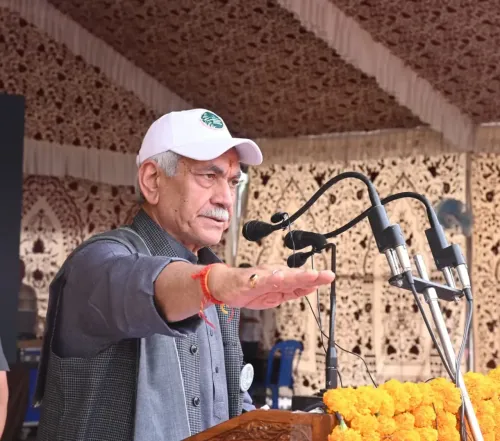
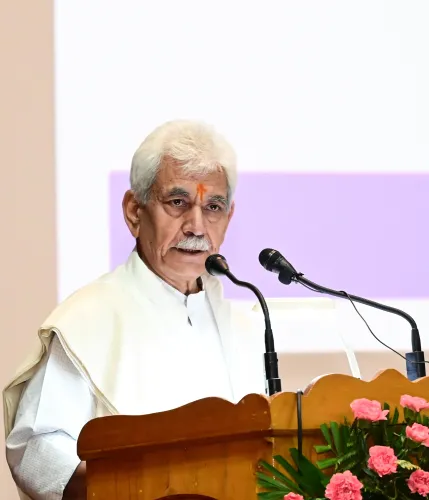
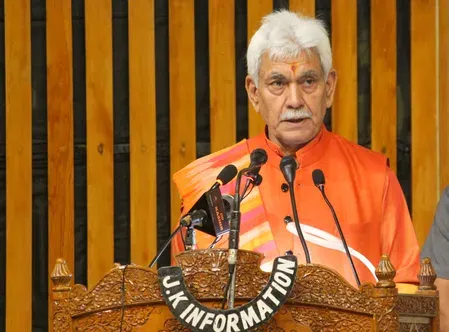
Jammu and Kashmir Lieutenant Governor Manoj Sinha on Thursday, 20 August declared that border villages are India's first, not its last — underscoring their centrality to national identity and development during a visit to Karol Krishna, a border village in Kathua district. The visit, which also covered Rathua, Gujjar Chak, Gajnal, Bobiya, and Kadiyala, came under the Vibrant Village Programme Phase-2 (VVP-2), the Centre's flagship scheme to integrate frontier settlements into the national mainstream.
Key Developments on the Ground
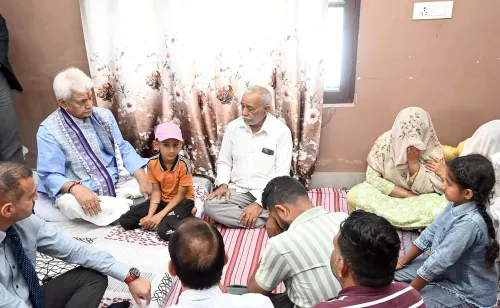
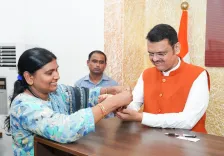
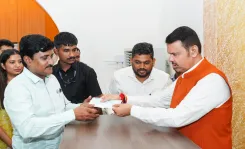
During the visit, LG Sinha distributed benefits under multiple government schemes to local families and handed over appointment letters to border-village youth — a tangible signal of the administration's focus on livelihood creation in strategically sensitive zones. He also visited the Karol Krishna Border Out Post (BOP), where he interacted with jawans and commended their role during Operation Sindoor, stressing the need for continuous vigilance against hostile attempts.
Progress Since 2019: The Numbers
Sinha cited a series of measurable gains since 2019 across 216 border villages of Kathua district. All villages are now connected by road, with full electrification, telecommunication, and television access reaching every household. According to the LG, poverty levels have declined sharply, migration to cities has halved, rural incomes have risen by 30 per cent, and unemployment has been reduced to nearly half of earlier levels. More than 2,000 individual and community bunkers have been constructed to protect border families from cross-border threats.
Women's Role in Border Economies
Sinha highlighted the contribution of women to the economic transformation of these villages. Under the National Rural Livelihood Mission, more than 1,300 self-help groups have been formed, benefiting over 12,000 families. Women are active in tailoring, embroidery, crafts, and small enterprises — strengthening both household incomes and village economies. The LG described this as a model of Nari Shakti driving frontier development.
Four Pillars for Border Village Development
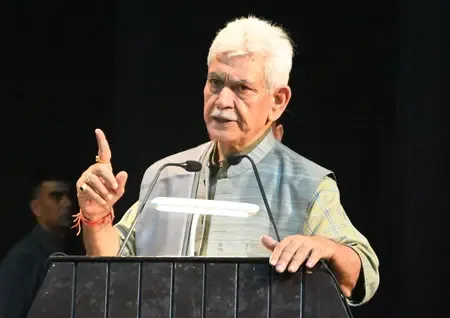
Addressing residents from the six villages, Sinha outlined four priorities: connecting villages to markets for self-reliance; empowering youth through agriculture, tourism, defence-support services, and crafts; expanding health access through telemedicine; and deepening security infrastructure through civil-military coordination. 'Development and security are not separate goals but two pillars of the same goal. Only a secure village can become a prosperous village, and only prosperous villages can build a self-reliant and developed India,' he said.
What the LG Said
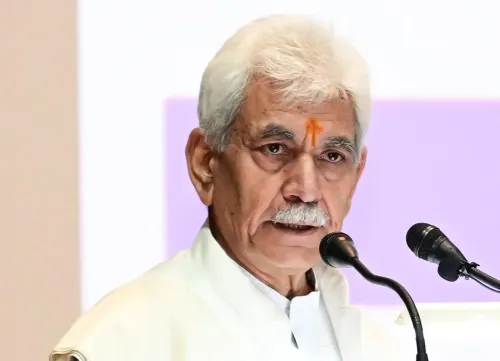
Sinha told residents that the word 'border' had for decades carried a sense of distance and neglect, but under Prime Minister Narendra Modi's leadership, these villages had entered the mainstream of development. 'When the story of India's development is written, its first chapter should begin in villages like Karol Krishna, Rathua, Gajnal, Bobiya, Kadiyala and Gujjar Chak, where India's border breathes and the tricolour flutters,' he said. He called on residents to take ownership of their future: 'Your ancestors held this soil through difficulties for decades after Independence. Now it is your responsibility to take it forward. Today resources are in your hands, and if there is any shortfall, I promise it will be addressed immediately.'
The visit signals an intensifying administrative push to convert border settlements from perceived peripheries into development anchors — a framing that carries both political and strategic weight as India's security calculus along the Jammu frontier remains elevated.
Point of View
Not last' — is a deliberate rhetorical inversion of decades of frontier neglect, and the statistics cited deserve scrutiny as much as celebration. A 30% income rise and halved migration are significant claims, but the absence of independent verification leaves room for scepticism about baseline methodology. More telling is the bunker-building figure: 2,000-plus protective structures speak to a security environment that development alone cannot resolve. The Vibrant Village Programme is sound policy, but its durability depends on whether gains persist without sustained administrative attention — and whether border youth stay once the appointment letters are cashed.
NationPress
20 Aug 2026
Frequently Asked Questions
What is the Vibrant Village Programme Phase-2 (VVP-2)?
The Vibrant Village Programme Phase-2 is a Central government initiative to develop strategically located border villages by improving connectivity, livelihoods, and infrastructure. It covers villages like Karol Krishna, Rathua, Gujjar Chak, Gajnal, Bobiya, and Kadiyala in Kathua district of Jammu and Kashmir.
What progress has been made in Kathua's border villages since 2019?
According to LG Manoj Sinha, all 216 border villages in Kathua district are now road-connected with full electrification and telecom access. Rural incomes have risen 30%, migration to cities has halved, unemployment has nearly halved, and over 2,000 bunkers have been built for family protection.
What is Operation Sindoor, which LG Sinha referenced during his visit?
Operation Sindoor is a security operation in which jawans at the Karol Krishna Border Out Post participated. LG Sinha visited the BOP and commended the jawans for their service and commitment during the operation, while stressing the need for continuous vigilance.
How are women contributing to border village development in Kathua?
Under the National Rural Livelihood Mission, more than 1,300 self-help groups have been formed in the border villages, benefiting over 12,000 families. Women are engaged in tailoring, embroidery, crafts, and small enterprises, strengthening household and village economies.
What did LG Sinha promise to residents of Karol Krishna and neighbouring villages?
LG Sinha assured residents that any shortfall in resources or facilities would be addressed immediately. He also outlined four development priorities: market linkages, youth empowerment, telemedicine, and stronger civil-military security coordination.