CM Fadnavis brings Kashi's Ganga Aarti to Gadchiroli's Wainganga
Synopsis
Chief Minister Devendra Fadnavis's vision brought a Varanasi-style Mahaganga Pooja-Aarti to Markanda Dev in Gadchiroli on Shravani Somwar, celebrating the Wainganga river's sacred northward flow and spotlighting Vidarbha's own Kashi.
Key Takeaways
The Mahaganga Pooja-Aarti was held at Markanda Dev, Gadchiroli on Shravani Somwar, 20 August 2026 .
The event was organised on the initiative of Chief Minister Devendra Fadnavis , modelled on the Ganga Aarti traditions of Varanasi and Haridwar .
Markanda Dev is known as Vidarbhachi Kashi due to the rare northward ( uttarwahini ) flow of the Wainganga river at the site.
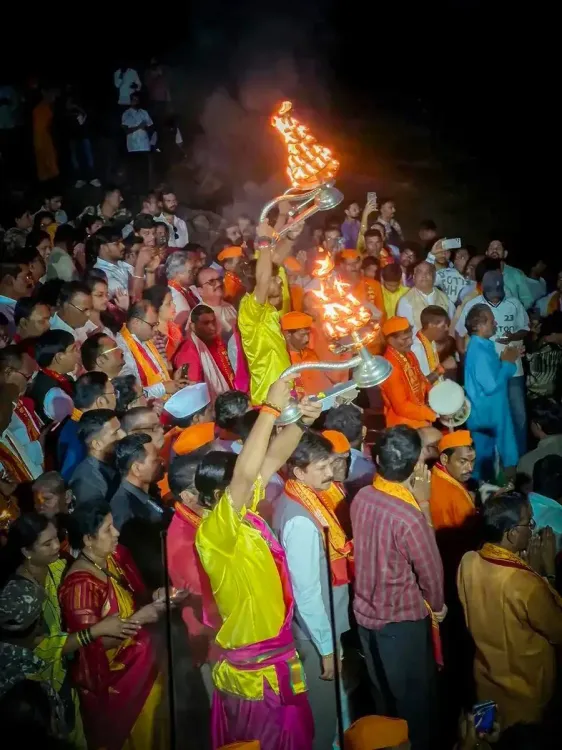
Full Kashi-style ceremonial rites — vidhivat pooja and Mahaganga Aarti — were performed, drawing hundreds of devotees.
The event repositions Gadchiroli , historically known for its Naxal-affected interior, as a significant pilgrimage destination in Vidarbha.
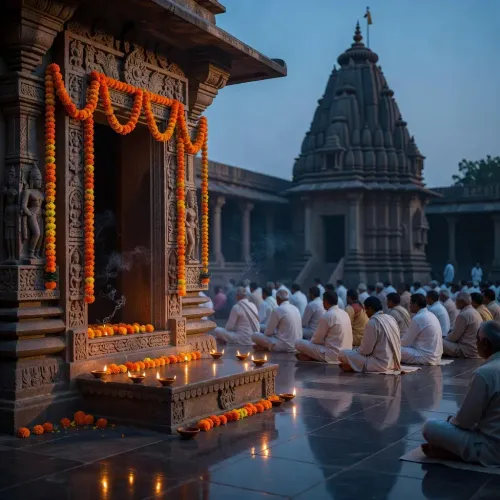
On the sacred occasion of Shravani Somwar, the banks of the Wainganga river at Markanda Dev, Gadchiroli came alive with the glow of oil lamps and the chant of vedic hymns — a scene that, until now, belonged only to Varanasi and Haridwar. The Chief Minister's Office of Maharashtra announced that a grand 'Mahaganga Pooja-Aarti' was organised at the site on the initiative of Chief Minister Devendra Fadnavis, bringing Kashi's centuries-old ritual tradition to Vidarbha's own sacred heartland.
Vidarbha's Kashi steps into the spotlight
Markanda Dev is a revered temple site in Gadchiroli district, long known locally as Vidarbhachi Kashi — 'Vidarbha's Kashi' — owing to the rare northward flow of the Wainganga river at that precise stretch. In Hindu pilgrimage tradition, a river flowing northward (uttarwahini) is considered especially auspicious, a quality that defines Varanasi's sanctity on the Ganga. That same geography has given Markanda Dev its sacred identity for generations, even as it remained largely unknown beyond the region.
The ritual on Thursday, 20 August followed the full ceremonial protocol of Kashi — vidhivat pooja (worship performed with prescribed rites) followed by the Mahaganga Aarti, with hundreds of devotees gathering on the riverbank. The CMO's post captured the atmosphere in three words: bhakti, shraddha aani adhyatmacha sangam — 'a confluence of devotion, faith, and spirituality.'
Fadnavis's concept: regional sacred geography on a national stage
Chief Minister Devendra Fadnavis, who represents Nagpur — itself a Vidarbha city — has positioned the event as a deliberate effort to draw a cultural and spiritual equivalence between Gadchiroli's riverine heritage and India's most celebrated pilgrimage corridors. State governments across India have periodically elevated regional sacred sites by staging large-scale rituals modelled on Varanasi's iconic Ganga Aarti, a strategy that simultaneously serves devotional, cultural, and tourism-promotion goals.
Gadchiroli, historically in the news for its Naxal-affected interior, rarely features in cultural or tourism conversations at the state level. An event of this scale — framed explicitly on the Varanasi-Haridwar template and backed by the Chief Minister's personal vision — marks a deliberate repositioning of the district's identity.
The Shravani Somwar connection
The timing is significant. Shravani Somwar — Mondays falling in the Hindu month of Shravan — are among the most auspicious days in the Shaivite calendar, when devotees throng Shiva temples and riverbanks across Maharashtra and beyond. Anchoring the inaugural Mahaganga Aarti to this occasion maximises both footfall and symbolic resonance, linking the new ritual to an already deeply observed tradition.
Whether this becomes an annual fixture on the state's cultural calendar — and whether it is accompanied by infrastructure investment in Gadchiroli's pilgrimage circuit — will determine how far the vision travels beyond a single auspicious evening on the Wainganga.
Point of View
Chief Minister Fadnavis is executing a well-worn but effective playbook: elevate a regional sacred site to national-pilgrimage stature, simultaneously deepening cultural identity politics and opening a tourism-development narrative. The choice of Gadchiroli — a district the state has long struggled to integrate into its mainstream development story — is pointed. If the ritual becomes an annual state-backed event, it could anchor a broader pilgrimage-economy push for eastern Vidarbha, though critics may question whether ceremonial spectacle precedes the infrastructure investment the region actually needs.
NationPress
20 Aug 2026
Frequently Asked Questions
What is Markanda Dev and why is it called Vidarbha's Kashi?
Markanda Dev is a temple site in Gadchiroli district, Maharashtra. It is called Vidarbha's Kashi because the Wainganga river flows northward ( uttarwahini ) at that spot — the same rare quality that gives Varanasi its sacred status on the Ganga.
What is the Mahaganga Aarti held at Markanda Dev?
The Mahaganga Aarti is a large-scale river worship ritual modelled on the iconic Ganga Aarti of Varanasi and Haridwar, organised on the banks of the Wainganga river at Markanda Dev on the initiative of Chief Minister Devendra Fadnavis.
Who organised the Mahaganga Aarti at Gadchiroli?
The event was organised on the concept and initiative of Maharashtra Chief Minister Devendra Fadnavis, as announced by the Chief Minister's Office of Maharashtra.
What is Shravani Somwar and why was the event held on this day?
Shravani Somwar refers to Mondays in the Hindu month of Shravan, considered highly auspicious in the Shaivite tradition. The Mahaganga Aarti was anchored to this occasion to maximise devotional significance and participation.
Is Gadchiroli a known pilgrimage destination in Maharashtra?
Gadchiroli has not traditionally been prominent on Maharashtra's pilgrimage circuit, though Markanda Dev holds local religious significance. This event represents a deliberate state-level effort to raise the site's profile.