J&K L-G Manoj Sinha: Panchayats must lead digital governance and innovation
Synopsis
J&K L-G Manoj Sinha used a national panchayat workshop in Srinagar to reveal a striking data point: digital transactions in J&K leapt from 2 crore in 2016-18 to over 50 crore in just the first half of 2023. He also proposed Village Innovation Labs in every panchayat — a grassroots R&D idea that, if adopted nationally, could redefine how India's 2.5 lakh-plus panchayats deliver public services.
Key Takeaways
L-G Manoj Sinha addressed the 'Seva Se Samriddhi' workshop at SKICC, Srinagar on 23 June , organised by the Union Ministry of Panchayati Raj.
More than 1,100 government services in J&K have been moved online within three years, making it one of India's leading regions in digital service delivery.
Digital transactions in J&K surged from 2 crore (2016–18) to over 50 crore in the first six months of 2023 .
Out of 4,290 Panchayats , 4,211 — more than 98% — are now digitally connected; remaining 79 are being covered under the Vibrant Villages Programme .
L-G Sinha proposed Village Innovation Labs in every panchayat to generate grassroots solutions and opportunities for local youth and farmers.
More than 15,000 Common Service Centres (CSCs) are operational across Jammu and Kashmir.
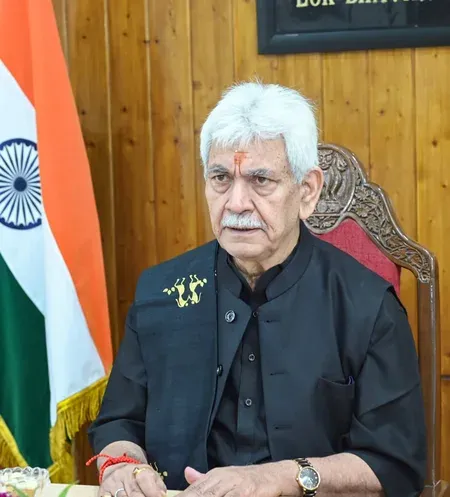
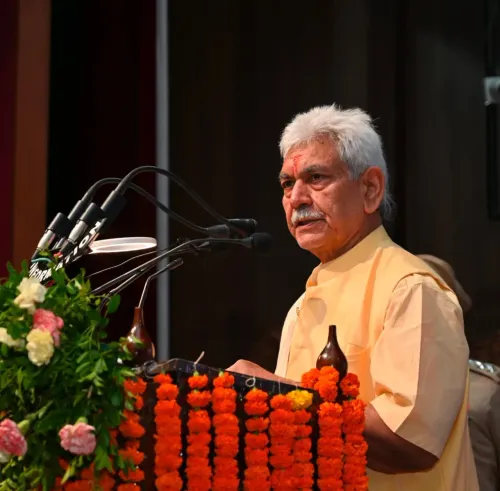
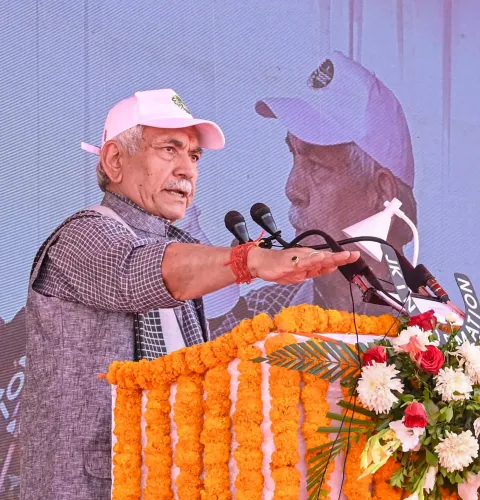
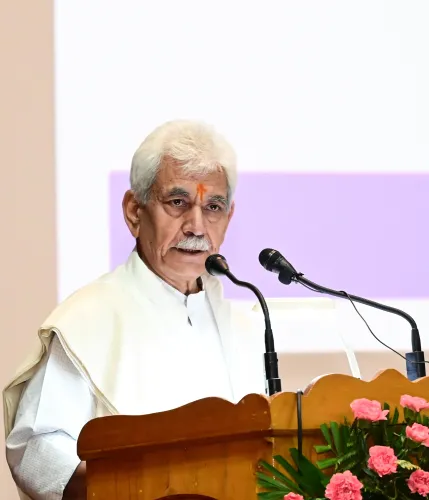
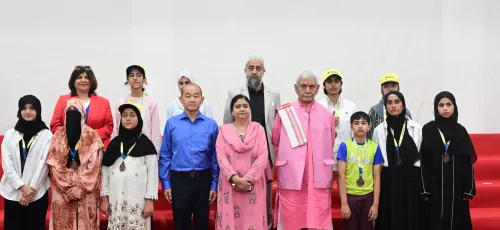
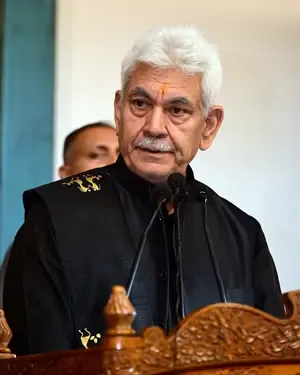
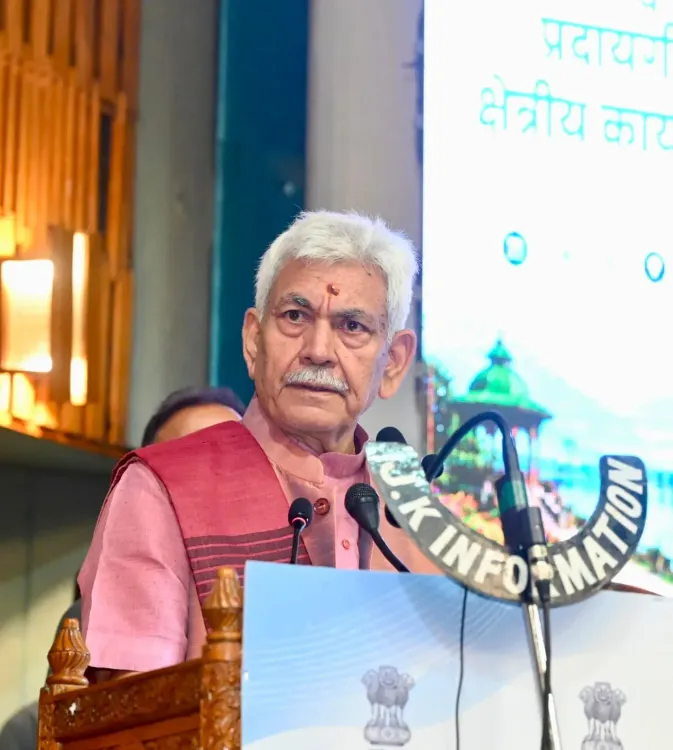
Jammu and Kashmir Lieutenant Governor Manoj Sinha on Tuesday, 23 June called on Panchayati Raj Institutions (PRIs) across the country to evolve into centres of innovation, digital governance, and public trust, asserting that empowered grassroots bodies are indispensable to realising Prime Minister Narendra Modi's vision of a 'Viksit Bharat' (Developed India). He was speaking at the 'Seva Se Samriddhi: Regional Workshop on Panchayat-Led Service Delivery' held at the Sher-e-Kashmir International Convention Centre (SKICC) in Srinagar, organised by the Union Ministry of Panchayati Raj.
Key Remarks at the Workshop
Addressing delegates and panchayat representatives from across India, L-G Sinha said PRIs must move beyond their conventional role as administrative units. 'I believe Panchayat-led service delivery is one of the most important components of the governance system and a subject very close to my heart,' he said. He reiterated the Union Territory administration's commitment to strengthening local self-governance institutions, describing seamless service delivery as a crucial pillar of governance. He also welcomed the National Panchayat Governance Awards, calling such recognitions vital for encouraging innovation and accountability at the grassroots level.
J&K's Digital Transformation: From 154 Trucks to 50 Crore Transactions
L-G Sinha drew a striking contrast between J&K's governance past and present. Recalling his arrival in 2020, he said he witnessed nearly 154 trucks transporting government files between Srinagar and Jammu under the legacy Darbar Move system. 'I was surprised that in the digital age, the Union Territory administration was still dependent on the physical movement of files,' he said. The administration subsequently accelerated digitisation, bringing more than 1,100 government services online within three years. Digital transactions surged from nearly 2 crore between 2016 and 2018 to more than 50 crore in the first six months of 2023 alone — a figure that underscores the scale of the shift.
Panchayat Connectivity and Infrastructure Milestones
The Lieutenant Governor highlighted that out of 4,290 Panchayats in Jammu and Kashmir, 4,211 — representing more than 98 per cent — have been connected through digital networks. The remaining 79 Panchayats, located in remote and border areas, are being covered under the Prime Minister's Vibrant Villages Programme. More than 15,000 Common Service Centres (CSCs) are now operational across the Union Territory. He also noted that district plans were prepared jointly with elected representatives, with development priorities identified at the grassroots level and implemented accordingly.
Call for Village Innovation Labs and National Replication of Best Practices
L-G Sinha proposed establishing Village Innovation Labs in panchayats across India to nurture local talent and generate ground-up solutions. 'Can we create innovation labs in every Panchayat? Such platforms can provide opportunities to local youth, farmers, educational institutions, scientists and social organisations to develop practical solutions for local challenges,' he said. He also called for a structured framework to replicate successful governance models from one region across the country, arguing that shared best practices could strengthen both governance quality and national unity. Citizen outreach initiatives such as 'Back to Village', he added, had already strengthened direct interaction between the J&K administration and the public.
Broader Vision: Governance Rooted in Participation and Trust
Invoking Mahatma Gandhi's vision of self-reliant villages, L-G Sinha said the Panchayati Raj system is deeply embedded in India's democratic traditions and civilisational heritage. 'A developed India cannot be imagined without developed villages. Empowering Panchayats and strengthening rural governance is essential for achieving national development goals,' he said. He added that governance must be rooted in people's participation, trust, and accountability, and that 'future-ready panchayats must ensure easy access to digital services, participatory decision-making and greater accountability.' The workshop, he said, offered a timely opportunity to chart the path ahead for panchayat-led governance across the country.
Point of View
But the harder question is whether J&K's digital gains are structurally durable or dependent on Union Territory-level administrative control that a fully restored elected government may not replicate. The proposal for Village Innovation Labs is imaginative, but without dedicated funding lines and a national rollout framework, it risks remaining a workshop talking point. What is notable — and underreported — is that J&K's panchayat connectivity rate of 98% now outpaces several larger states, suggesting that direct Centre-UT administration, whatever its political costs, has delivered measurable governance dividends at the local level.
NationPress
22 Sept 2026
Frequently Asked Questions
What was the 'Seva Se Samriddhi' workshop about?
The 'Seva Se Samriddhi: Regional Workshop on Panchayat-Led Service Delivery' was a national-level event held at SKICC in Srinagar on 23 June, organised by the Union Ministry of Panchayati Raj. It brought together delegates and panchayat representatives from across India to discuss strengthening grassroots governance and digital service delivery.
What digital milestones has Jammu and Kashmir achieved in panchayat governance?
More than 1,100 government services have been moved online in J&K within three years. Digital transactions rose from around 2 crore between 2016 and 2018 to over 50 crore in just the first half of 2023, and 4,211 of 4,290 panchayats — over 98% — are now connected through digital networks.
What are Village Innovation Labs and why did L-G Sinha propose them?
Village Innovation Labs are proposed grassroots platforms within panchayats designed to help local youth, farmers, scientists, and social organisations develop practical solutions for community challenges. L-G Sinha proposed establishing them in every panchayat across India to nurture local talent and drive bottom-up innovation in public service delivery.
What is the Vibrant Villages Programme and how does it relate to J&K's panchayats?
The Prime Minister's Vibrant Villages Programme targets remote and border villages with infrastructure and connectivity. In J&K, it is being used to extend digital network coverage to the remaining 79 panchayats — located in border and remote areas — that are not yet connected.
How has J&K's panchayat system changed since 2020?
L-G Sinha said J&K previously lacked a fully functional three-tier Panchayati Raj system. Since 2020, significant efforts have been made to transfer funds, functions, and functionaries to local bodies, shift governance online, and introduce citizen outreach programmes like 'Back to Village' to align governance with public aspirations.