CM Mohan Yadav Hails India's Third Semiconductor Plant Launch

Synopsis
Madhya Pradesh CM Dr. Mohan Yadav marked a national milestone on 4 July 2026, applauding the launch of commercial chip packaging at India's third semiconductor plant — the fruition of a five-year pledge under PM Modi's India Semiconductor Mission backed by ₹76,000 crore.
Key Takeaways
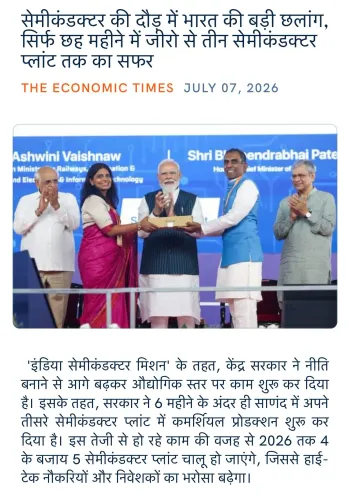
Mohan Yadav posted on 4 July 2026 hailing commercial chip packaging production at India's third semiconductor plant .
He credited the milestone to PM Narendra Modi's five-year-old resolve to make India a semiconductor hub.
The India Semiconductor Mission was approved by the Union Cabinet in December 2021 with an outlay of ₹76,000 crore .
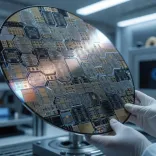
The mission covers fabrication, assembly, testing, and packaging to reduce India's chip import dependence.
The announcement reflects the Atmanirbhar Bharat drive to build self-reliance in critical technologies.
Future focus will be on production ramp-up at commissioned units and progress on remaining approved plants.
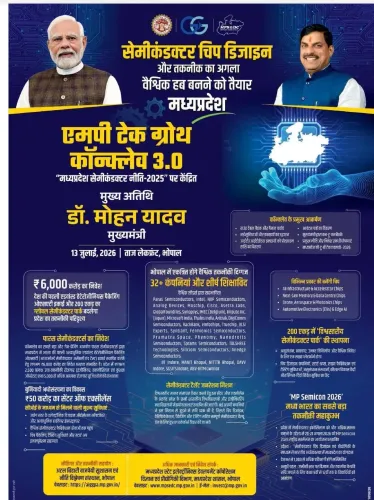
Madhya Pradesh Chief Minister Dr. Mohan Yadav on Saturday, 4 July 2026, lauded the commencement of commercial chip packaging production at India's third semiconductor plant, citing it as proof of the nation's resolve to become a global semiconductor hub — a goal he attributed to the vision of Prime Minister Narendra Modi.
Context
In his post, Dr. Yadav wrote: 'Bharat jo thaan leta hai, wo karke dikhata hai' ['When India resolves to do something, it delivers']. He noted that five years ago India had pledged to transform itself into a semiconductor hub, and that commercial chip packaging production is now beginning at the country's third such plant — a milestone he credited to Prime Minister Narendra Modi.
The statement underscores the political weight that BJP leaders are attaching to semiconductor milestones as visible proof of the Atmanirbhar Bharat agenda translating into industrial reality.
Policy Backdrop
The foundation for this milestone was laid in December 2021, when the Union Cabinet approved the India Semiconductor Mission (ISM) with a total outlay of ₹76,000 crore. The mission was designed to build a full-spectrum domestic ecosystem — covering fabrication, assembly, testing, and packaging — to reduce India's near-total dependence on imported chips.
The policy combines central fiscal incentives with state-level infrastructure support, positioning India as an alternative node in global semiconductor supply chains that have been disrupted by geopolitical tensions and pandemic-era shortages. The ISM sits within the broader Atmanirbhar Bharat framework, which targets self-reliance in critical and emerging technologies.
Stakeholders and Impact
The most immediate beneficiaries of an expanding domestic semiconductor manufacturing base are electronics manufacturers across India, who currently import the vast majority of the chips used in consumer electronics, automotive systems, and industrial equipment. A domestic packaging and assembly capacity reduces lead times and foreign-exchange outflow on one of India's largest import categories.
For the semiconductor workforce, each new plant represents direct employment in high-skill roles as well as downstream opportunities in component supply chains. State governments — including Madhya Pradesh — have been competing to attract semiconductor investments by offering land, power, and water infrastructure incentives, making such announcements politically significant at the regional level as well.
What's Next
Attention will now turn to the operational ramp-up of the newly commissioned unit and to progress updates on remaining approved semiconductor facilities still in various stages of construction or commissioning. Upcoming state and central budget sessions may reveal fresh land allotments, power commitments, or enhanced fiscal incentives aimed at accelerating the next wave of investment.
As India's semiconductor programme matures from policy commitment to physical production, the benchmark shifts from approvals and ground-breakings to actual chip output volumes — a metric that will increasingly define the credibility of the India Semiconductor Mission on the global stage.
Point of View
With states competing to be seen as active partners rather than passive recipients of central policy.
NationPress
3 Oct 2026
Frequently Asked Questions
What is the India Semiconductor Mission?
The India Semiconductor Mission is a central government initiative approved in December 2021 with an outlay of ₹76,000 crore to build a domestic ecosystem for semiconductor fabrication, assembly, testing, and packaging, reducing India's dependence on chip imports.
What did CM Mohan Yadav say about the semiconductor plant?
CM Dr. Mohan Yadav said that five years after India resolved to become a semiconductor hub, commercial chip packaging production has begun at the country's third semiconductor plant, crediting the achievement to PM Narendra Modi's vision.
Which is India's third semiconductor plant?
The post by CM Dr. Mohan Yadav refers to India's third semiconductor plant beginning commercial chip packaging production as of July 2026; specific details of the facility's location and operator were not named in the post.
How much has India invested in semiconductor manufacturing?
The Union Cabinet approved ₹76,000 crore under the India Semiconductor Mission in December 2021 to develop the country's semiconductor and display manufacturing ecosystem.
How does India's semiconductor push relate to Atmanirbhar Bharat?
India's semiconductor programme is a core pillar of the Atmanirbhar Bharat initiative, aiming to reduce import dependence in critical technologies and position India as a reliable node in global chip supply chains through fiscal incentives and state-level infrastructure support.