Vaishnaw Quotes PM Modi on Made-in-India Chips Powering AI
Synopsis
Union Minister Ashwini Vaishnaw has amplified PM Modi's call for Indian youth to lead an AI and robotics revolution powered by domestically manufactured chips, reinforcing the government's Rs 76,000 crore India Semiconductor Mission and its Atmanirbhar Bharat technology agenda.
Key Takeaways
Union Minister Ashwini Vaishnaw shared a quote from PM Narendra Modi on July 5, 2026 , linking Made-in-India chips to AI and robotics ambitions.
The India Semiconductor Mission , approved in December 2021 , carries an outlay of Rs 76,000 crore to build a domestic chip ecosystem.
The PLI scheme for semiconductors and IT hardware was expanded in 2022-23 to cover mobile phones, servers, and chip assembly.
PM Modi's statement explicitly names Indian youth as the drivers of the next-generation technology revolution on domestic chips.
The policy push is partly a response to global chip shortages post- 2020 and supply-chain risks tied to East Asia dependence.
Parallel progress under the India AI Mission on compute infrastructure and fab approvals will be the next key indicator to watch.
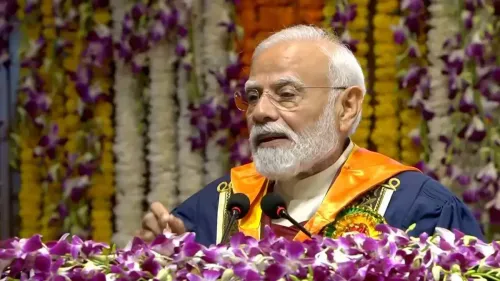
Union Minister Ashwini Vaishnaw on Sunday, July 5, 2026, shared a statement by Prime Minister Narendra Modi asserting that India's youth will drive an AI, robotics, and next-generation technology revolution powered by domestically manufactured semiconductors — underscoring the government's push for chip self-reliance.
Context
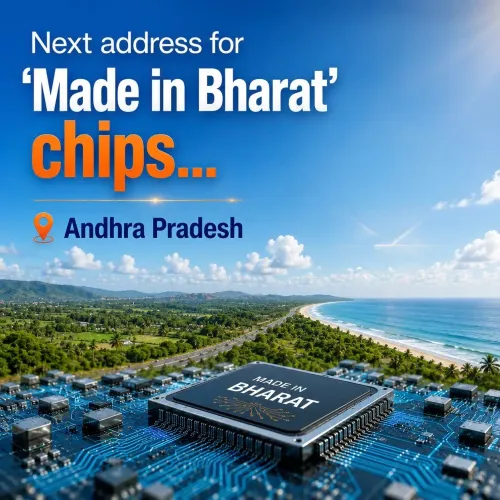
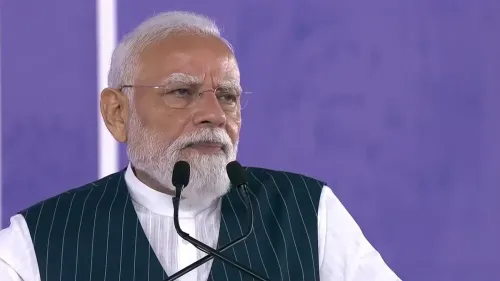
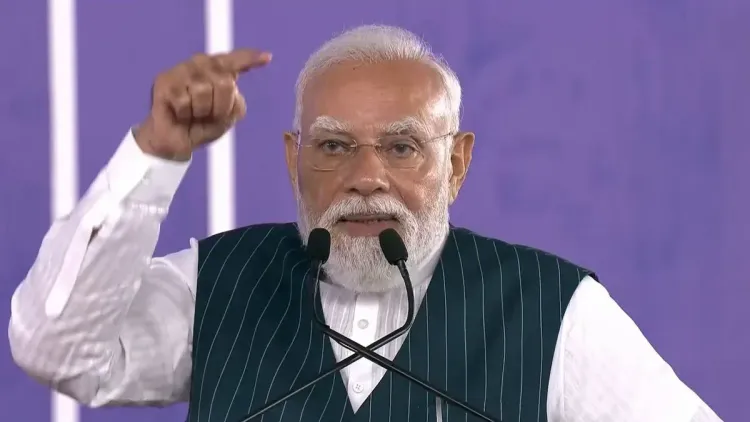
The post quotes Prime Minister Modi as saying: 'Bharat ka yuva Made in India chip par AI, robotics aur next-gen tech kranti ko gati dega' — 'India's youth will accelerate the revolution in AI, robotics and next-generation technology on Made-in-India chips.' The statement frames domestic semiconductor production not merely as an industrial goal but as a generational mission for Indian youth.
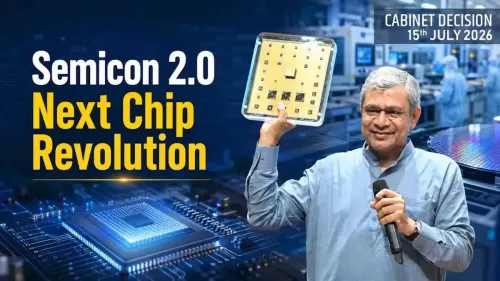
Vaishnaw, who holds the Electronics and Information Technology portfolio alongside Railways and Information and Broadcasting, is the nodal minister responsible for translating this vision into policy. His amplification of the Prime Minister's words signals continued political momentum behind India's semiconductor agenda.
Policy Backdrop
The statement draws directly from the architecture of the India Semiconductor Mission (ISM), approved in December 2021 with an outlay of Rs 76,000 crore. The mission was designed to attract semiconductor fabrication units to India and build an end-to-end chip ecosystem — covering design, manufacturing, packaging, and testing.
The Production Linked Incentive (PLI) scheme for IT hardware and semiconductors was subsequently expanded in 2022-23 to encompass mobile phones, servers, and semiconductor assembly, broadening the industrial base that domestic chips are expected to serve. These policy instruments together represent India's most ambitious attempt to reduce dependence on chip imports from East Asia, a vulnerability exposed sharply during the global semiconductor shortage that followed 2020.
The broader Atmanirbhar Bharat campaign, launched in 2020, provided the political framing for treating semiconductor capability as strategic infrastructure rather than a purely commercial pursuit. AI and robotics — the technologies the Prime Minister specifically names — are among the highest-value consumers of advanced chips, making domestic fabrication a prerequisite for any serious play in those sectors.
Stakeholders and Impact
The most direct beneficiaries of a mature domestic chip ecosystem would be Indian tech startups and the broader semiconductor design community, which currently relies on chips manufactured abroad. Access to locally produced semiconductors could reduce costs, shorten supply chains, and insulate technology companies from geopolitical disruptions.
Indian youth — the demographic explicitly named in the Prime Minister's quote — stand to gain through skill programmes and employment opportunities in chip fabrication, design, and the downstream AI and robotics industries that depend on them. The government has consistently paired hardware sovereignty goals with workforce development narratives to build public support for large capital subsidies in the sector.
For the semiconductor industry, the political signal is significant: sustained high-level attention from both the Prime Minister and the minister directly overseeing the portfolio reduces policy-uncertainty risk for investors considering India as a manufacturing destination.
What's Next
Observers will watch for parliamentary or cabinet-level announcements on additional semiconductor fabrication approvals and disbursements under the India AI Mission, which runs parallel to the ISM and focuses on compute infrastructure and AI application development. The convergence of chip manufacturing ambitions with the AI Mission could produce integrated policy packages that link hardware production targets to AI deployment goals. Any new youth-specific programme tied to the Made-in-India chip initiative would be the clearest operational expression of the Prime Minister's stated vision.
Point of View
He elevates chip policy from a ministry-level programme to a prime-ministerial priority, making it harder for future governments to dilute. The explicit mention of youth is strategically significant: it connects a capital-intensive industrial policy to a demographic dividend narrative that has broad electoral resonance. Coming alongside the India AI Mission, this signals that the government is attempting to build a vertically integrated technology sovereignty story — from silicon to software — rather than treating semiconductors and AI as separate portfolios. The consistency of this messaging across years suggests the government sees chip self-reliance as a long-cycle political asset, not just an economic one.
NationPress
3 Oct 2026
Frequently Asked Questions
What did PM Modi say about Made-in-India chips and AI?
PM Modi stated that India's youth will accelerate the revolution in AI, robotics and next-generation technology on Made-in-India chips, as quoted by Union Minister Ashwini Vaishnaw on July 5, 2026.
What is the India Semiconductor Mission?
The India Semiconductor Mission is a central government programme approved in December 2021 with an outlay of Rs 76,000 crore to attract semiconductor fabrication units and build an end-to-end chip design, manufacturing, and packaging ecosystem in India.
Why is India trying to make its own semiconductor chips?
India is pursuing domestic chip manufacturing to reduce dependence on East Asian supply chains, a vulnerability exposed by global chip shortages after 2020, and to support strategic industries including AI, defence, and consumer electronics.
What is Ashwini Vaishnaw's role in India's semiconductor policy?
As Union Minister for Electronics and Information Technology, Ashwini Vaishnaw is the nodal minister overseeing the India Semiconductor Mission, PLI schemes for semiconductors, and broader electronics manufacturing incentives.
How does the PLI scheme support semiconductor manufacturing in India?
The Production Linked Incentive scheme for IT hardware and semiconductors, expanded in 2022-23, provides financial incentives for domestic production of mobile phones, servers, and semiconductor assembly to build a self-reliant chip supply chain.