Bhupender Yadav at BASIC Meet on COP31 Sidelines in Antalya
Synopsis
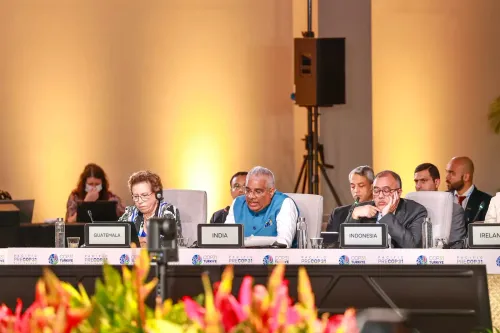
Union Environment Minister Bhupender Yadav participated in the BASIC Ministerial Meeting on Climate Change at COP31 in Antalya, Türkiye. India, Brazil, South Africa, and China reaffirmed their commitment to equity, multilateralism, and preserving the balance of the Paris Agreement.
Key Takeaways
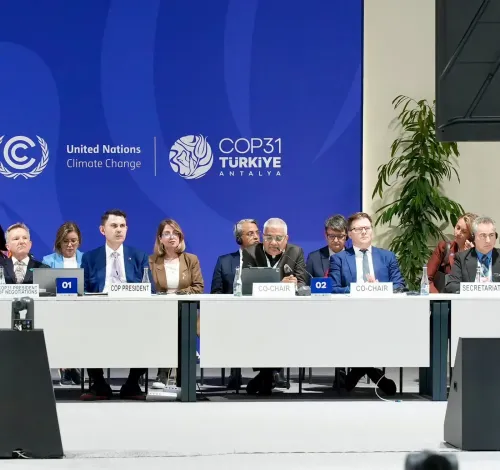
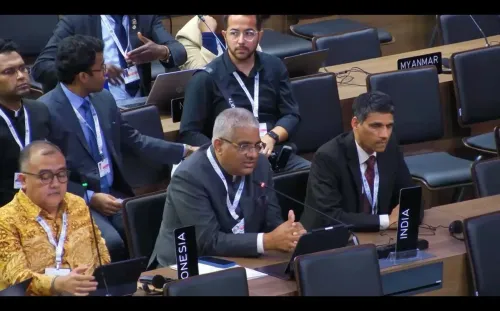
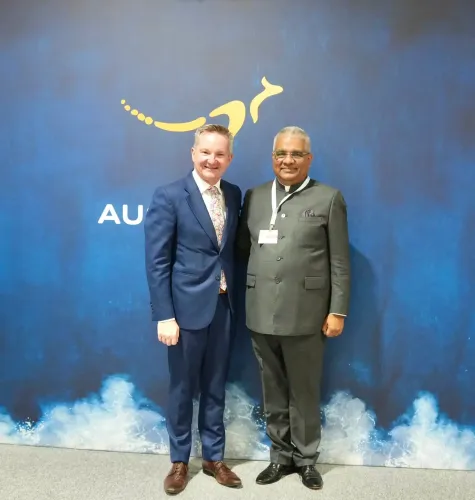
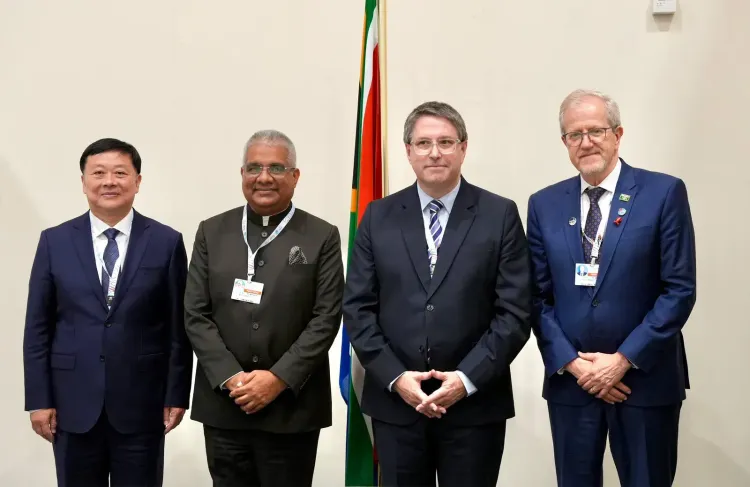
Union Environment Minister Bhupender Yadav attended the BASIC Ministerial Meeting on the sidelines of COP31 in Antalya, Türkiye on 17 November 2026 .
The BASIC bloc — comprising Brazil, South Africa, India, and China — agreed to strengthen coordination at both technical and ministerial levels.
The four nations committed to outcomes that preserve the 'balance of the Paris Agreement ' and uphold multilateralism.
Climate action must be 'equitable, inclusive and consistent with sustainable development,' per the joint position.
The BASIC group was established in 2009 to coordinate positions of major emerging economies in UNFCCC negotiations.
Key COP31 watch items include climate finance, updated NDCs, and any shifts to the equity framework under the Paris Agreement.
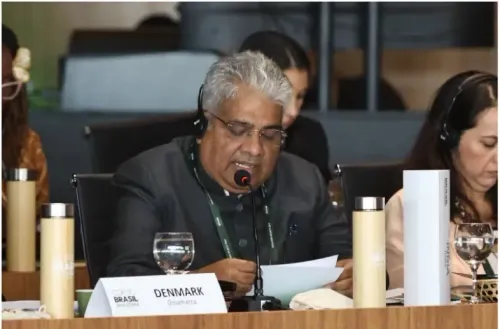
Four of the world's largest emerging economies sat down together in Antalya, Türkiye, and left with a shared message for the rest of COP31: climate action must be fair, or it will not hold. Union Environment Minister Bhupender Yadav represented India at the BASIC Ministerial Meeting on Climate Change on Tuesday, 17 November 2026, joining counterparts from Brazil, South Africa, and China to sharpen the bloc's collective stance ahead of the main negotiations.
BASIC's united front on Paris Agreement balance
The meeting produced a firm, consensus-driven commitment. As Minister Yadav stated, the group resolved to 'collectively work towards outcomes that preserve the balance of the Paris Agreement, uphold multilateralism and ensure that climate action is pursued in a manner that is equitable, inclusive and consistent with sustainable development.' The four ministers also agreed to deepen coordination at both the technical and ministerial levels — signalling that BASIC intends to arrive at the negotiating table as a cohesive unit, not four separate voices.
The language is deliberate and loaded. 'Preserving the balance of the Paris Agreement' is diplomatic shorthand for protecting the treaty's foundational principle of common but differentiated responsibilities — the idea that richer, historically high-emitting nations must shoulder a heavier share of the climate burden. When BASIC says 'balance,' it is warning against any renegotiation of that asymmetry.
Why the BASIC coalition still carries weight
The BASIC group was formed in 2009, just weeks before the Copenhagen climate summit, as a tactical coalition among four major emerging economies that together account for a substantial share of global emissions and an even larger share of global population. The coalition's core argument has never really changed: developing nations need the policy space to grow, and the financial and technological support from developed nations promised under successive climate frameworks must actually materialise.
India has attended every BASIC ministerial meeting on the sidelines of COP conferences since the group's founding. That consistency is the point — continuity of position, continuity of pressure. Minister Yadav has represented India at multiple such sessions since taking charge of the environment portfolio in 2021, and the bloc's vocabulary — equity, multilateralism, sustainable development — has remained the backbone of India's negotiating posture throughout.
What BASIC's alignment means for COP31 outcomes
Pre-COP ministerial huddles like this one are where the real architecture of negotiating blocs gets built. When Brazil, South Africa, India, and China agree — before the formal sessions begin — on the red lines they will collectively hold, the dynamics inside the negotiating halls shift. Developed-country proposals on accelerated phasedowns or revised finance mechanisms face a coordinated pushback rather than fragmented resistance.
The specific watch items at COP31 include progress on climate finance commitments to developing nations, the ambition and scope of updated Nationally Determined Contributions (NDCs), and any attempts to revisit the equity architecture embedded in the 2015 Paris Agreement. BASIC's statement that it will 'strengthen coordination at the technical and ministerial levels' suggests the coalition is preparing to engage on each of these fronts in a sustained, structured way — not just issuing declarations.
Four voices, one script. That is precisely what BASIC was built to deliver — and Antalya shows the coalition is still doing exactly that.
Point of View
Not merely a discussion forum. For Minister Yadav, repeated participation deepens India's credibility as a consistent voice for the Global South in climate diplomacy. How effectively the bloc converts pre-COP alignment into actual text at the negotiating table will define BASIC's real leverage this cycle.
NationPress
18 Nov 2026
Frequently Asked Questions
What is the BASIC group in climate negotiations?
BASIC is a coalition of Brazil, South Africa, India, and China formed in 2009 to coordinate positions in UNFCCC climate negotiations. The group advocates for equity, differentiated responsibilities, and financial support for developing nations.
What was decided at the BASIC ministerial meeting at COP31?
The four nations agreed to strengthen coordination at technical and ministerial levels and committed to outcomes that preserve the balance of the Paris Agreement , uphold multilateralism, and ensure climate action remains equitable, inclusive, and consistent with sustainable development.
What does 'preserving the balance of the Paris Agreement' mean?
It refers to protecting the treaty's core principle of common but differentiated responsibilities — the recognition that historically high-emitting, wealthier nations must bear a greater share of climate responsibility compared to developing economies.
Where is COP31 being held?
COP31 is being held in Antalya, Türkiye . The BASIC ministerial meeting took place on its sidelines on 17 November 2026 .
What is India's position at COP31?
India, through Minister Bhupender Yadav , is pushing for climate action that is equitable and consistent with sustainable development, resisting any erosion of the differentiation between developed and developing countries embedded in the Paris Agreement.