Nvidia CEO Jensen Huang: AI will not eliminate jobs, will 'supercharge' workers
Synopsis
Nvidia's Jensen Huang used a high-profile fireside chat with the US Commerce Secretary to make a sweeping counter-argument to AI doomsayers: jobs won't vanish, workers will be 'supercharged.' With the US set to pour nearly $1 trillion into AI infrastructure this year and AGI potentially years away, Huang's framing — regulate real harms, not hypothetical ones — could shape how governments worldwide approach the technology.
Key Takeaways
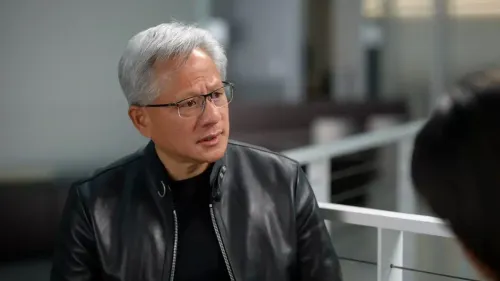
Nvidia CEO Jensen Huang called fears of AI eliminating all jobs 'just nonsense' at a fireside chat in Chapel Hill, North Carolina on 2 September .
Huang said AI will automate tasks but not the purpose or meaning of jobs, predicting workers will be 'supercharged.' He forecast that artificial general intelligence (AGI) could arrive within the next few years, but warned it would not make companies productive overnight.
Huang described AI as a 'five-layer cake' — energy, chips, infrastructure, models, and data — urging every country to invest in its own AI infrastructure.
The United States is expected to invest close to $1 trillion in AI infrastructure this year, generating hundreds of thousands of jobs.
Huang called for regulation targeting actual and pragmatic harm , not hypothetical or theoretical risks.
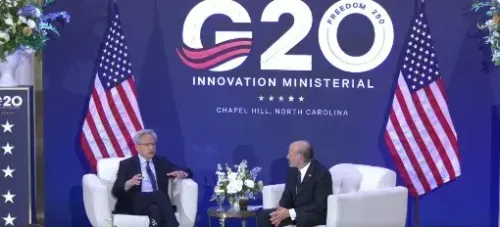
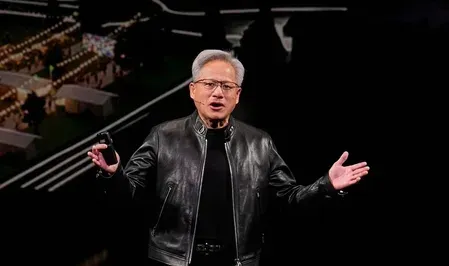
Nvidia chief executive Jensen Huang has firmly dismissed fears that artificial intelligence will wipe out employment, telling a fireside chat in Chapel Hill, North Carolina on 2 September that AI will automate tasks — not erase the purpose behind jobs. Speaking alongside US Commerce Secretary Howard Lutnick, Huang argued that workers and companies would instead be 'supercharged' by the technology.
Huang's Core Argument on Jobs
'The idea that somehow all the jobs are going to be eliminated, removed, that's just nonsense,' Huang said at the event. He drew a distinction between the skills used to perform a job and the job's underlying purpose, context, and meaning — asserting that while AI would automate specific tasks, the human rationale behind work would endure.
'Those skills are gonna be automated by AI. The tasks are gonna be automated, but our jobs purpose remain,' he said. 'And so I think what's gonna happen was that we're all just gonna be supercharged.'
How Nvidia Uses AI Internally
Huang noted that Nvidia already deploys AI across its own operations, blending off-the-shelf products with internally developed systems. He urged every company and country to invest in building proprietary intelligence rather than relying entirely on external providers.
'You should use AI off-the-shelf wherever you can, but don't forget, you have to invest in building your own intelligence, every country, every company,' he said. 'You can't outsource all of your intelligence to somebody else.'
AGI Timeline and Realistic Expectations
Huang predicted that artificial general intelligence (AGI) could arrive within the next few years, suggesting that elements of it had effectively already emerged. However, he cautioned against expecting overnight transformation, warning that even a breakthrough would not automatically make companies more productive.
'It's not as if all of a sudden in two years time, I say, okay, let me connect it to this AI service and I just sit back and all of a sudden my company becomes more and more productive overnight,' he said. 'That's just not gonna happen at all.' Organisations would still need to supply AI systems with purpose, context, relevant data, and appropriate tools, he added.
The 'Five-Layer Cake' Framework
Huang described AI as a 'five-layer cake' comprising energy, chips, infrastructure, models, and data and applications. He said countries need not dominate every layer but should identify where to invest strategically and push AI adoption across education, healthcare, manufacturing, and science.
'Every single country needs to build infrastructure so that you could support your own local economy,' Huang said, framing such investment as building 'digital intellectual capacity' for researchers, students, industries, and startups.
US Investment and Regulatory Stance
The United States is expected to invest close to $1 trillion in AI infrastructure this year, according to Huang, generating economic growth and hundreds of thousands of jobs across semiconductor fabrication, computer production, and AI data centres. He urged governments to balance AI safety discussions with the technology's potential to drive prosperity, arguing that the gravest risk was being left behind.
'The worst outcome is that you don't take advantage of it, that you are left behind. That is the single worst outcome,' he said. On regulation, Huang called for rules targeting demonstrated harms rather than speculative ones: 'Don't regulate hypothetical, theoretical harm. Regulate actual and pragmatic harm.'
Commerce Secretary Lutnick echoed the infrastructure imperative, saying countries must harness AI domestically to ensure their citizens and economies benefit. Nvidia, founded in 1993 by Huang, Chris Malachowsky, and Curtis Priem, has seen its graphics processing units evolve from gaming hardware into the backbone of global AI data centres. With AGI potentially on the horizon and US AI investment approaching a trillion dollars, the debate over how governments and companies adapt is set to intensify.
Point of View
Not speculative ones, is also a position that conveniently delays the kind of structural oversight that could constrain Nvidia's own customers. Governments listening to this advice should weigh the source as carefully as the argument.
NationPress
18 Oct 2026
Frequently Asked Questions
What did Nvidia CEO Jensen Huang say about AI and jobs?
Jensen Huang said fears that AI will eliminate all jobs are 'just nonsense,' arguing that while AI will automate specific tasks, the purpose and meaning of jobs will remain. He predicted workers and companies will be 'supercharged' rather than replaced by the technology.
Did Jensen Huang predict when AGI will arrive?
Huang said artificial general intelligence could be achieved within the next few years and argued that elements of it had effectively already arrived. However, he cautioned that even an AGI breakthrough would not make companies automatically more productive overnight.
What is Huang's 'five-layer cake' framework for AI?
Huang described AI as a five-layer cake comprising energy, chips, infrastructure, models, and data and applications. He said countries do not need to dominate every layer but should decide where to invest and promote AI adoption across education, healthcare, manufacturing, and science.
How much is the US investing in AI infrastructure?
According to Huang, the United States is expected to invest close to $1 trillion in AI infrastructure this year, creating hundreds of thousands of jobs across semiconductor fabrication, computer production, and AI data centres.
What did Huang say about AI regulation?
Huang urged governments to regulate actual and pragmatic harm rather than hypothetical or theoretical risks. He also said the single worst outcome for any country would be failing to adopt AI and being left behind.