Chhattisgarh CMO Highlights India's First Digital Tribal Museum
Synopsis
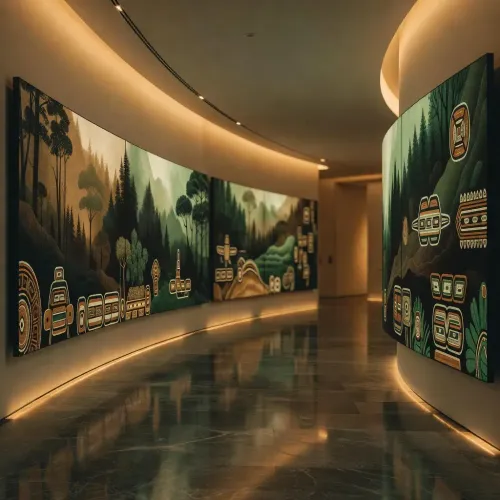
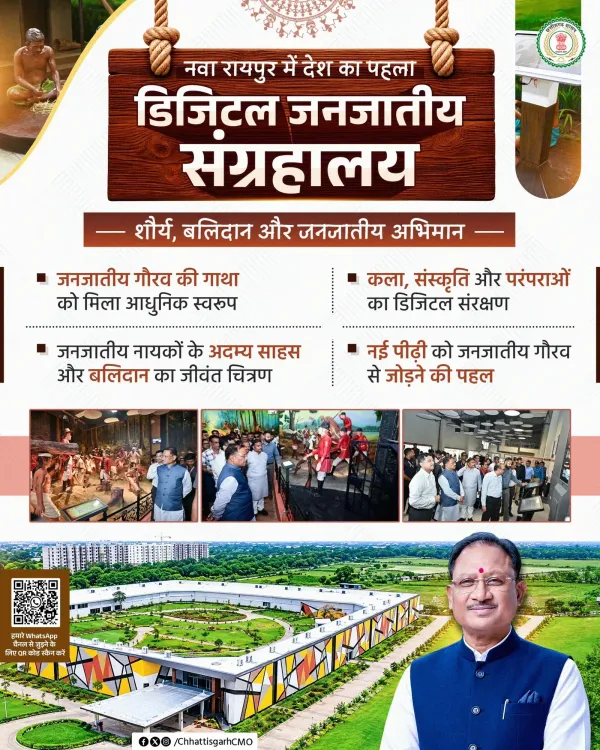
The Chhattisgarh CMO spotlighted the Shaheed Veer Narayan Singh digital tribal museum in Nava Raipur on Janjatiya Gaurav Diwas 2026, positioning it as India's first digital tribal museum connecting Adivasi heritage and freedom-fighter history with younger generations.
Key Takeaways
The Chief Minister's Office of Chhattisgarh highlighted the museum on November 12, 2026 , coinciding with Janjatiya Gaurav Diwas .
The facility is named after Shaheed Veer Narayan Singh , a tribal leader who resisted British rule during the 1857 uprising.
Located in Nava Raipur (Atal Nagar) , the museum is described as India's first digital tribal museum.
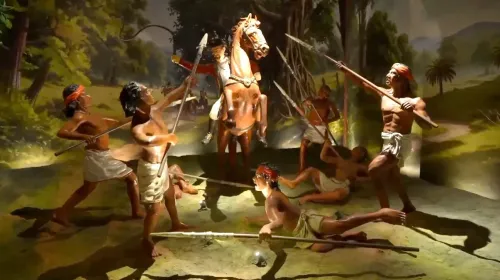
The museum preserves tribal traditions, folk arts, and freedom-fighter histories in digital format for access by younger generations.
Janjatiya Gaurav Diwas has been observed nationally since 2021 to honour tribal contributions to India's freedom struggle.
At the crossroads of living memory and digital innovation, a museum in Nava Raipur is quietly rewriting how India's tribal heritage reaches the next generation. The Chief Minister's Office of Chhattisgarh spotlighted the Shaheed Veer Narayan Singh Smarak Sah Janjatiya Swatantrata Sangram Senani Sangrahalaya on Thursday, November 12, 2026 — a facility the state positions as the country's first digital tribal museum — ahead of Janjatiya Gaurav Diwas observances.
A warrior's name on a digital institution
The museum bears the name of Shaheed Veer Narayan Singh, the 19th-century tribal leader from Chhattisgarh who stood against British authority during the 1857 uprising and paid for that resistance with his life. Naming a digital institution after him is not incidental — it anchors a cutting-edge preservation project in the most visceral possible reminder of what is being preserved: a people's history of defiance.
The CMO's post described the museum as connecting 'the roots of tribal traditions, the glorious pages of history, and the unique splendour of folk arts' — janjatiya paramparaon ki jaḍen, itihas ke gauravshali panne aur lokokalaon ki anoothi chhata — with younger generations through a digital format. That phrase is worth sitting with. Folk arts, oral traditions, and resistance histories are precisely the categories that physical neglect and generational distance erode fastest.
Nava Raipur's bet on digital heritage
Nava Raipur, the planned capital also known as Atal Nagar, was conceived as a showcase city for Chhattisgarh — and hosting what the state bills as a national first in digital tribal preservation fits that ambition. Chhattisgarh has one of India's largest Adivasi populations, with tribal communities forming a substantial share of the state's social fabric. That demographic weight gives projects like this both political salience and genuine cultural urgency.
The broader national pattern matters here. States with large tribal populations have increasingly turned to digitisation as a hedge against the irreversible loss of indigenous knowledge — folk songs, ritual objects, oral genealogies, craft techniques. A digital-first museum format allows communities scattered across difficult terrain to access their own recorded heritage without a journey to a capital city.
Janjatiya Gaurav Diwas and the politics of recognition
Janjatiya Gaurav Diwas, observed nationally since 2021, was established to honour tribal contributions to India's freedom struggle — most prominently figures like Birsa Munda — and to elevate Adivasi cultural heritage in mainstream national consciousness. The timing of this post, on the day of the observance, frames the Nava Raipur museum as a concrete, standing expression of that national intent rather than a one-day ceremony.
Chhattisgarh's investment in this institution signals that the state is staking a claim as the definitive custodian of tribal freedom-fighter memory — a claim with both cultural weight and electoral resonance in a state where Adivasi voters shape outcomes. The museum, by linking a physical memorial with a digital interface, attempts to solve the classic heritage dilemma: preservation for posterity versus access for today.
Point of View
Signalling the state's intent to position itself as the foremost custodian of Adivasi freedom-fighter memory. The choice to name the museum after Veer Narayan Singh — a local martyr rather than a pan-India figure like Birsa Munda — anchors the claim in specifically Chhattisgarhi tribal identity, blending cultural pride with sub-national assertion. As digitisation of indigenous heritage accelerates across tribal-majority states, Chhattisgarh's 'first digital museum' branding is both a preservation strategy and a soft-power move in intra-state cultural politics. The project also reflects a wider government calculus: in states where Adivasi voters are decisive, visible cultural investment in tribal memory carries electoral weight alongside its genuine heritage value.
NationPress
12 Nov 2026
Frequently Asked Questions
What is the Shaheed Veer Narayan Singh digital tribal museum in Nava Raipur?
It is a museum in Nava Raipur, Chhattisgarh , named after the tribal freedom fighter Shaheed Veer Narayan Singh , which the state describes as India's first digital tribal museum preserving tribal traditions, folk arts, and freedom-fighter histories in digital format.
Who was Shaheed Veer Narayan Singh?
Shaheed Veer Narayan Singh was a 19th-century tribal leader from Chhattisgarh who led resistance against British rule during the 1857 uprising and is revered as a martyr of the tribal freedom struggle.
What is Janjatiya Gaurav Diwas and when is it observed?
Janjatiya Gaurav Diwas is a national observance, established in 2021 , held annually to honour tribal contributions to India's freedom struggle and cultural heritage, with figures like Birsa Munda at its centre.
Where is Nava Raipur located?
Nava Raipur , also called Atal Nagar , is the planned capital city of Chhattisgarh and hosts several state memorials and cultural institutions.
Why is digital preservation of tribal heritage important in Chhattisgarh?
Chhattisgarh has one of India's largest Adivasi populations , and digitisation allows tribal communities spread across remote terrain to access their folk arts, oral traditions, and resistance histories without travelling to a central location, safeguarding knowledge that physical neglect could erase.