Jharkhand CM Hemant Soren threatens statewide agitation over Mineral Amendment Bill 2026
Synopsis
Jharkhand CM Hemant Soren has drawn a hard line against the Mines and Minerals Amendment Bill 2026, threatening a statewide agitation that reaches every village and panchayat. His warning that the state may take 'decisive and historic steps' marks one of the sharpest Centre-state confrontations over mineral rights in recent memory — with Jharkhand's flagship welfare schemes now framed as collateral damage.
Key Takeaways
Jharkhand CM Hemant Soren demanded the Centre withdraw the Mines and Minerals (Development and Regulation) Amendment Bill, 2026 on 13 August .
Soren threatened a statewide agitation covering every district, block, panchayat, and urban centre in Jharkhand.
He alleged the Bill could adversely affect welfare schemes including Maiyan Samman Yojana and Abua Awas Yojana .
The Jharkhand Mukti Morcha (JMM) has been directed to intensify its campaign and carry protests to every village.
Soren warned of 'decisive and historic steps' if the Centre fails to restore Jharkhand's mineral rights.
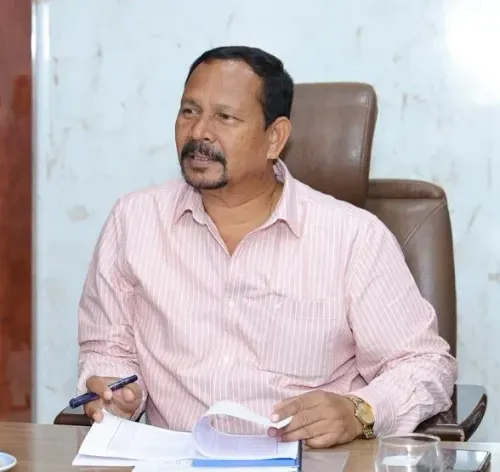
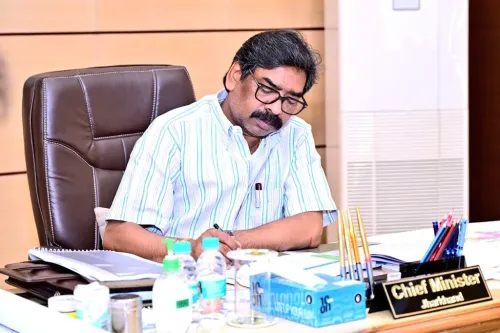
Jharkhand Chief Minister Hemant Soren on 13 August mounted a sharp challenge to the Mines and Minerals (Development and Regulation) Amendment Bill, 2026, demanding its immediate withdrawal after the legislation cleared both Houses of Parliament. Soren warned that if the Centre refuses to roll back the Bill, Jharkhand will launch a statewide movement 'the entire country will witness.'
What Soren Said
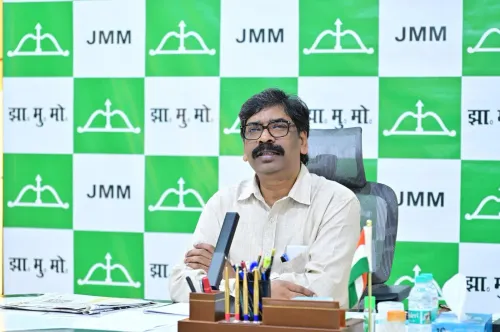
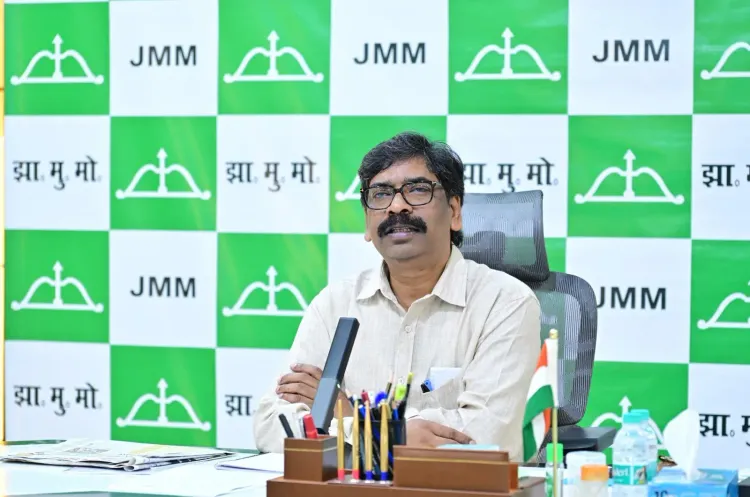
Addressing Jharkhand Mukti Morcha (JMM) MPs, district presidents, and party office-bearers via video conferencing on Thursday, Soren announced a coordinated protest campaign spanning every district, block, panchayat, and urban centre in the state. He described the Bill as an 'anti-Jharkhand measure' and accused the Centre of pushing it through Parliament in haste, weakening the state's rights over its own mineral resources.
'If the minerals belong to Jharkhand and the land belongs to Jharkhand, then why should decisions regarding the state's rights and interests be taken in Delhi?' Soren said, questioning the Union government's authority over the state's natural wealth.
Threat to Welfare Schemes
Soren further alleged that the legislation could jeopardise the state's social security infrastructure, including flagship programmes such as the Maiyan Samman Yojana, Abua Awas Yojana, pensions, and education and healthcare initiatives. He argued that the Bill poses a serious threat not only to present development but to the future of coming generations in the state.
Party Mobilisation
The Chief Minister directed the JMM organisation to intensify its campaign and take the protest movement to every village and panchayat. Among those present during the virtual meeting were MPs Vijay Hansda and Mahua Maji, state minister and party General Secretary Sudivya Kumar, General Secretary Vinod Pandey, Abhishek Prasad Pintu, along with district unit presidents and several party functionaries.
Broader Context
Jharkhand, one of India's most mineral-rich states, has long maintained that revenues and decision-making authority over its natural resources should rest primarily with the state. This is not the first time Ranchi has clashed with the Centre over mining policy — disputes over royalty rates and tribal land rights have periodically strained Centre-state relations in the region. Critics argue that amendment bills of this nature, passed swiftly through Parliament, often leave mineral-dependent states with limited legislative recourse. Soren's warning of 'decisive and historic steps' signals that the JMM government is prepared to escalate the standoff significantly if the Centre does not engage.
With Jharkhand's next political calendar already crowded, the agitation, if it materialises at scale, could reshape the state's relationship with the Union government in the months ahead.
Point of View
Iron ore, and other minerals, yet consistently ranks among the lower-income states; that gap fuels the perception of extraction without commensurate return. The speed with which the Amendment Bill cleared Parliament, without visible state-level consultation, hands Soren a legitimate grievance and a politically potent one ahead of any future electoral cycle. The Centre's silence so far is the real story: if it does not engage, it risks validating every charge of 'stepmotherly treatment' that opposition-governed mineral states have levelled for years.
NationPress
28 Sept 2026
Frequently Asked Questions
What is the Mines and Minerals (Development and Regulation) Amendment Bill, 2026?
It is a legislative amendment to India's mining governance framework that was passed by both Houses of Parliament in 2026. Jharkhand CM Hemant Soren has objected to it, arguing it weakens state rights over mineral resources and threatens the state's development and welfare programmes.
Why is Jharkhand opposing the Mineral Amendment Bill?
Soren argues the Bill undermines Jharkhand's authority over its own mineral-rich land and was pushed through Parliament hastily without adequate state consultation. He also claims it could jeopardise state welfare schemes such as Maiyan Samman Yojana and Abua Awas Yojana.
What kind of agitation has Soren threatened?
Soren has announced a coordinated protest campaign across every district, block, panchayat, and urban centre in Jharkhand. He warned of 'decisive and historic steps' if the Centre does not withdraw the Bill.
Who attended the JMM virtual meeting on the Mineral Bill?
The meeting included MPs Vijay Hansda and Mahua Maji, state minister and General Secretary Sudivya Kumar, General Secretary Vinod Pandey, Abhishek Prasad Pintu, district unit presidents, and several party functionaries.
Has Jharkhand clashed with the Centre over mining policy before?
Yes. Jharkhand has periodically disputed Centre policies on royalty rates and tribal land rights tied to mining. The state's position — that decisions over its mineral resources should not be made in Delhi — has been a recurring point of Centre-state friction.