China's export dependence deepens as rebalancing efforts fall flat
Synopsis
Nearly 20 years after Premier Wen Jiabao warned China's economy was 'unstable, unbalanced, uncoordinated and unsustainable,' household consumption as a share of GDP has barely moved — sitting at 39.9% in 2024 versus 39.8% in 2005. With retail sales now contracting, economist Stephen Roach calls the rebalancing effort an 'absolute failure,' and the spillover — cheap Chinese exports undercutting industries abroad — is a global problem.
Key Takeaways
Economist Stephen S.
Roach calls China's economic rebalancing an 'absolute failure' in a new analysis.
China's retail sales fell 0.6 per cent year-on-year in May 2026 — the first monthly decline in three-and-a-half years .
Household consumption as a share of GDP stands at 39.9 per cent (2024), barely changed from 39.8 per cent in 2005 .
Former Premier Wen Jiabao flagged the same structural weakness in March 2007 , warning of the 'four UNs' .
Continued export dumping at low prices is reportedly harming industries and displacing jobs in other countries.
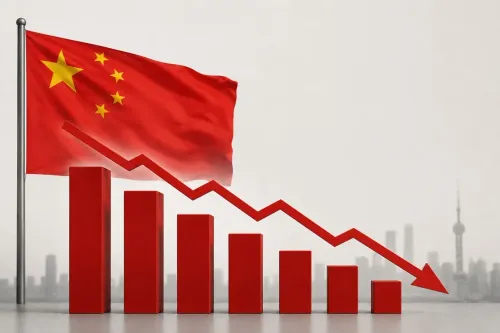
China's reliance on export-led growth has intensified over the past two decades, with domestic consumption failing to pick up the slack, according to a new analysis by economist Stephen S. Roach published in Malaysia's The Star. The findings suggest that efforts to shift the world's second-largest economy toward consumer-driven growth have been, in Roach's own assessment, an 'absolute failure'.
A Warning Unheeded for Nearly Two Decades
In March 2007, then-Premier Wen Jiabao flagged the structural vulnerability at a press conference following the conclusion of the National People's Congress. The Chinese economy, he cautioned, was becoming 'increasingly unstable, unbalanced, uncoordinated and unsustainable' — a formulation that became known as the 'four UNs'. Nearly two decades on, the diagnosis appears more accurate than ever.
Consumption Data Tells a Troubling Story
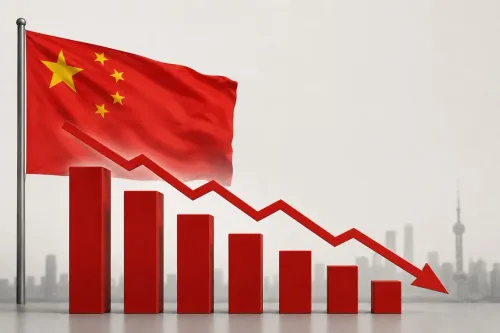
The numbers underlying Roach's argument are stark. China's retail sales fell 0.6 per cent year-on-year in May 2026 — an unexpected contraction following an already anaemic 0.2 per cent increase in April, marking the first monthly decline in three-and-a-half years. Household consumption as a share of gross domestic product (GDP) stood at just 39.9 per cent in the latest available reading (2024), virtually unchanged from the 39.8 per cent recorded in 2005 — the very baseline Wen had in hand when he issued his warning.
Given persistent consumption weakness through 2025 and into early 2026, Roach's analysis suggests the current share may have slipped even below that 2005 benchmark.
The Global Fallout: Cheap Exports and Job Losses
The failure to rebalance has direct consequences beyond China's borders. With domestic demand unable to absorb industrial output, Beijing has continued to push exports at competitive — critics argue artificially suppressed — prices. This dynamic, the analysis notes, is harming industries and displacing jobs in importing countries, fuelling trade tensions across Asia, Europe, and North America. This is not a new pattern: China faced similar accusations of export dumping during the post-2008 stimulus era, when excess capacity in steel and aluminium flooded global markets.
Why Rebalancing Has Remained Elusive
Structural barriers to Chinese consumption are well-documented. A weak social safety net — covering healthcare, education, and retirement — compels households to save rather than spend. Property sector distress, which has deepened since 2021, has further eroded household wealth and confidence. Without addressing these fundamentals, incremental stimulus measures have repeatedly failed to shift the consumption needle in any meaningful way.
Roach's analysis raises 'critical questions for China and the rest of the world' about the sustainability of an economic model that leans ever more heavily on external demand. With global trade under pressure from protectionist headwinds and tariff escalation, the margin for error is narrowing.
Point of View
Two major stimulus cycles, and a global pandemic that was supposed to force a domestic pivot. What mainstream coverage often misses is the structural trap at work: without meaningful social security reform, Chinese households have every rational incentive to save rather than spend. Beijing's preferred tool — investment and export stimulus — relieves short-term pressure while entrenching the very imbalance it claims to be solving. For the rest of the world, the consequence is not abstract: excess Chinese industrial output must go somewhere, and it is going into export markets at prices that competing industries cannot match.
NationPress
30 Sept 2026
Frequently Asked Questions
Why is China still so dependent on export-led growth?
China's domestic consumption has failed to grow as a share of GDP, remaining near 39.9 per cent in 2024 — almost identical to 2005 levels. Without a strong social safety net, households save heavily rather than spend, forcing the economy to rely on exports and investment to sustain growth.
What did economist Stephen Roach say about China's rebalancing?
Roach, writing in Malaysia's The Star, described China's efforts to shift toward consumer-led growth as an 'absolute failure.' He cited stagnant household consumption data and weakening retail sales as evidence that the structural problem flagged by Premier Wen Jiabao in 2007 has not improved.
How weak is Chinese consumer spending in 2026?
China's retail sales fell 0.6 per cent year-on-year in May 2026, the first monthly decline in three-and-a-half years, following a barely positive 0.2 per cent rise in April. Household consumption as a share of GDP stood at 39.9 per cent in 2024, with analysts suggesting it may have slipped further since.
Who is Wen Jiabao and what did he warn about?
Wen Jiabao served as China's Premier from 2003 to 2013. In March 2007, following the National People's Congress, he warned that the Chinese economy was becoming 'increasingly unstable, unbalanced, uncoordinated and unsustainable' — a caution that became known as the 'four UNs.' His warning has proven prescient.
How does China's export dependence affect other countries?
With domestic demand too weak to absorb industrial output, China has continued exporting goods at highly competitive prices. According to the analysis, this is harming industries and displacing jobs in importing nations, contributing to trade tensions across multiple regions.