China's subsidised exports dumping cheap goods worldwide, hurting local industries: Report
Synopsis
China's trade surplus is on track to top $1 trillion again — but the engine behind it is structural weakness, not strength. With domestic GDP growth at a three-year low of 4.3% and youth unemployment stuck near 15%, Beijing is leaning harder on subsidised exports, flooding global markets with cheap goods. The OECD finds Chinese firms got three to eight times more state support than global peers over two decades. The world is absorbing the cost.
Key Takeaways
China's exports surged 24 per cent year-over-year , with the trade surplus on track to exceed $1 trillion in 2026.
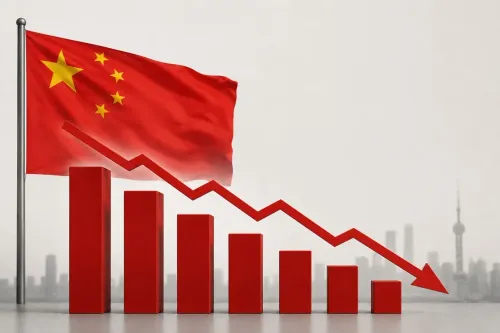
GDP growth slowed to 4.3 per cent in Q2 2026 — a three-year low — amid falling home prices and rising debt.
Youth unemployment remains around 15 per cent ; factory investment fell 4.1 per cent between January and May.
Chinese firms in 15 sectors received three to eight times more government support than global peers from 2005 to 2024 , per OECD data.
Inadequate social safety nets force Chinese households to save heavily, making a shift to domestic consumption politically and structurally difficult.
Former PM Wen Jiabao flagged China's economic model as unsustainable as early as 2007 ; the report says little has changed since.
China's structurally weakened domestic economy and massive industrial overcapacity are compelling Beijing to sustain heavily subsidised exports, flooding global markets with cheap goods and dealing a damaging blow to local industries in importing nations, according to a report by The Washington Post. The findings come as China posts a trade surplus on track to exceed $1 trillion for another consecutive year.
The Export Surge Masking Domestic Weakness
On the surface, China's trade numbers appear robust. Exports surged 24 per cent year-over-year last month, according to recent data. Yet beneath that headline figure, the domestic economy is showing persistent and deepening stress.
China's GDP growth slowed to 4.3 per cent in the second quarter of 2026 — its weakest pace in three years. Home prices have slumped sharply, and both property developers and local governments are grappling with mounting debt burdens. Youth unemployment has remained stubbornly elevated at around 15 per cent, the report notes. Retail sales declined in May, and factory investment fell 4.1 per cent between January and May — further evidence of a consumption-led slowdown.
How Beijing Subsidises Its Industries
The report highlights that China's electric vehicle manufacturers, steel producers, and other strategic industries benefit from a wide array of state support — including cheap loans, tax breaks, free or heavily discounted land at government-run industrial parks, and in some cases direct cash grants.
According to data from the Organisation for Economic Co-operation and Development (OECD), Chinese firms across 15 sectors received three to eight times more government support than their counterparts in other major economies between 2005 and 2024. This level of state backing allows Chinese companies to undercut global competitors on price, making it difficult for local industries in other countries to compete.
Why a Shift to Domestic Consumption Remains Elusive
China's leadership has repeatedly signalled its intent to rebalance the economy toward domestic consumption. However, the report argues this ambition faces deep structural and political obstacles.
Chinese households save heavily not out of choice but necessity — government-backed pensions, health insurance, education subsidies, and basic income support are described as 'woefully inadequate.' With unemployment rising and economic uncertainty increasing, households are cutting back on consumer spending and building savings buffers for essentials and unforeseen expenses, further suppressing domestic demand.
The report quotes former Chinese Prime Minister Wen Jiabao, who as far back as 2007 described China's economic development as 'unsteady, unbalanced, uncoordinated and unsustainable.' Nearly two decades on, the report observes, little has structurally changed.
Global Impact and Trade Tensions
The consequences of China's export-led growth model are increasingly being felt internationally. Cheap Chinese goods — particularly in sectors such as electric vehicles and steel — are being absorbed by markets in Asia, Europe, and beyond, undercutting domestic producers and triggering trade friction. Several economies have already moved to impose tariffs or initiate anti-dumping investigations in response.
Notably, this is not a new pattern — but the scale and speed of the current export push, driven by domestic demand weakness rather than organic competitiveness, has amplified its disruptive effect on global supply chains. As long as Beijing's political economy prioritises export-driven growth over genuine consumer rebalancing, analysts warn the pressure on trading partners is unlikely to ease.
Point of View
But its implications are still under-absorbed in policy circles. What is new is the scale of the export push now that domestic demand has stalled: Beijing is effectively exporting its overcapacity problem. The harder question — whether China's leadership genuinely wants to shift to a consumer economy or merely talks about it — is answered implicitly by the report: political incentives run the other way. Without a credible social safety net, household savings will remain high, consumption will remain suppressed, and the export valve will stay open. For India and other manufacturing-aspirant economies, this is not an abstract trade concern; it is a direct competitive threat to sectors where domestic industry is still finding its footing.
NationPress
25 Sept 2026
Frequently Asked Questions
Why is China subsidising its exports?
China's weak domestic demand and excess industrial capacity have left its government reliant on subsidised exports to sustain economic growth. State support — including cheap loans, tax breaks, and discounted land — allows Chinese firms to price goods below what unsubsidised competitors can match, according to the report.
How much has China's economy slowed down?
China's GDP growth fell to 4.3 per cent in the second quarter of 2026, its lowest rate in three years. Retail sales declined in May, factory investment dropped 4.1 per cent from January to May, and youth unemployment has remained around 15 per cent.
How does China's government support compare to other countries?
According to OECD data, Chinese firms across 15 sectors received three to eight times more government support than firms in other major economies between 2005 and 2024. This includes subsidised loans, tax relief, land grants, and direct financial assistance.
Why can't China simply shift to a consumer-driven economy?
The primary obstacle is structural: Chinese households lack adequate government-backed pensions, health insurance, and education support, forcing them to save heavily rather than spend. With unemployment rising and economic uncertainty growing, consumer spending is contracting further, making a demand-led rebalancing difficult to achieve.
What is the impact of China's subsidised exports on other countries?
Cheap Chinese goods — particularly in electric vehicles and steel — are being absorbed by markets across Asia, Europe, and beyond, undercutting domestic producers and triggering trade tensions. Several economies have responded with tariffs or anti-dumping investigations to protect local industries.