Bhupender Yadav: 'Those not born of democracy can't understand it'
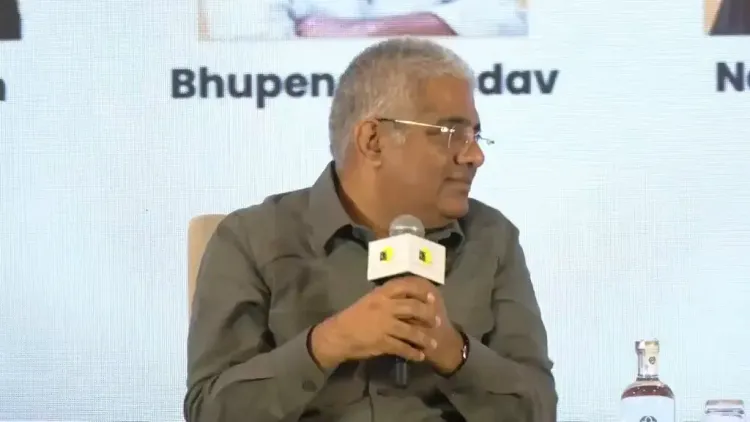
Synopsis
Union Environment Minister Bhupender Yadav posted a sharp Hindi one-liner on 25 September 2026 arguing that only those who have emerged through democratic elections can truly understand democracy — a pointed, targetless provocation in India's political discourse.
Key Takeaways
Bhupender Yadav , Union Minister of Environment, Forest and Climate Change, posted the remark on 25 September 2026 .
The Hindi statement translates as: 'Those who have not emerged through democracy, what would they know of democracy?' The post carries no named target, making it a broad political provocation rather than a direct attack.
Yadav has held the environment portfolio since 2021 and has been elected to parliament through electoral contests.
The remark aligns with BJP's long-standing messaging on grassroots democratic participation versus dynastic or appointed leadership.
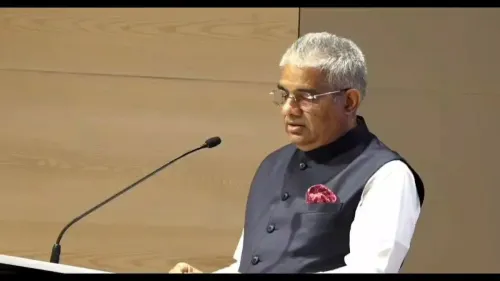
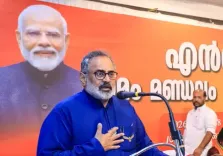
A pointed remark on democratic legitimacy landed on social media on Friday, 25 September 2026, when Union Environment Minister Bhupender Yadav posted a single sharp line that stopped timelines mid-scroll — a line aimed squarely at the question of who truly understands democracy.
Writing in Hindi, Yadav posted: 'Jo democracy se nikalkar nahin aaye wo democracy ko kya jaanenge' — 'Those who have not emerged through democracy, what would they know of democracy?' The statement is brief, but its edge is deliberate: it draws a hard line between leaders forged in electoral competition and those who, in his framing, have not earned their standing through the ballot.
The argument inside the one-liner
The post carries an implicit logic familiar to Indian political discourse: that the experience of contesting elections — canvassing, losing, winning, facing voters — confers a ground-level understanding of democratic practice that no appointment, dynasty, or ideological inheritance can replicate. It is a claim about legitimacy, not just rhetoric.
Yadav, a senior BJP leader, has himself been returned to parliament through electoral contests and has served in the Union Cabinet since 2021, holding the environment and climate-change portfolio. He speaks, in other words, from the position of someone who has navigated exactly the process he is invoking.
Where this fits in BJP's political messaging
Indian ministers and party leaders have periodically used social media to post short, stand-alone statements on democratic principles — often as oblique responses to commentary about India's institutions, opposition politics, or international criticism. A one-line post like this one functions as a political provocation: it names no target, which means it can reach any target.
The broader BJP messaging architecture has long emphasized grassroots democratic participation — pointing to the party's organisational depth across constituencies — as a counterpoint to what it describes as elite or dynastic politics insulated from voter accountability. Yadav's line fits neatly into that frame without requiring a named opponent.
No specific trigger for the post has been identified. What it does is put a marker in the ground: in Yadav's telling, democracy is not an idea one inherits or studies from a distance — it is something one survives, and earns.
Point of View
A senior minister planting this marker on social media signals that the party intends to keep democratic authenticity — defined on its own terms — as a live election-season theme.
NationPress
25 Sept 2026
Frequently Asked Questions
What did Bhupender Yadav post on X on 25 September 2026?
He posted a Hindi one-liner that translates as 'Those who have not emerged through democracy, what would they know of democracy?' — a pointed comment on democratic legitimacy.
Who is Bhupender Yadav?
Bhupender Yadav is India's Union Minister of Environment, Forest and Climate Change and a senior BJP leader who has held the portfolio since 2021.
Who was Bhupender Yadav targeting with his democracy remark?
No specific individual or party is named in the post. The statement is a broad political provocation that can be read as directed at dynastic politicians, appointed leaders, or external critics of India's democracy.
What does BJP's messaging on democracy typically argue?
BJP has consistently emphasised grassroots electoral participation as a marker of genuine democratic legitimacy, contrasting it with what it calls dynastic or elite politics insulated from voter accountability.
Is there a specific political event that triggered Yadav's post?
No specific trigger has been publicly identified. The post appears to be a standalone political statement rather than a direct response to an identifiable event.