Mahua Moitra demands answers after Delhi Police detains activists
Synopsis
TMC MP Mahua Moitra publicly demanded on 25 September 2026 that Delhi Police reveal the whereabouts of detained activists Dipankar Bhattacharya, Yogendra Yadav, Anjali Bhardwaj, and Neha of AISA, questioning how a peaceful democratic protest could be handled this way.
Key Takeaways
TMC MP Mahua Moitra posted on X on 25 September 2026 demanding Delhi Police reveal where four activists had been taken.
Those detained include Dipankar Bhattacharya (General Secretary, CPI-ML Liberation), Yogendra Yadav (political activist), Anjali Bhardwaj (RTI activist), and Neha of AISA.
Delhi Police is controlled by the Union Home Ministry , not a state government, making any detention politically significant.
Moitra invoked the right to peaceful protest under Article 19 of the Indian Constitution in her challenge.
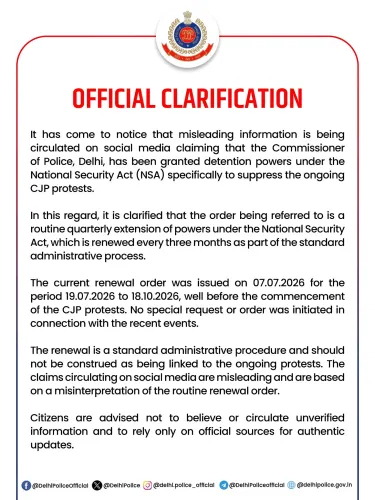
Delhi Police had not issued a public statement on the grounds for detention at the time of the post.
Legal observers are watching for potential habeas corpus petitions or bail proceedings involving the four individuals.
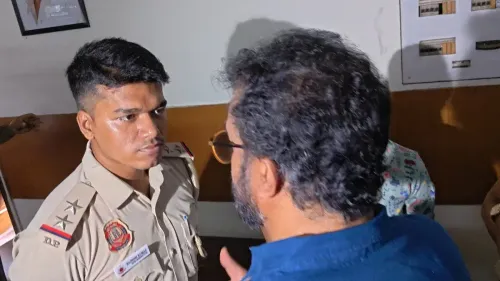
Prominent opposition voices went silent on the streets of New Delhi on Friday, 25 September 2026 — and TMC MP Mahua Moitra wants to know exactly where Delhi Police took them. Moitra went public on X, demanding accountability after Dipankar Bhattacharya, Yogendra Yadav, Anjali Bhardwaj, and Neha (associated with AISA, the All India Students Association) were apparently picked up by the capital's central-government-controlled police force.
Who was detained — and why it matters
Dipankar Bhattacharya is the General Secretary of CPI(ML) Liberation, one of India's most active left-wing parties on labour and peasant rights. Yogendra Yadav is a prominent political activist and former leader of Swaraj India, a fixture at farmer-rights and democratic-reform protests. Anjali Bhardwaj is a leading RTI activist with the National Campaign for People's Right to Information — someone whose work centres on government transparency and accountability. Together, they represent a cross-section of civil society: left politics, electoral reform activism, and the transparency movement.
Moitra's post is pointed and direct: 'Where has Delhi Police taken them? How can peaceful protest in a democracy be handled like this?' The question carries a clear constitutional charge — Article 19 of the Indian Constitution guarantees citizens the right to peaceful assembly and protest, a right that has repeatedly come into tension with the public-order mandate of Delhi Police, which reports to the Union Home Ministry rather than any state government.
A recurring friction in the capital
This is not the first time such scenes have played out in Delhi. Indian authorities have periodically detained demonstrators — particularly those aligned with left-leaning or student organisations — during protests in the capital. The pattern cuts across governments and decades, but the stakes are always the same: where does the state's power to maintain public order end, and where does a citizen's constitutional right to dissent begin?
The fact that Delhi Police functions under central government control — unlike most state police forces — means detentions in the capital carry an inherently political charge. Any action against activists here is read, rightly or wrongly, as a signal from the Union government.
What comes next
As of the time of posting, Delhi Police had not issued a public statement on the grounds for detention. The specific protest event that triggered the action — its location, demands, and organisers — has not been officially confirmed. Legal observers will be watching for any court petitions or bail proceedings involving the four individuals. If habeas corpus applications are filed, they would force police to formally justify the detentions before a magistrate — and put the constitutional question squarely before a judge.
Moitra's intervention ensures the story reaches a national audience fast. Whether Delhi Police responds with a formal statement or remains silent, the pressure is now public — and on the record.
Point of View
She seizes the narrative and forces Delhi Police into a reactive posture. The fact that the detained individuals span left politics, electoral reform, and the RTI movement — rather than a single party — frames this as a broad assault on democratic dissent rather than a partisan skirmish. Coming in a city where police accountability runs directly to the Union government, the question of 'where have you taken them' doubles as a question about the state's appetite for civic protest. Court proceedings, if they follow, will test whether the constitutional guarantee of peaceful assembly has any operational teeth.
NationPress
25 Sept 2026
Frequently Asked Questions
Who did Delhi Police detain on 25 September 2026?
Delhi Police reportedly detained Dipankar Bhattacharya (General Secretary of CPI-ML Liberation), Yogendra Yadav (political activist), Anjali Bhardwaj (RTI activist), and Neha of AISA during what TMC MP Mahua Moitra described as a peaceful protest.
Why did Mahua Moitra post about Delhi Police detaining activists?
Mahua Moitra questioned the legality and democratic legitimacy of the detentions, asking where the individuals had been taken and stating that peaceful protest cannot be handled this way in a democracy.
Who controls Delhi Police?
Delhi Police is controlled by the Union Home Ministry of the central government, unlike most state police forces which answer to elected state governments — making its actions in political protests a matter of national scrutiny.
What is Anjali Bhardwaj known for?
Anjali Bhardwaj is a leading activist with the National Campaign for People's Right to Information, known for her work on government transparency and RTI (Right to Information) accountability in India.
Can police detain peaceful protesters in India?
The Indian Constitution guarantees the right to peaceful assembly under Article 19 , but police can impose restrictions in the interest of public order. Detentions must be legally justified, and individuals can challenge them through habeas corpus petitions in court.