China GDP growth hits 3-year low at 4.3% in April-June 2026

Synopsis
China's economy grew just 4.3% in Q2 2026 — its weakest quarterly performance in over three years — missing Beijing's own growth target as real estate investment cratered 18% and the IMF warned of deep structural problems that no short-term stimulus can fix.
Key Takeaways
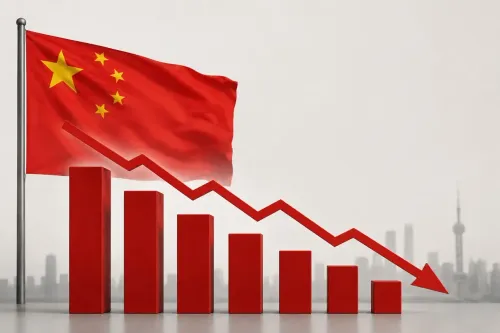
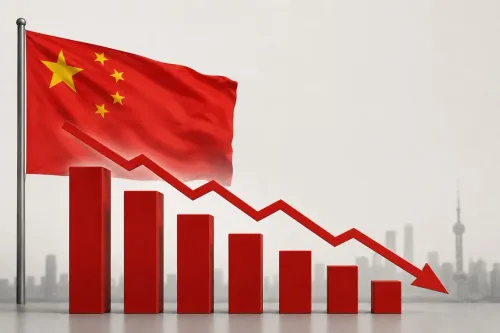
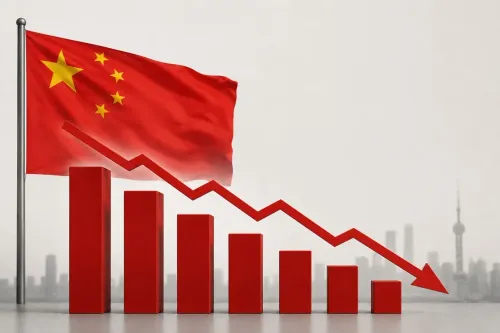
China's GDP grew 4.3 per cent year-on-year in Q2 2026 — the slowest quarterly pace in more than three years.
The reading falls below Beijing's official target range of 4.5–5 per cent .
Real estate investment fell 18 per cent ; infrastructure and manufacturing investment also contracted.
First-half 2026 GDP growth stood at 4.7 per cent , with total output near 69.57 trillion yuan (~ $10.25 trillion ).
The IMF projects China's growth to slow from 5 per cent in 2025 to 4.6 per cent in 2026 , flagging structural weaknesses.
The IMF has urged China to pivot from export-led growth to stronger domestic consumption.
China's GDP expanded just 4.3 per cent year-on-year in the April-June 2026 quarter, the slowest pace in more than three years, as the world's second-largest economy wrestles with a persistent supply-demand imbalance and deepening structural headwinds, according to official data released by the National Bureau of Statistics (NBS) in Beijing on Wednesday, 15 July 2026. The reading falls short of Beijing's own target range of 4.5–5 per cent.
Key Growth Figures
For the first half of 2026, China's gross domestic product grew 4.7 per cent year-on-year, generating output worth approximately 69.57 trillion yuan (around $10.25 trillion). The second-quarter print of 4.3 per cent dragged the half-year average below the government's comfort zone, signalling that the recovery momentum seen in early 2025 has not held.
Where the Weakness Is Concentrated
Investment data from the NBS laid bare the breadth of the slowdown. Real estate investment contracted 18 per cent, reflecting the prolonged property sector crisis that has weighed on household wealth and local government finances. Infrastructure investment fell 2.4 per cent, while manufacturing investment declined 1.2 per cent — suggesting that even export-oriented industrial capacity is no longer absorbing surplus capital at the pace it once did.
The NBS acknowledged the challenges in its own statement: 'The economy ran within a reasonable range. There were many instabilities and uncertainties externally, and the supply-demand imbalance was prominent domestically.'
IMF Warning and Structural Concerns
The data lands just days after the International Monetary Fund (IMF) called on China to urgently overhaul its growth model, shifting away from export dependence toward stronger domestic consumption. The Fund cited weak demand, slowing productivity, and a rapidly ageing population as forces that will constrain growth for years ahead.
Julie Kozack, Director of the IMF's Communications Department, noted that the Fund 'continues to see significant structural weaknesses in the Chinese economy' despite a modest upward revision to this year's forecast. The IMF's latest 'World Economic Outlook' update projects China's growth to slow from 5 per cent in 2025 to 4.6 per cent in 2026 — a slight upgrade from its April projection, but one that Kozack stressed does not diminish longer-term concerns.
Why This Matters Beyond China
A decelerating Chinese economy carries significant implications for global commodity markets, Asian supply chains, and emerging-market export volumes — including India, which competes with China in several manufacturing segments even as it deepens its own industrial push. Notably, this is the weakest quarterly growth reading since early 2023, when the economy was still recovering from pandemic-era restrictions. The pattern of consecutive quarterly deceleration suggests the post-reopening bounce has fully unwound.
What to Watch Next
Analysts will closely track whether Beijing introduces fresh fiscal or monetary stimulus ahead of the National People's Congress standing committee sessions later this year. Any policy response — or absence of one — will be a key signal of how confident the leadership is that the economy can self-correct toward the official growth band.
Point of View
Infrastructure investment contracting, and manufacturing investment shrinking all at once signals that the three traditional engines of Chinese growth are stalling simultaneously. Beijing has so far resisted the kind of large-scale demand stimulus the IMF is prescribing, betting instead on export volumes to carry the load. That bet is looking increasingly fragile as trading partners push back with tariffs and the domestic consumption gap widens. The longer the structural rebalancing is deferred, the sharper the eventual correction.
NationPress
13 Oct 2026
Frequently Asked Questions
What was China's GDP growth rate in Q2 2026?
China's economy grew 4.3 per cent year-on-year in the April-June 2026 quarter, according to the National Bureau of Statistics. This is the weakest quarterly growth rate in more than three years and falls below Beijing's official target range of 4.5–5 per cent.
Why is China's economic growth slowing?
China faces a combination of a severe real estate sector slump, weak domestic demand, slowing productivity, and an ageing population. The National Bureau of Statistics also cited external instabilities and a prominent domestic supply-demand imbalance as key drags.
What did the IMF say about China's economy?
The IMF urged China to urgently shift its growth model away from exports toward domestic consumption, warning that structural weaknesses — including weak demand, slowing productivity, and demographic pressure — will weigh on the economy for years. It projects growth slowing from 5 per cent in 2025 to 4.6 per cent in 2026.
How much did Chinese real estate investment fall?
Real estate investment in China contracted 18 per cent in the reported period, according to official NBS data. Infrastructure investment fell 2.4 per cent and manufacturing investment declined 1.2 per cent over the same period.
What is China's total economic output for the first half of 2026?
China generated approximately 69.57 trillion yuan — around $10.25 trillion — in economic output during the first half of 2026, with year-on-year GDP growth of 4.7 per cent over that period.