Are China’s Official GDP Figures Inflated, Raising Concerns About Its Financial Stability?
Synopsis
As China's GDP growth projections fall below government targets, doubts about its economic health and the integrity of official statistics arise. This report sheds light on critical disparities and urges transparency in economic reporting.
Key Takeaways
China's GDP growth is projected at 2.5-3 percent for 2025.
This is significantly below the official target of 5 percent.
Declines in investment are a key factor in this lower projection.
Independent analyses suggest even lower growth rates than official figures.
There are calls for greater transparency in economic reporting.
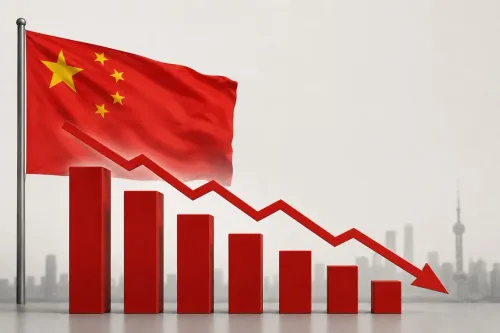
Mumbai, Jan 16 (NationPress) China’s actual GDP growth for 2025 is projected to be around 2.5-3 percent, significantly lower than the government’s declared target of approximately 5 percent. This discrepancy prompts serious doubts regarding the genuine health of the world’s second-largest economy and the dependability of its official statistics, according to a recent report.
The analysis from Mizzima News indicates that this gap is primarily fueled by a pronounced decrease in fixed assets and property investments, ongoing producer-price deflation, and persistent weaknesses in domestic demand, which may further hinder growth into 2026.
According to estimates from the US-based Rhodium Group, Beijing's data for the first three quarters indicated a 5.2 percent year-on-year expansion, which starkly contrasts with independent assessments.
The Rhodium Group forecasts that China's growth could drop to between 1-2.5 percent, significantly lower than international forecasts like those from the International Monetary Fund (IMF), which anticipates around 4.5 percent growth for the following year.
The report emphasizes that fixed-asset investments turned negative by mid-2025, with a downturn in property sector investments adversely impacting broader capital formation.
For over three years, producer prices have been declining, and consumer spending showed only slight increases towards the end of 2025, pointing to weak domestic demand.
While headline inflation in China experienced a modest uptick near year-end, broader price data reveal ongoing weakness in domestic demand and continued deflationary pressures at the producer level, according to the Myanmar-based media outlet.
The report states, "Coupled with diminishing investment, these trends indicate that households and businesses are becoming increasingly cautious, showcasing a deeper malaise beneath the surface."
Furthermore, the report notes that the stark contrast between independent estimates and official figures has intensified calls for greater transparency and robust statistical methodologies.
Critics argue that the official narrative may overlook these discrepancies, particularly during times when leaders feel pressured to maintain public confidence and project economic stability.
“While foreign trade has contributed to sustaining the headline figures, an overreliance on external demand exposes vulnerabilities within the domestic economy and raises concerns about the sustainability of growth,” the report concludes.
Point of View
I believe it is imperative to scrutinize the economic data presented by governments, especially in a global context where transparency is crucial. The discrepancies between independent assessments and official figures in China's case call for a thorough investigation into the methodologies used, ensuring that the public is informed about the true state of our economy.
NationPress
27 Sept 2026
Frequently Asked Questions
What is the expected GDP growth for China in 2025?
China's real GDP growth is anticipated to be between 2.5 to 3 percent for 2025.
How does this figure compare to the official target?
This anticipated growth rate is significantly lower than the government's target of around 5 percent.
What factors are contributing to this decline?
Key factors include a sharp decline in fixed asset and property investments, persistent producer-price deflation, and ongoing weaknesses in domestic demand.
What do independent forecasts suggest for China's economy?
Independent analyses, particularly from the Rhodium Group, predict growth could be as low as 1-2.5 percent, contrasting with the IMF's forecast of around 4.5 percent.
Why are these discrepancies important?
Such discrepancies raise critical concerns about the accuracy of official statistics and the overall transparency in reporting economic data.