Shekhawat hails India-UK FTA as historic win for MSMEs, farmers
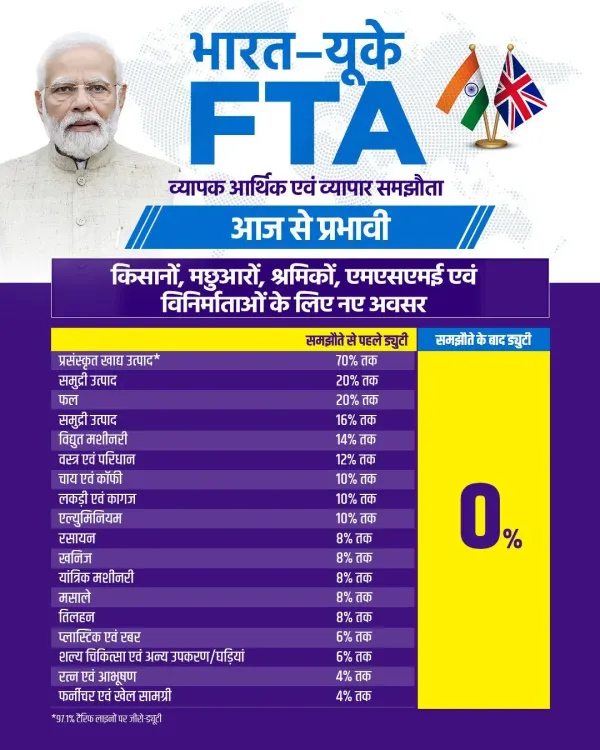
Synopsis
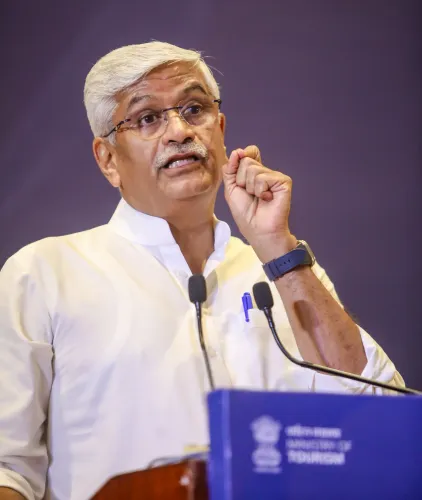
Union Minister Gajendra Singh Shekhawat on 15 July 2026 praised the India-UK FTA as a historic leap for Indian industry, MSMEs, agriculture, and service professionals, crediting PM Modi's leadership and linking the deal to India's Viksit Bharat ambition.
Key Takeaways
Union Culture and Tourism Minister Gajendra Singh Shekhawat publicly welcomed the India-UK Free Trade Agreement on 15 July 2026 .
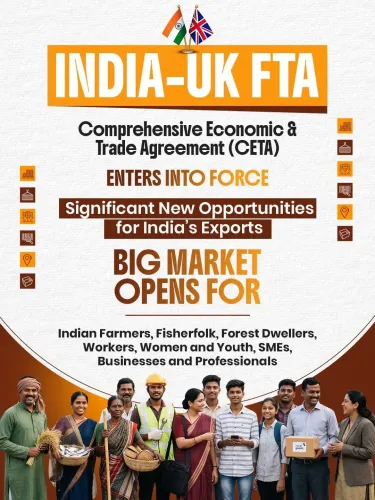
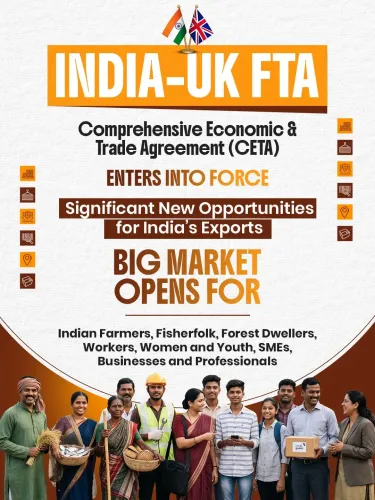
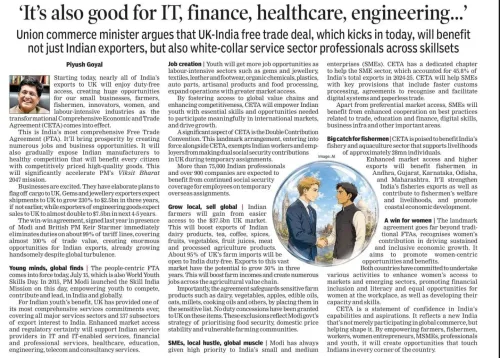
The minister said the FTA brings 'unprecedented opportunities' for Indian industry, agriculture, MSMEs, and the services sector .
A separate social security agreement accompanying the FTA is intended to protect the interests of Indian professionals working in the UK.
Shekhawat linked the deal to PM Narendra Modi 's vision of progressing from Atmanirbhar Bharat to Viksit Bharat .
India-UK trade negotiations were formally launched in 2022 , following similar FTAs with the UAE and Australia .
Full implementation will depend on parliamentary ratification in both countries and publication of detailed tariff schedules.
Union Culture and Tourism Minister Gajendra Singh Shekhawat on Wednesday, 15 July 2026 welcomed the India-UK Free Trade Agreement, calling it a historic milestone that opens unprecedented opportunities for Indian industry, agriculture, MSMEs, and the services sector, and crediting the deal to the leadership of Prime Minister Narendra Modi.
Context
Shekhawat posted in Hindi on X, describing the agreement as 'ऐतिहासिक प्रमाण' ('historic proof') of India's growing global standing. He stated that the accompanying social security pact would ensure 'strong protection of the interests of Indian professionals' working in the United Kingdom. The minister framed the deal as accelerating the journey from Atmanirbhar Bharat (Self-Reliant India) to Viksit Bharat (Developed India).
The #IndiaUKFTA hashtag trended on X as senior government figures across ministries amplified the announcement, reflecting coordinated political messaging around the deal.
Policy Backdrop
Formal negotiations for the India-UK Free Trade Agreement were launched in 2022 following a virtual leaders' summit, part of a broader post-Brexit push by the United Kingdom to forge independent trade partnerships. India had already concluded early-harvest or comprehensive FTAs with the UAE and Australia in 2022, signalling an accelerated trade diplomacy posture under the Modi government.
The Atmanirbhar Bharat initiative, launched in 2020, laid the domestic policy foundation — strengthening manufacturing and reducing import dependence — that negotiators cited as leverage in tariff talks. The pairing of a goods-and-services FTA with a separate social security agreement mirrors the structure used in the Australia deal, where portability of pension and benefit entitlements was a key Indian demand.
Stakeholders and Impact
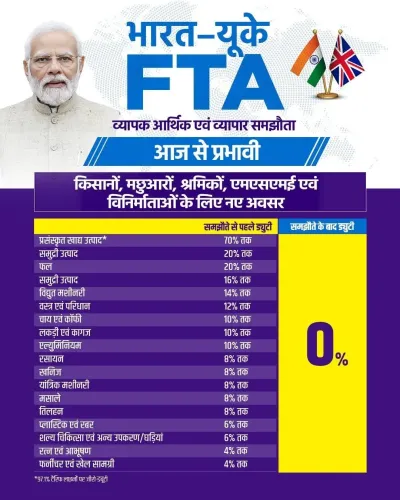
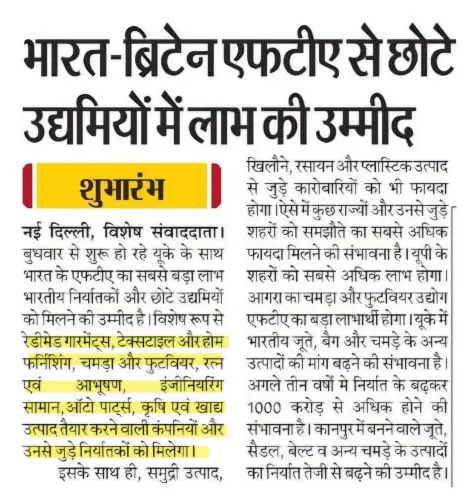
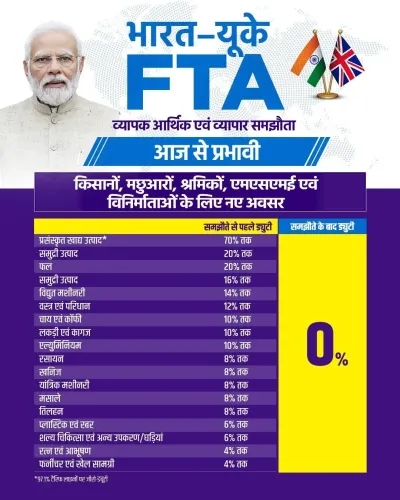
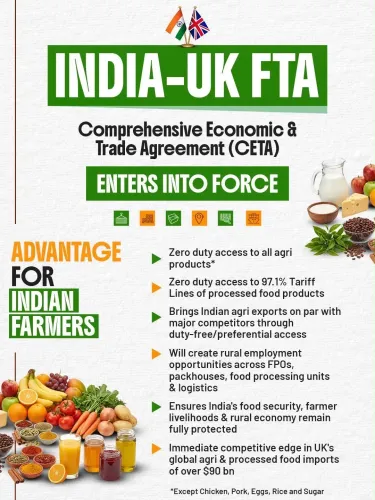
Indian MSMEs stand to gain from reduced tariffs on manufactured exports entering the UK market, while agricultural exporters could benefit from improved market access for products such as processed foods, spices, and rice. The services sector — particularly IT professionals, healthcare workers, and financial services firms — has long sought smoother mobility and recognition of qualifications.
The social security agreement is of particular significance to the estimated 1.8 lakh Indian nationals working in the UK on temporary visas, who previously risked contributing to British social security without being able to claim equivalent benefits upon return. Portability mechanisms are expected to address this long-standing grievance.
What's Next
Parliamentary ratification in both countries and the publication of full tariff schedules will be the immediate next steps, determining the actual depth of liberalisation across sensitive sectors. The rollout of the social security agreement's portability mechanisms — covering pensions and contributory benefits — will require bilateral administrative coordination before Indian professionals can access them.
Analysts will watch whether the deal's agricultural provisions clear domestic political sensitivities in both countries, and whether the services mobility chapter translates into measurable visa-pathway improvements. The India-UK FTA, if implemented as described, would mark one of India's most comprehensive bilateral trade agreements to date, potentially reshaping supply-chain alignments in sectors from textiles to pharmaceuticals.
Point of View
A deal the government is positioning as proof that Modi-era diplomacy delivers tangible economic dividends — not just strategic optics. By explicitly invoking both 'Atmanirbhar Bharat' and 'Viksit Bharat', the messaging bridges two distinct political slogans across the Modi government's tenure, signalling continuity of economic nationalism. The inclusion of the social security pact in the same breath as tariff liberalisation is deliberate: it pre-empts Opposition lines about the deal benefiting corporations while neglecting Indian workers abroad. Whether the FTA's actual tariff schedules and mobility provisions live up to this framing will determine its political durability.
NationPress
13 Oct 2026
Frequently Asked Questions
What is the India-UK FTA and what does it cover?
The India-UK Free Trade Agreement is a bilateral trade deal aimed at reducing tariffs and expanding market access for goods, services, and investments between India and the United Kingdom. It is accompanied by a social security agreement to protect the rights and benefits of Indian professionals working in the UK.
How does the India-UK FTA benefit Indian MSMEs?
Indian MSMEs stand to gain from lower tariffs on their manufactured exports entering the UK market, making their products more price-competitive. The deal is also expected to ease regulatory barriers and improve access to British supply chains.
What is the social security agreement with the UK about?
The social security agreement is designed to ensure that Indian professionals working in the UK can have their pension and benefit contributions recognised and made portable, preventing a situation where workers pay into the British system without being able to claim equivalent benefits when they return to India.
When did India-UK FTA negotiations begin?
Formal negotiations for the India-UK Free Trade Agreement were launched in 2022 following a virtual leaders' summit, as part of the UK's post-Brexit strategy to build independent trade partnerships.
What is Viksit Bharat and how is it linked to the India-UK FTA?
'Viksit Bharat' means 'Developed India' and is the Modi government's overarching goal of making India a fully developed nation by 2047. The government is positioning the India-UK FTA as a key step in that journey, building on the earlier 'Atmanirbhar Bharat' or Self-Reliant India initiative.