Shekhawat shares Modi's call to lead future economy
Synopsis
Union Minister Gajendra Singh Shekhawat amplified PM Modi's message on June 19, 2026, asserting that India is preparing to lead the global future economy by making its youth future-ready in emerging technologies, under the Viksit Bharat vision.
Key Takeaways
Union Culture and Tourism Minister Gajendra Singh Shekhawat shared a quote by PM Narendra Modi on June 19, 2026 .
PM Modi stated that while the world prepares for the future economy, India is preparing to lead it .
The post was tagged with #PMViksitBharatRozgarYojana , linking it to the government's employment and skilling agenda.
The Viksit Bharat vision targets developed-nation status for India by 2047 .
The Skill India Mission , launched in 2015 , remains a core vehicle for training youth in future-oriented sectors.
Operational details of any scheme under the hashtag are yet to be officially announced.
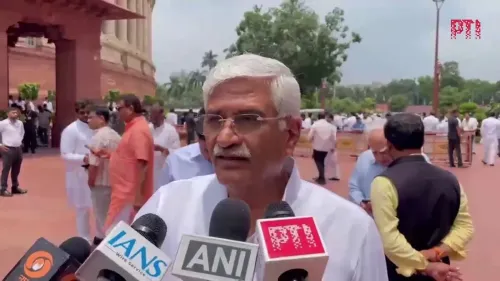
Union Culture and Tourism Minister Gajendra Singh Shekhawat on Friday, June 19, 2026, shared a statement attributed to Prime Minister Narendra Modi underscoring India's ambition to lead the global future economy and equip its youth with next-generation skills.
Context
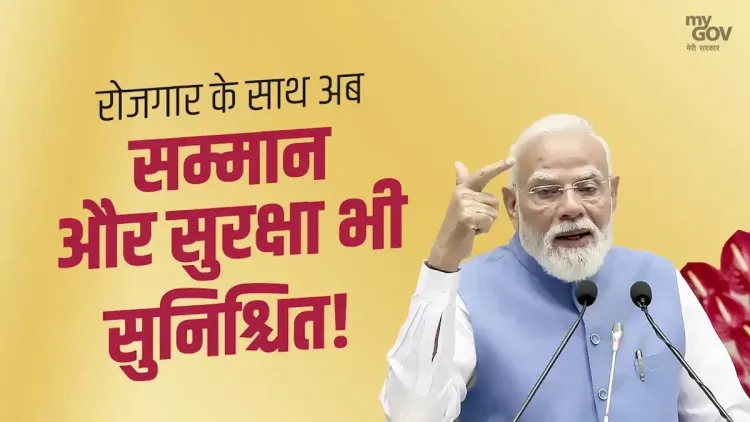
The post quotes PM Modi as saying: 'दुनिया भविष्य की अर्थव्यवस्था के लिए तैयार हो रही है और भारत भविष्य की अर्थव्यवस्था का नेतृत्व करने की तैयारी कर रहा है' — 'The world is preparing for the future economy, and India is preparing to lead the future economy.' The Prime Minister further stated that while the world is moving towards future technologies, India is focused on making its youth 'future ready,' calling it the biggest opportunity for Indian youth.
The message was shared alongside the hashtag #PMViksitBharatRozgarYojana, linking it to the broader Viksit Bharat vision that targets developed-nation status for India by 2047.
Policy Backdrop
PM Modi first articulated the Viksit Bharat vision in 2022-23, setting a long-horizon goal of transforming India into a fully developed economy within a generation. The Skill India Mission, launched in 2015, has been a key instrument of this strategy, aiming to train hundreds of millions of young Indians in sectors ranging from digital services to advanced manufacturing.
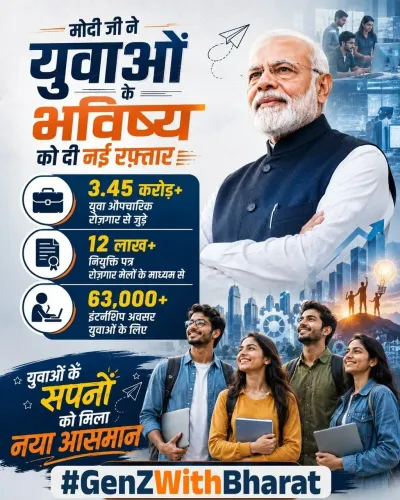
Successive Union Budgets have progressively prioritised future-of-work competencies — artificial intelligence, semiconductors, green energy, and digital infrastructure — as pillars of India's economic transformation. The demographic dividend, with more than 65 per cent of India's population below the age of 35, is consistently cited by the government as the country's most decisive competitive asset.
Stakeholders and Impact
The primary beneficiaries of policies aligned with this vision are India's youth workforce, particularly those entering the labour market in the coming decade. Skilling initiatives tied to future technologies are intended to raise formal employment rates and improve productivity across sectors.
Industry stakeholders in technology, manufacturing, and services stand to gain from a larger pool of future-ready talent. State governments and vocational training institutions are also key implementation partners in translating such policy signals into on-ground programmes.
What's Next
Concrete operational details, budget allocations, and eligibility criteria for any scheme linked to the #PMViksitBharatRozgarYojana hashtag are expected to be clarified through official government announcements, potentially at the next Union Budget or the Independence Day address. Minister Shekhawat's amplification of the message signals continued political momentum behind the Viksit Bharat employment agenda.
As India positions itself at the intersection of a young population and a rapidly evolving global technology landscape, the government's ability to convert this policy intent into scalable skilling outcomes will be closely watched by economists and labour market analysts alike.
Point of View
Reinforcing the BJP's messaging around the Viksit Bharat brand ahead of potential scheme announcements. The hashtag #PMViksitBharatRozgarYojana suggests an employment-linked programme is being seeded in public discourse before a formal launch, a pattern consistent with the government's pre-Budget communication strategy. For the BJP, framing India's demographic dividend as a leadership asset rather than a liability is a durable electoral and policy narrative. How quickly the rhetoric translates into verifiable scheme guidelines will determine whether this remains aspirational messaging or becomes a concrete policy milestone.
NationPress
19 Sept 2026
Frequently Asked Questions
What is PM Viksit Bharat Rozgar Yojana?
#PMViksitBharatRozgarYojana is a hashtag circulating in association with India's Viksit Bharat vision, which targets developed-nation status by 2047. Official scheme details, eligibility, and budget allocations have not yet been publicly announced.
What did PM Modi say about India's future economy?
PM Modi stated that while the world is preparing for the future economy, India is preparing to lead it, and that making Indian youth future-ready in emerging technologies is the biggest opportunity for the country's young population.
What is the Viksit Bharat vision?
Viksit Bharat is a long-term development goal articulated by PM Modi in 2022-23, aiming to transform India into a fully developed economy by 2047, India's centenary of independence.
What is Gajendra Singh Shekhawat's role in the government?
Gajendra Singh Shekhawat is the Union Minister of Culture and Tourism, a senior BJP leader, and a Lok Sabha Member of Parliament from Jodhpur, Rajasthan.
How is India preparing youth for future technologies?
India has pursued youth skilling through initiatives such as the Skill India Mission, launched in 2015, which targets training in sectors including artificial intelligence, digital services, and advanced manufacturing.