Shekhawat Backs Skill India on World Youth Skills Day

Synopsis
On World Youth Skills Day, Union Minister Gajendra Singh Shekhawat backed the Skill India Mission, urging youth to move beyond degrees and build competencies in AI, Robotics, and Digital Services as the foundation of a developed India.
Key Takeaways
World Youth Skills Day is observed on 15 July every year, established by the UN General Assembly in 2014 .
Union Minister Gajendra Singh Shekhawat used the occasion to publicly endorse the Skill India Mission .
The Skill India Mission was launched in July 2015 to provide vocational and industry-relevant training to hundreds of millions of Indians.
The minister highlighted AI, Robotics, and Digital Services as key sectors where Indian youth are proving their competencies.
Shekhawat framed skilled youth as the 'strongest and unbreakable foundation' of the Viksit Bharat vision.
The programme's curriculum has evolved to integrate emerging technologies, addressing employability gaps in manufacturing and services.
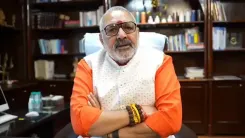
Union Culture and Tourism Minister Gajendra Singh Shekhawat on Wednesday, 15 July 2026, marked World Youth Skills Day by championing the Skill India Mission, calling skilled youth the strongest foundation of a developed India. The minister's post, shared on his official X account, urged young Indians to look beyond degrees and embrace competencies in AI, Robotics, and Digital Services.
Context
World Youth Skills Day is observed every year on 15 July, a date established by a UN General Assembly resolution in 2014 to spotlight the importance of equipping young people with skills for employment and entrepreneurship. Shekhawat's post, written in Hindi, opens with a vivid metaphor: 'कागज के विमान से उड़ान भरने वाले सपने' ('dreams that take flight from a paper aeroplane') become a self-reliant reality when paired with skill and craft.
The minister described today's youth as no longer confined to being mere degree-holders, but as professionals proving their abilities in modern industries and opening new opportunities for the world through their competencies.
Policy Backdrop
The Skill India Mission was launched in July 2015 alongside the National Policy for Skill Development and Entrepreneurship 2015, with the stated aim of training hundreds of millions of Indians in vocational and industry-relevant skills. Over the decade since its launch, the programme has progressively integrated emerging technologies — including AI and Robotics — into its training curricula to address widening employability gaps in manufacturing and services.
Successive central governments have positioned skill development as central to economic self-reliance, framing it as a complement to — and in some respects a corrective for — a formal education system historically oriented toward degree attainment over practical competency. Shekhawat's post explicitly echoes this framing, contrasting 'job-seekers' with skill-empowered youth who 'open doors to new opportunities for the world.'
Stakeholders and Impact
The primary beneficiaries of the Skill India Mission are Indian youth and vocational trainees across sectors ranging from manufacturing and construction to digital services and healthcare. The programme's pivot toward AI and Robotics curricula is aimed at aligning India's workforce supply with the demands of a rapidly digitising economy.
Shekhawat invoked what he called the 'त्रिवेणी' — the 'confluence' — of hunar (skill), seva (service), and sanskar (values), framing skilled youth not merely as economic assets but as the 'strongest and unbreakable foundation of tomorrow's developed India.' The remark underscores the government's broader narrative linking workforce development to the Viksit Bharat (Developed India) vision.
What's Next
Periodic outcome reports from the Skill India Mission are expected to detail enrolment figures, certification rates, and placement outcomes across trades and technology verticals. Observers will watch for announcements of new AI and digital-skills modules, particularly around future World Youth Skills Day observances, as the government looks to demonstrate measurable progress against its workforce-transformation targets.
As India continues to position its demographic dividend as a competitive advantage on the global stage, the alignment of skill policy with frontier technologies will remain a key test of whether ambition translates into verifiable outcomes for millions of young trainees.
Point of View
Anchoring the Skill India Mission to a globally recognised moment. The invocation of AI, Robotics, and the 'Viksit Bharat' frame signals that the government is keen to project its skilling agenda as forward-looking and technology-first, not merely a legacy vocational programme. The rhetorical move from 'job-seeker' to 'opportunity-creator' also tracks a deliberate shift in how the ruling dispensation wants the youth employment debate framed ahead of future electoral cycles. Whether the messaging is matched by verifiable outcome data from Skill India will determine how durable this narrative proves to be.
NationPress
13 Oct 2026
Frequently Asked Questions
What is World Youth Skills Day and when is it observed?
World Youth Skills Day is an annual observance held on 15 July each year, established by the UN General Assembly in 2014 to highlight the importance of equipping young people with skills for employment, decent work, and entrepreneurship.
What is the Skill India Mission?
The Skill India Mission is a Government of India programme launched in July 2015 aimed at training hundreds of millions of Indians in vocational and industry-relevant skills, including emerging fields such as AI and Robotics , to improve employability and promote entrepreneurship.
What did Gajendra Singh Shekhawat say on World Youth Skills Day 2026?
Minister Gajendra Singh Shekhawat posted on X that Indian youth, supported by the Skill India Mission , are no longer limited to being degree-holders but are proving their abilities in AI, Robotics, and Digital Services , and are the 'strongest foundation' of a developed India.
What is Viksit Bharat?
Viksit Bharat — meaning 'Developed India' — is the Indian government's overarching vision for transforming India into a fully developed nation, with skill development and workforce modernisation positioned as central pillars of this goal.
How does Skill India Mission address AI and technology training?
The Skill India Mission has progressively updated its curricula to include training in AI, Robotics, and Digital Services , aiming to align India's workforce with the demands of a rapidly digitising economy and reduce dependence on traditional degree-based qualifications.