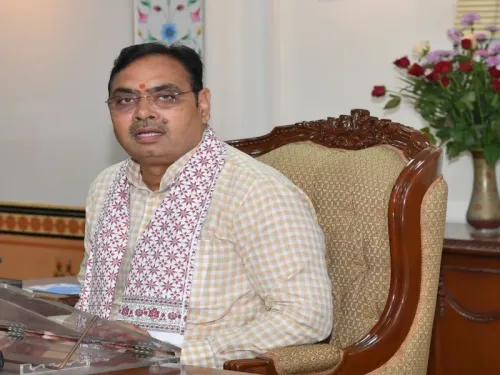
CM Bhajan Lal Hails India-UK FTA as Historic Milestone
Synopsis
Rajasthan Chief Minister Bhajan Lal Sharma on 15 July 2026 welcomed the India-UK Free Trade Agreement coming into force, saying it opens the British market to Indian farmers, MSMEs, startups, and professionals, and advances the Viksit Bharat vision under PM Modi.
Key Takeaways
Rajasthan CM Bhajan Lal Sharma publicly endorsed the India-UK FTA on 15 July 2026 , the date he said the agreement entered into force.
The deal is described as a Comprehensive Economic and Trade Agreement covering trade, investment, and a social-security coordination chapter for Indian professionals in the UK.
Sharma named farmers, fisherfolk, MSMEs, startups, entrepreneurs, and young professionals as direct beneficiaries of expanded access to the British market.
The FTA is positioned within India's Atmanirbhar Bharat framework, framing trade liberalisation as complementary to domestic manufacturing goals.
India-UK negotiations began formally in January 2022 , following earlier FTAs with the UAE (February 2022) and Australia (December 2022) .
Next milestones include first-quarter UK export data and parliamentary scrutiny of rules of origin and tariff-rate quotas .
Rajasthan Chief Minister Bhajan Lal Sharma on Wednesday, 15 July 2026, welcomed the coming into effect of the India-UK Free Trade Agreement (FTA), calling it a transformative chapter for 140 crore Indians and a decisive step in linking domestic aspirations to global opportunities under Prime Minister Narendra Modi's leadership.
Context
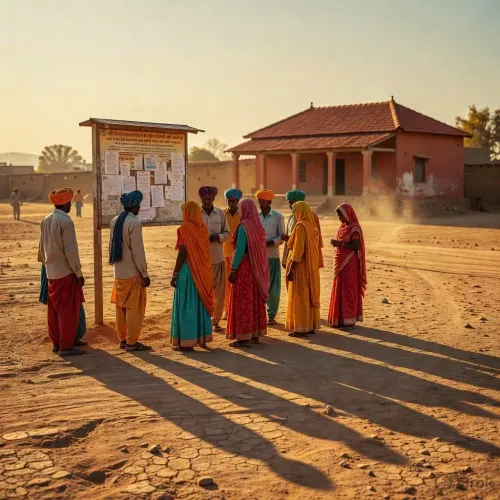
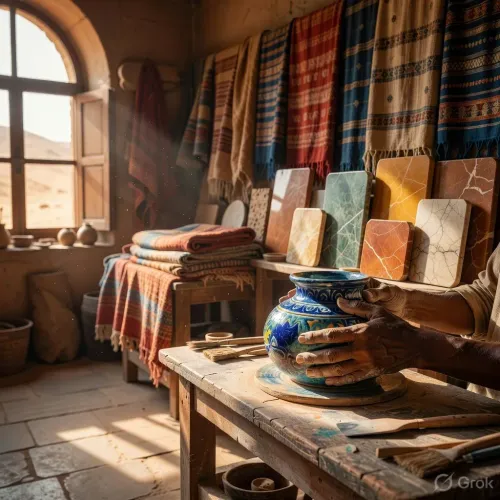
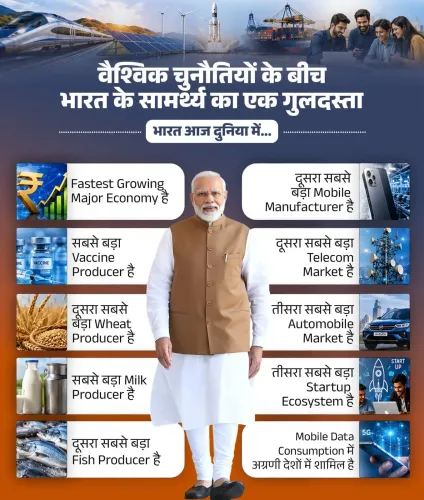
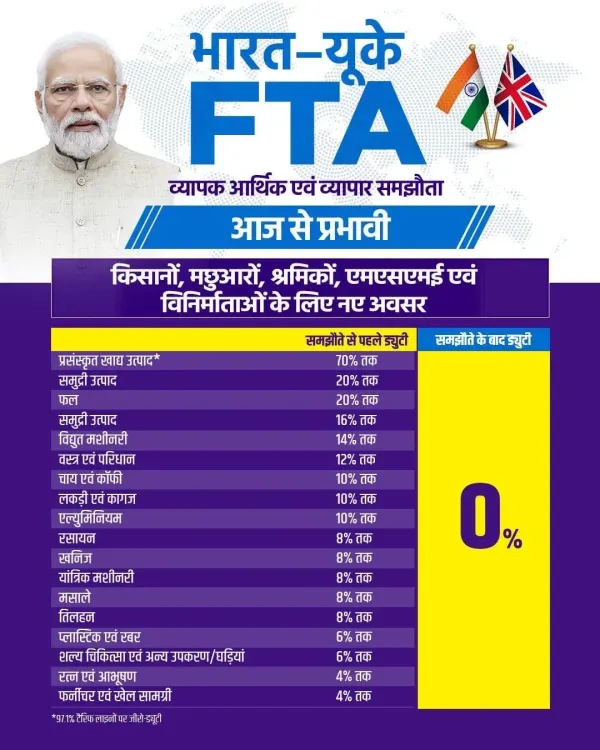
In his post on X, CM Bhajan Lal Sharma described the agreement — formally a Comprehensive Economic and Trade Agreement — as having come into effect on 15 July 2026. He wrote, 'Bharat ki vaishvik aarthik yatra ne aaj ek aitihasik mil ka patthar paar kiya hai' ('India's global economic journey has crossed a historic milestone today'), crediting PM Modi's 'visionary leadership' for the deal's conclusion. The post was accompanied by two images marking the occasion.
The FTA also includes a social-security agreement that Sharma said would strengthen protections for Indian professionals working in the United Kingdom, a provision long sought by the Indian diaspora in OECD countries.
Policy Backdrop
Formal negotiations for an India-UK FTA were launched in January 2022 following a joint announcement the previous year, accelerating after the United Kingdom's exit from the European Union opened space for independent bilateral trade arrangements. The agreement is part of a broader Indian strategy of expanding its bilateral trade network, which previously yielded agreements with the UAE in February 2022 and Australia in December 2022.
The deal fits within the framework of Atmanirbhar Bharat — the national self-reliance initiative launched in 2020 — which frames trade agreements as complementary to domestic manufacturing goals rather than substitutes for them. India has accelerated bilateral and regional pacts since 2020 to diversify export markets and reduce dependence on a narrow set of trading partners.
Stakeholders and Impact
CM Sharma specifically named farmers, fisherfolk, MSMEs, startups, entrepreneurs, and young professionals as the primary beneficiaries, arguing the pact 'opens new doors to the vast British market' for Indian goods and services. Typical FTAs of this kind combine tariff liberalisation with chapters on investment, intellectual property, and labour mobility.
The inclusion of a social-security coordination chapter is particularly significant for the large community of Indian professionals in the United Kingdom, addressing long-standing concerns about double contributions to pension and social-insurance systems. Sharma projected that the agreement would generate new employment opportunities and give Indian products fresh recognition in global competition.
What's Next
Attention will now turn to the publication of first-quarter export data to the UK under the new regime, as well as the implementation details governing rules of origin and tariff-rate quotas that will determine how quickly Indian exporters can realise the benefits. Parliamentary questions on these operational specifics are expected as the agreement moves from signing to enforcement.
For India, the FTA with the UK represents another node in a growing web of bilateral economic partnerships that the government frames as pillars of its 'Viksit Bharat' — or Developed India — vision, with CM Sharma's endorsement signalling the BJP's intent to project the deal as a political and economic achievement ahead of future electoral cycles.
Point of View
And BJP leaders rallying around it — including state-level figures like CM Bhajan Lal Sharma — signals a coordinated effort to brand the deal as a Modi-era achievement. The explicit mention of a social-security agreement is notable: it addresses a pressure point from the Indian diaspora that previous trade frameworks left unresolved. By weaving in 'Viksit Bharat' and 'Atmanirbhar Bharat' language, the party is positioning trade liberalisation not as a concession but as an expression of national confidence. Watch for whether implementation speed on tariff-rate quotas matches the political enthusiasm.
NationPress
13 Oct 2026
Frequently Asked Questions
What is the India-UK FTA and when did it come into effect?
The India-UK Free Trade Agreement is a Comprehensive Economic and Trade Agreement covering tariff reduction, investment, intellectual property, and labour mobility. According to Rajasthan CM Bhajan Lal Sharma's post, it came into effect on 15 July 2026 .
Who benefits from the India-UK Free Trade Agreement?
The agreement is expected to benefit Indian farmers, fisherfolk, MSMEs, startups, entrepreneurs, and young professionals by opening access to the British market, while a social-security chapter protects Indian professionals already working in the UK.
What is the social-security agreement included in the India-UK FTA?
The social-security coordination chapter is designed to protect Indian professionals working in the United Kingdom from double contributions to pension and social-insurance systems, a long-standing demand of the Indian diaspora in OECD countries.
How does the India-UK FTA relate to Atmanirbhar Bharat?
Atmanirbhar Bharat , launched in 2020, frames trade agreements as complementary to domestic manufacturing. The India-UK FTA is presented as expanding global markets for Indian goods while reinforcing, rather than undermining, local production capacity.
What other trade deals has India signed in recent years?
India concluded agreements with the UAE in February 2022 and Australia in December 2022 , with the India-UK FTA being the latest in a series of bilateral trade pacts aimed at diversifying India's export markets.