CM Bhajan Lal marks 6 years of PM SVANidhi scheme
Synopsis
Rajasthan Chief Minister Bhajan Lal Sharma marked six years of PM SVANidhi on 1 June 2026, crediting the collateral-free micro-credit scheme with benefiting over 75 lakh families and welcoming its reported extension to March 2030 as proof of the central government's commitment to urban informal workers.
Key Takeaways
PM SVANidhi completed six years on 1 June 2026 , having launched on 1 June 2020 under the Atmanirbhar Bharat package.
Rajasthan CM Bhajan Lal Sharma said the scheme has benefited more than 75 lakh families through collateral-free loans, financial inclusion, and digital empowerment.
The scheme was designed to provide working capital loans — initially up to Rs 10,000 — to urban street vendors affected by COVID-19 restrictions.
Sharma welcomed a reported central government decision to extend the scheme until March 2030 , calling it a 'historic decision.' The scheme sits within a broader policy arc that includes Jan Dhan accounts and Mudra loans , all targeting financial inclusion for the unorganised sector.
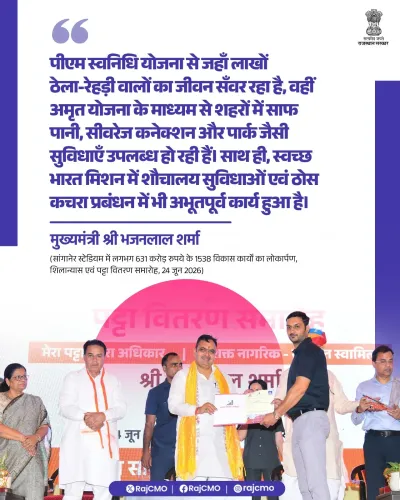
Rajasthan Chief Minister Bhajan Lal Sharma on Monday, 1 June 2026 marked the sixth anniversary of the Pradhan Mantri SVANidhi scheme, calling it a transformative journey of 'struggle, dignity, and self-reliance' for millions of street vendors and pavement traders across India. The BJP leader praised Prime Minister Narendra Modi's vision and credited the scheme with delivering collateral-free credit, financial inclusion, and digital empowerment to the urban informal workforce.
Context
In his post, Sharma described the six years of PM SVANidhi as 'संघर्ष, सम्मान और आत्मनिर्भरता की प्रेरक यात्रा' ('an inspiring journey of struggle, dignity, and self-reliance'). He framed the scheme's arc as a shift 'गुजारे से आत्मनिर्भरता' — 'from bare subsistence to self-reliance' — attributing this outcome to Modi's 'far-sighted thinking and unwavering resolve for the welfare of the poor.' Sharma also noted that the scheme has so far benefited more than 75 lakh families, providing them economic support alongside confidence and respect.
The Chief Minister further welcomed what he described as a central government decision to extend the scheme until March 2030, calling it proof of the government's commitment to the poor, marginalised, and working classes. He expressed gratitude to the Prime Minister for what he termed a 'historic decision.'
Policy Backdrop
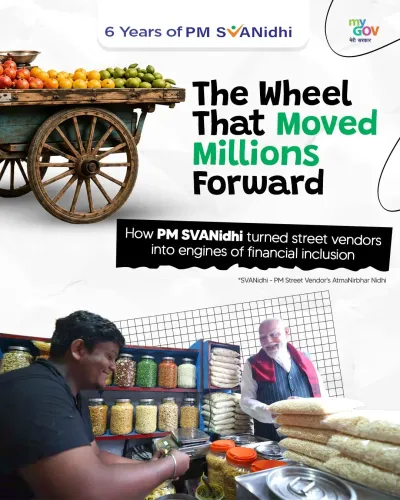
PM SVANidhi — formally the Pradhan Mantri Street Vendor's AtmaNirbhar Nidhi scheme — was launched on 1 June 2020 by the Ministry of Housing and Urban Affairs as part of the Atmanirbhar Bharat economic package announced in response to the COVID-19 pandemic. It was designed to provide working capital loans to urban street vendors whose livelihoods had been disrupted by lockdowns and movement restrictions.
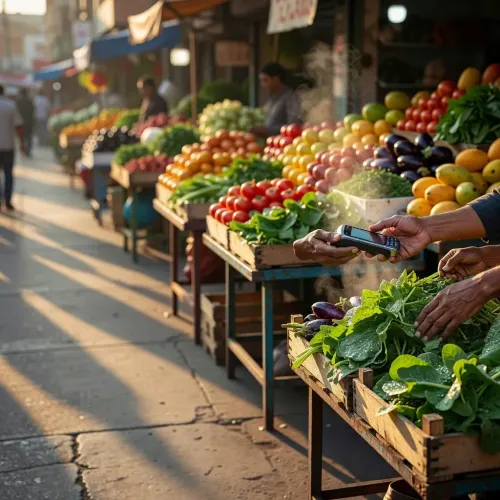
The scheme initially offered collateral-free loans of up to Rs 10,000, with enhanced credit tiers for vendors who repaid on time. It also integrated a digital payments incentive, nudging vendors toward cashless transactions and formal financial systems. This placed PM SVANidhi within a broader continuum of central government financial-inclusion efforts, including Jan Dhan accounts and Mudra loans, all targeting the unorganised sector.
Stakeholders and Impact
The primary beneficiaries of PM SVANidhi are urban street vendors — a segment of the workforce that has historically operated outside formal credit channels. Access to collateral-free loans has allowed many vendors to restock inventory, upgrade their setups, and build credit histories for the first time. The scheme's digital payments component has also drawn a portion of this workforce into the formal banking ecosystem.
State governments, including Rajasthan, have played a key role in on-ground implementation, identifying eligible vendors, facilitating loan applications through urban local bodies, and tracking disbursement progress. CM Sharma's public endorsement on the scheme's anniversary signals continued state-level political commitment to its rollout and the broader Atmanirbhar Bharat narrative.
What's Next
If the reported extension to March 2030 is formalised, it would convert what began as emergency pandemic relief into a medium-term self-employment support programme — consistent with a pattern seen across other components of the Atmanirbhar Bharat framework. State-level disbursement data and digital-onboarding progress reports are expected to be key metrics by which the extended programme's performance will be assessed.
With the scheme now entering its seventh year, the focus is likely to shift toward deepening credit access in smaller cities and ensuring repeat borrowers graduate to higher loan tiers, reinforcing the scheme's stated goal of building a self-reliant informal economy.
Point of View
Sharma reinforces the BJP's pro-poor narrative ahead of a period when welfare delivery will be closely scrutinised. The framing of PM SVANidhi as a journey 'from subsistence to self-reliance' is consistent with the Atmanirbhar Bharat brand that the central government has cultivated since 2020. The post also signals that state BJP leaders are expected to amplify central scheme anniversaries as part of coordinated political communication.
NationPress
25 Sept 2026
Frequently Asked Questions
What is PM SVANidhi scheme?
PM SVANidhi — the Pradhan Mantri Street Vendor's AtmaNirbhar Nidhi scheme — is a central government programme launched on 1 June 2020 that provides collateral-free working capital loans to urban street vendors, initially up to Rs 10,000, with higher credit tiers for timely repayers.
How many people have benefited from PM SVANidhi?
According to Rajasthan CM Bhajan Lal Sharma's post marking the scheme's sixth anniversary, more than 75 lakh families have benefited from PM SVANidhi since its launch in 2020.
Has PM SVANidhi been extended?
CM Bhajan Lal Sharma stated in his post on 1 June 2026 that the scheme has been extended until March 2030, describing the decision as proof of the central government's commitment to the poor and working classes.
Who launched PM SVANidhi and when?
PM SVANidhi was launched by Prime Minister Narendra Modi's government on 1 June 2020 through the Ministry of Housing and Urban Affairs as part of the Atmanirbhar Bharat economic relief package during the COVID-19 pandemic.
What did Rajasthan CM say about PM SVANidhi?
Rajasthan Chief Minister Bhajan Lal Sharma marked the scheme's sixth anniversary on 1 June 2026 by calling it an inspiring journey of struggle, dignity, and self-reliance, crediting PM Modi's vision and welcoming the reported extension of the scheme to March 2030.