Jal Shakti Minister Paatil marks 6 years of PM SVANidhi
Synopsis
Union Jal Shakti Minister C. R. Paatil on 1 June 2026 marked six years of PM SVANidhi, the Modi government's flagship collateral-free loan scheme for street vendors, calling it an inspiring journey of service, trust, and empowerment for lakhs of urban micro-entrepreneurs across India.
Key Takeaways
PM SVANidhi completed six years on 1 June 2026 , having been launched on 1 June 2020 as part of the Atmanirbhar Bharat package.
The scheme offers collateral-free working capital loans of up to Rs 50,000 to street vendors and small traders.
Paatil extended wishes to all beneficiaries and credited PM Narendra Modi's leadership for the scheme's reach.
The nodal ministry for implementation is the Ministry of Housing and Urban Affairs , working through urban local bodies and lending institutions.
The scheme is part of a broader financial-inclusion drive that includes Jan Dhan accounts and Mudra loans , targeting India's informal sector.
Successive enhancements have raised loan ceilings and added digital on-boarding to extend coverage to tier-2 and tier-3 cities .
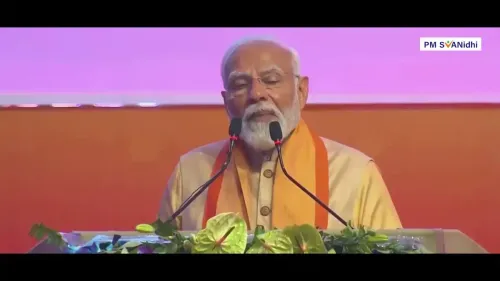
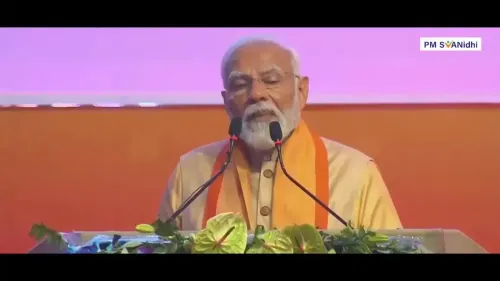
Union Jal Shakti Minister C. R. Paatil on Monday, 1 June 2026 marked the sixth anniversary of the PM SVANidhi scheme, crediting Prime Minister Narendra Modi's visionary leadership for empowering millions of street vendors and small traders with financial inclusion and dignified livelihoods. The minister extended warm wishes to all beneficiaries of the scheme, calling the six-year journey a symbol of service, trust, and empowerment.
Context
Paatil's post, written in Hindi, described the scheme's anniversary as 'sewa, vishwas aur sashaktikaran ki ek prerak yatra' ('an inspiring journey of service, trust, and empowerment'). He noted that the scheme has given 'vittiya sashaktikaran, sammanjaniya aajivika aur atmanirbharta ki nayi shakti' ('financial empowerment, dignified livelihood, and new strength of self-reliance') to lakhs of hardworking citizens engaged in street vending and small businesses. The minister also acknowledged beneficiaries' contribution to strengthening the national economy.
Policy Backdrop
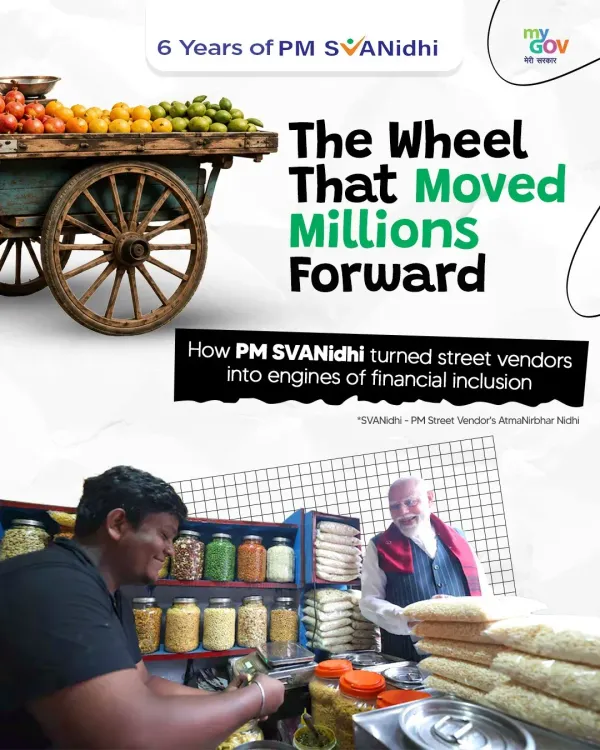
The Pradhan Mantri Street Vendor's AtmaNirbhar Nidhi (PM SVANidhi) was launched on 1 June 2020 as part of the Atmanirbhar Bharat stimulus package, originally conceived to provide relief to street vendors whose livelihoods were disrupted by COVID-19 lockdowns. The scheme, administered by the Ministry of Housing and Urban Affairs through urban local bodies and lending institutions, offers collateral-free working capital loans of up to Rs 50,000 to street vendors. Over successive years, the government has raised loan ceilings and introduced digital on-boarding features to extend coverage to vendors in tier-2 and tier-3 cities.
The scheme sits within a broader post-2014 financial-inclusion architecture that includes Jan Dhan accounts and Mudra loans, all aimed at formalising credit access for India's informal sector. PM SVANidhi is notable for targeting the most granular layer of urban micro-enterprise — the pavement and cart vendor — who had historically been excluded from institutional lending.
Stakeholders and Impact
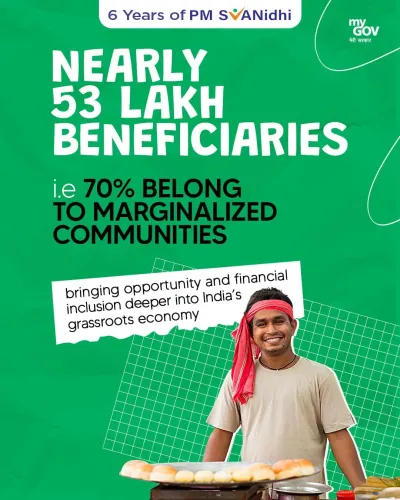
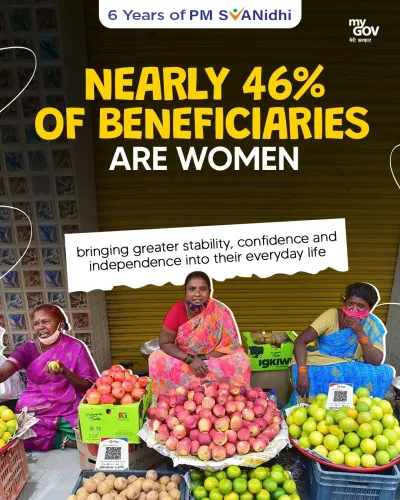
The primary beneficiaries are street vendors and urban micro-entrepreneurs across Indian cities, a constituency that spans vegetable sellers, fruit cart operators, cobblers, and small food stall owners. By providing collateral-free loans and integrating digital payment incentives, the scheme has sought to bring these workers into the formal financial system, enabling credit histories that can unlock larger borrowing in future cycles.
The broader urban economy also benefits: formalised vendors contribute to local tax bases and supply chains, while reduced dependence on informal moneylenders lowers household debt stress. Senior BJP leaders regularly mark the scheme's milestones, underscoring its political salience as a visible welfare delivery mechanism ahead of urban and state elections.
What's Next
Attention will now turn to cumulative disbursement and repayment data that the Ministry of Housing and Urban Affairs is expected to release around the anniversary. Analysts and urban policy researchers will watch for any further upward revision of loan limits, expanded credit guarantee mechanisms, or integration with upcoming urban development or budget announcements that could deepen the scheme's reach into India's vast informal sector.
Point of View
Reinforcing the BJP's narrative of inclusive economic governance ahead of electoral cycles. PM SVANidhi occupies a unique space in the party's communication strategy because it targets the hyper-visible, hyper-relatable constituency of street vendors — a group whose daily struggle resonates with a vast urban and semi-urban voter base. The minister's framing around 'service, trust, and empowerment' echoes the broader Atmanirbhar Bharat lexicon, signalling continuity in the government's messaging on self-reliance. The emphasis on economic contribution by beneficiaries also subtly repositions informal workers from welfare recipients to active participants in national growth — a narrative shift with long-term political dividends.
NationPress
15 Oct 2026
Frequently Asked Questions
What is PM SVANidhi scheme?
PM SVANidhi, or Pradhan Mantri Street Vendor's AtmaNirbhar Nidhi, is a central government scheme launched on 1 June 2020 that provides collateral-free working capital loans of up to Rs 50,000 to street vendors and small traders to support their livelihoods.
When was PM SVANidhi launched?
PM SVANidhi was launched on 1 June 2020 as part of the Atmanirbhar Bharat economic stimulus package introduced during the COVID-19 pandemic to support street vendors affected by lockdowns.
Who can apply for PM SVANidhi loan?
Street vendors and small traders operating in urban areas are eligible to apply for PM SVANidhi loans through urban local bodies and empanelled lending institutions under the Ministry of Housing and Urban Affairs.
What is the maximum loan amount under PM SVANidhi?
The scheme provides collateral-free working capital loans of up to Rs 50,000, with loan limits having been raised in successive enhancements since the scheme's launch in 2020.
What did C. R. Paatil say about PM SVANidhi anniversary?
Union Jal Shakti Minister C. R. Paatil said the six-year journey of PM SVANidhi is a symbol of service, trust, and empowerment, and that the scheme has given financial empowerment and dignified livelihoods to lakhs of hardworking street vendors and small traders.