PM Modi Marks 6 Years of PM SVANidhi Street Vendor Scheme
Synopsis
Prime Minister Narendra Modi marked the sixth anniversary of PM SVANidhi on 1 June 2026, crediting the collateral-free credit scheme with transforming livelihoods for street vendors across urban India through financial inclusion and dignity-centred empowerment since its 2020 launch.
Key Takeaways
PM SVANidhi completed 6 years on 1 June 2026 , having been launched on 1 June 2020 under the Atmanirbhar Bharat package.
The scheme offers collateral-free working capital loans to street vendors with no fixed premises or credit history.
The Ministry of Housing and Urban Affairs is the nodal ministry; urban local bodies implement it on the ground.
PM SVANidhi builds on the collateral-free credit model pioneered by Pradhan Mantri Mudra Yojana (2015) and Jan Dhan accounts.
Digital payment incentives embedded in the scheme aim to bring informal vendors into the formal financial ecosystem.
Possible future integration with DAY-NULM and state vendor-ID programmes could expand the scheme's reach further.
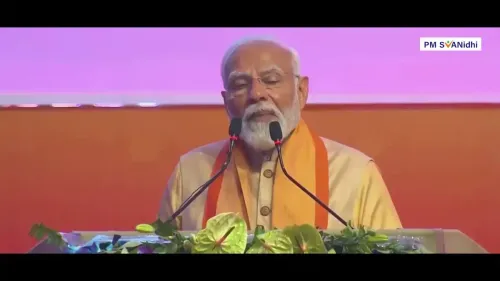
Prime Minister Narendra Modi on Monday, 1 June 2026 marked the sixth anniversary of the PM SVANidhi scheme, hailing it as a transformative programme that has delivered collateral-free credit, financial inclusion and new growth opportunities to street vendors across urban India.
Context
The PM Street Vendor's AtmaNirbhar Nidhi (PM SVANidhi) scheme was launched on 1 June 2020 under the Atmanirbhar Bharat stimulus package, originally designed to provide swift liquidity relief to street vendors whose livelihoods were devastated by COVID-19 lockdowns. The Ministry of Housing and Urban Affairs serves as the nodal ministry, implementing the scheme through urban local bodies across the country.
In his post, Modi described the scheme as being 'all about trust, dignity and empowerment,' extending his best wishes to beneficiaries and stakeholders on the milestone anniversary.
Policy Backdrop
PM SVANidhi extended the government's established collateral-free credit architecture — first scaled through Pradhan Mantri Mudra Yojana (2015) and Jan Dhan accounts — specifically to the informal urban workforce. The scheme offers working capital loans with digital onboarding and repeat-loan incentives designed to draw vendors into the formal financial ecosystem.
Unlike large infrastructure outlays, PM SVANidhi was conceived as a rapid-liquidity instrument targeting the bottom of the urban economy. Its design reflects a post-pandemic policy pivot toward shoring up informal livelihoods in cities, where millions of vendors operate without fixed premises or credit histories.
Stakeholders and Impact
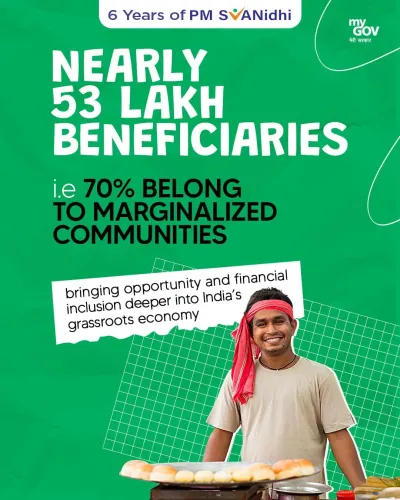
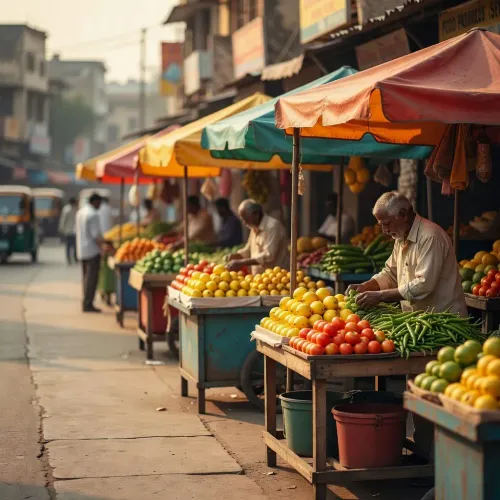
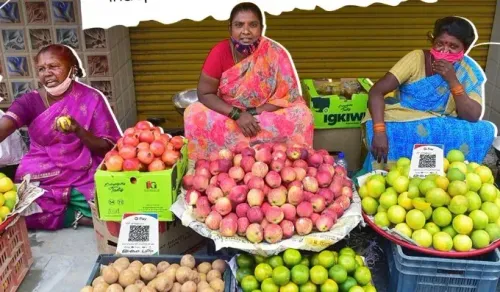
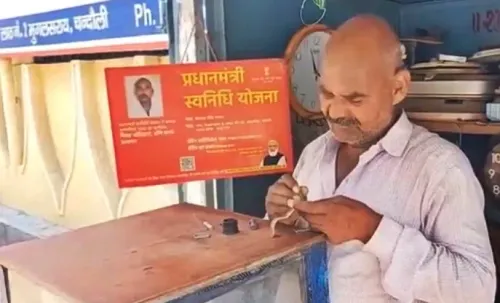
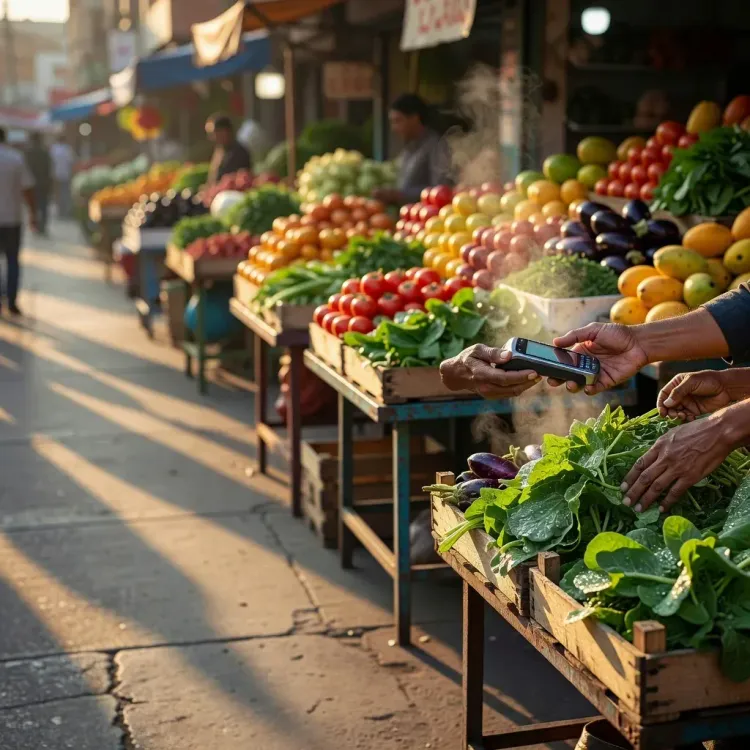
The primary beneficiaries are street vendors — hawkers, cart operators and pavement sellers — who have historically been excluded from formal banking credit due to the absence of collateral. Urban local bodies across states have served as the on-ground implementation machinery, issuing vendor identification certificates that unlock loan eligibility.
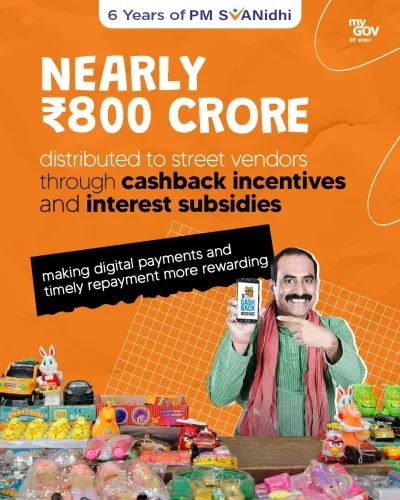
The scheme's integration with digital payment incentives has also nudged a segment of the informal workforce toward cashless transactions, creating a credit footprint for first-time borrowers. This positions PM SVANidhi as both a welfare instrument and a financial inclusion pipeline for urban India's informal sector.
What's Next
Observers will watch for possible revisions to loan disbursement targets and potential convergence of PM SVANidhi with programmes such as the Deendayal Antyodaya Yojana – National Urban Livelihoods Mission (DAY-NULM) or state-level vendor-ID initiatives. Any such integration could be signalled in forthcoming urban housing policy updates or the next Union Budget.
As the scheme enters its seventh year, the government's emphasis on 'trust and dignity' for the informal workforce signals that street vendor welfare will remain a visible plank of its urban development narrative.
Point of View
Visible and politically resonant in India's cities. By framing the scheme around 'trust, dignity and empowerment' rather than raw disbursement numbers, Modi is reinforcing a values-based political identity for a programme born out of pandemic necessity. PM SVANidhi fits neatly into a broader arc of collateral-free credit expansion — from Mudra to Jan Dhan to street vendors — that the government presents as proof of inclusive growth. As the scheme matures, the policy challenge will be deepening credit access beyond first-cycle borrowers and ensuring repeat-loan uptake translates into sustained livelihood improvement.
NationPress
16 Sept 2026
Frequently Asked Questions
What is PM SVANidhi scheme?
PM SVANidhi, or PM Street Vendor's AtmaNirbhar Nidhi, is a central government scheme launched on 1 June 2020 that provides collateral-free working capital loans to street vendors, helping them access formal credit and rebuild livelihoods disrupted by COVID-19 lockdowns.
When was PM SVANidhi launched?
PM SVANidhi was launched on 1 June 2020 as part of the Atmanirbhar Bharat stimulus package announced by the Modi government in response to the economic impact of the COVID-19 pandemic.
Who implements PM SVANidhi?
The Ministry of Housing and Urban Affairs is the nodal ministry for PM SVANidhi. Urban local bodies across states handle on-ground implementation, including issuing vendor identification certificates that make vendors eligible for loans.
Who benefits from PM SVANidhi?
Street vendors — including hawkers, cart operators and pavement sellers — who lack collateral or a formal credit history are the primary beneficiaries of PM SVANidhi.
How does PM SVANidhi relate to other Modi government schemes?
PM SVANidhi extends the collateral-free credit model first scaled through Pradhan Mantri Mudra Yojana (2015) and Jan Dhan accounts, applying the same approach specifically to urban street vendors in the informal sector.