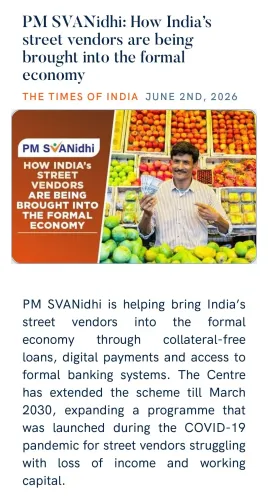
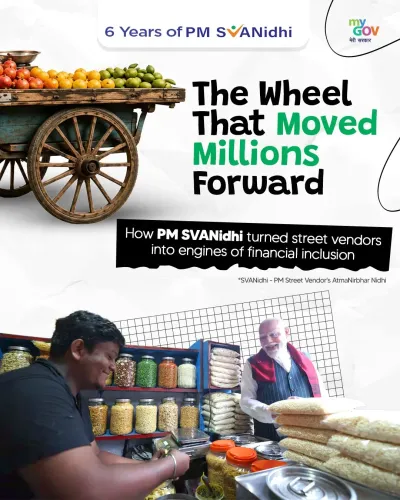
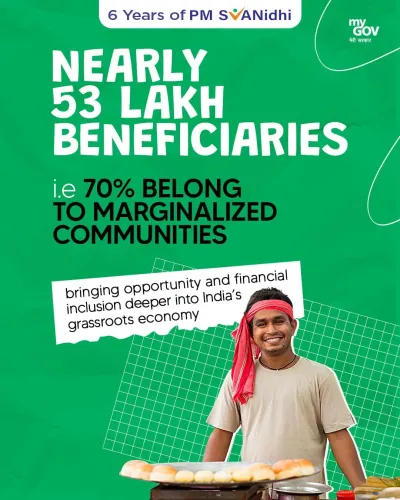
CM Gujarat Marks 6 Years of PM SVANidhi Street Vendor Scheme

Synopsis
The Chief Minister's Office of Gujarat marked the sixth anniversary of PM SVANidhi on June 1, 2026, highlighting how the central micro-credit scheme has provided collateral-free working capital loans to street vendors since its launch on June 1, 2020, under Prime Minister Narendra Modi's Atmanirbhar Bharat package.
Key Takeaways
PM SVANidhi completed six years on June 1, 2026 , with Gujarat's CMO issuing a commemorative post in Gujarati.
The scheme was launched on June 1, 2020 under the Atmanirbhar Bharat package to support street vendors hit by pandemic lockdowns.
The programme provides collateral-free working capital loans of up to Rs 50,000 to eligible street vendors.
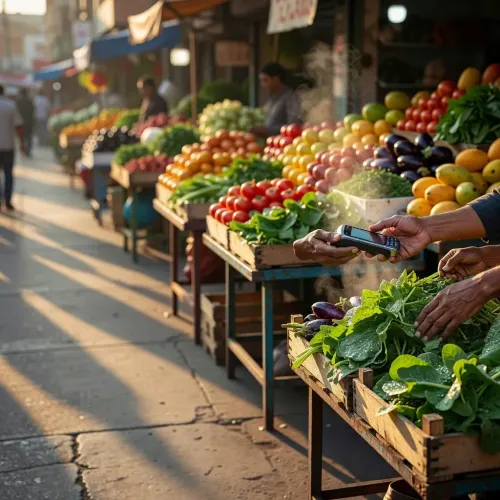
The scheme promotes digital transaction adoption and financial inclusion of informal-sector workers.
Gujarat's CMO credited PM Narendra Modi with steering the initiative that has helped vendors rebuild livelihoods and achieve self-reliance.
Analysts are watching for fresh disbursement data and any announcements on scheme extension or enhanced loan limits .
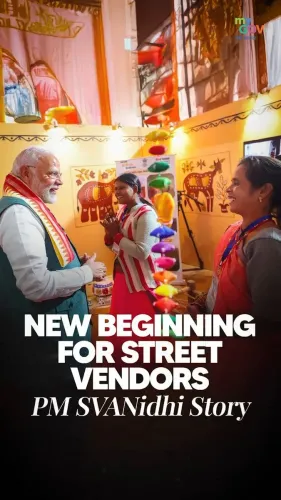
The Chief Minister's Office of Gujarat on Monday, June 1, 2026 marked the sixth anniversary of the Pradhan Mantri SVANidhi (PM SVANidhi) scheme, highlighting how the central micro-credit programme has provided financial support, fulfilled aspirations, and opened doors to self-reliance for street vendors across India over the past six years.
Posting in Gujarati under the hashtag #6YearsofPMSVANidhi, the CMO stated: 'ફેરિયાઓને મળ્યો આર્થિક આધાર, સપનાં થયાં સાકાર અને ખૂલ્યાં આત્મનિર્ભરતાના દ્વાર' — meaning, 'street vendors received financial support, dreams were realised, and the doors of self-reliance were opened.' The post credited Prime Minister Narendra Modi with leading the initiative that was launched on June 1, 2020.
Context
PM SVANidhi was launched on June 1, 2020 as part of the broader Atmanirbhar Bharat package, a suite of economic measures introduced in response to the disruptions caused by pandemic-related lockdowns. The scheme was designed specifically to address the vulnerability of urban street vendors — an informal-sector workforce largely excluded from conventional banking and credit systems. The anniversary post from Gujarat's CMO underscores continued state-level engagement with the programme's messaging and outcomes.Policy Backdrop
Under PM SVANidhi, eligible street vendors can access collateral-free working capital loans starting at Rs 10,000, with the ceiling raised over successive rounds to Rs 50,000 for vendors who repay on time and demonstrate digital transaction behaviour. The scheme integrates micro-credit with digital onboarding, nudging beneficiaries toward formal financial ecosystems. It sits within a larger architecture of central schemes targeting self-employment and micro-enterprise revival in urban and peri-urban India, including linkages to urban livelihood missions. The six-year milestone is being observed nationally, with state governments amplifying the central government's messaging.Stakeholders and Impact
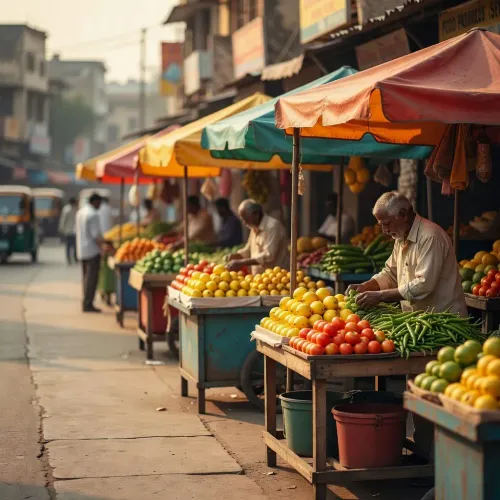
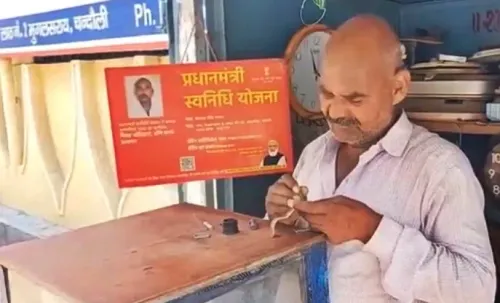
The primary beneficiaries of PM SVANidhi are street vendors — hawkers, thela operators, and pavement sellers — whose livelihoods were disproportionately affected by lockdown-era restrictions. By providing collateral-free credit, the scheme aimed to help vendors restock inventory, resume operations, and gradually build credit histories. Gujarat, as one of India's more urbanised states with a significant informal trading economy, has been an active implementation ground for the scheme. The CMO's anniversary communication reflects the state government's alignment with the Centre's financial-inclusion narrative for informal workers.What's Next
With the scheme completing six years, attention will turn to state-level disbursement and loan-renewal data, which central ministries periodically release. Any announcement on scheme extension, enhanced loan limits, or convergence with urban livelihood missions would be the next significant development to watch. The anniversary also sets the stage for potential policy reviews and fresh targets for vendor registration and digital transaction adoption in states including Gujarat. Sustained political attention to the informal sector suggests the programme's mandate is likely to be reinforced rather than wound down.Point of View
Doors of Atmanirbharta opened' — the messaging aligns with the BJP's broader political economy of positioning micro-credit as empowerment rather than relief. At six years, the scheme is mature enough to demand performance scrutiny, and anniversary communications of this kind often precede either expansion announcements or consolidation with allied urban livelihood programmes. The informal sector's integration into formal credit and digital ecosystems remains a live policy frontier, and PM SVANidhi continues to be a visible marker of that ambition.
NationPress
22 Sept 2026
Frequently Asked Questions
What is PM SVANidhi scheme?
PM SVANidhi , or the Pradhan Mantri Street Vendor's AtmaNirbhar Nidhi, is a central government micro-credit scheme launched on June 1, 2020 that provides collateral-free working capital loans of up to Rs 50,000 to street vendors to help them rebuild livelihoods.
When was PM SVANidhi launched?
The scheme was launched on June 1, 2020 by the Government of India under Prime Minister Narendra Modi as part of the Atmanirbhar Bharat economic package introduced in response to pandemic-related disruptions.
Who benefits from PM SVANidhi?
Urban street vendors — including hawkers, thela operators, and pavement sellers — are the primary beneficiaries, gaining access to formal credit, digital transaction incentives, and a pathway to financial inclusion.
How much loan can a street vendor get under PM SVANidhi?
Vendors can initially access Rs 10,000 in working capital. Timely repayment and digital transactions qualify them for enhanced loans in successive rounds, up to a ceiling of Rs 50,000 .
What did Gujarat's CMO say about PM SVANidhi on its anniversary?
On June 1, 2026 , the Chief Minister's Office of Gujarat posted in Gujarati stating that under PM Modi's leadership, street vendors had received financial support, seen their dreams realised, and found the doors of self-reliance opened over the scheme's six years.