Gujarat CMO marks 6 years of PM SVANidhi for street vendors
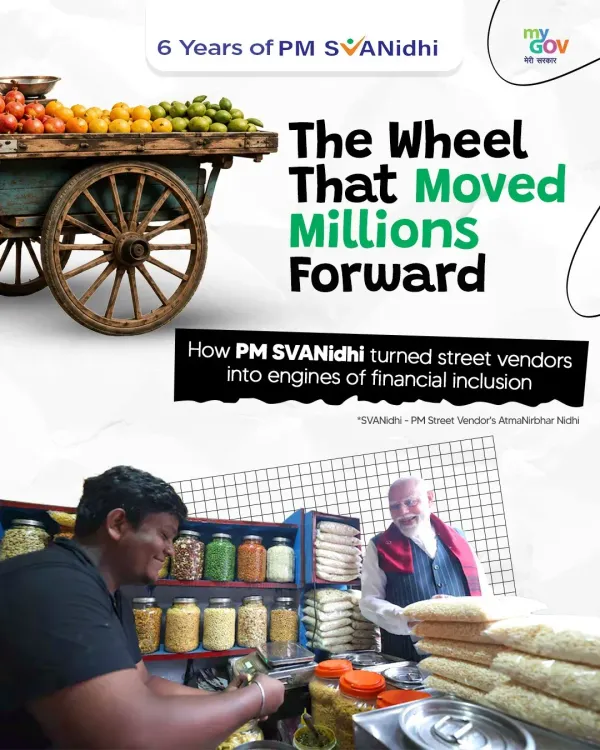
Synopsis
The Chief Minister's Office of Gujarat marked six years of PM SVANidhi Yojana on 1 June 2026, highlighting the scheme's role in providing collateral-free micro-credit to street vendors under PM Modi's vision of self-employment and self-reliance.
Key Takeaways
PM SVANidhi Yojana completed six years on 1 June 2026 , with Gujarat's CMO office marking the milestone publicly.
The scheme was launched in June 2020 under the Atmanirbhar Bharat package to support street vendors during COVID-19 disruptions.
It provides collateral-free working capital loans to street vendors through the Ministry of Housing and Urban Affairs .
The programme is framed around PM Modi's principles of Swarozgar, Swavlamban aur Swabhiman — self-employment, self-reliance, and self-respect.
The scheme complements earlier financial-inclusion efforts such as Mudra Yojana by targeting the informal urban vending workforce specifically.
Gujarat integrates the central scheme into its local vending zone and livelihood policy frameworks.
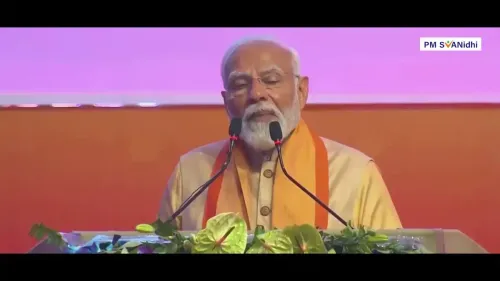
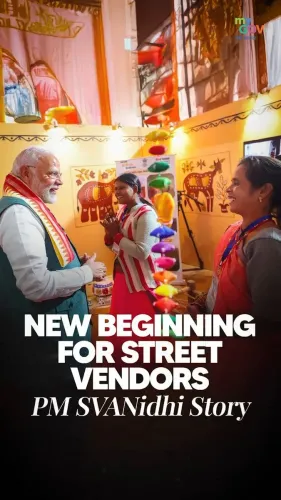
The Chief Minister's Office of Gujarat on Monday, 1 June 2026, marked the sixth anniversary of PM SVANidhi Yojana, describing the micro-credit scheme as having transformed the livelihoods of street vendors across the country through the principles of self-employment, self-reliance, and self-respect.
Context
The CMO Gujarat's post stated that PM SVANidhi Yojana, driven by Prime Minister Narendra Modi's vision of Swarozgar, Swavlamban aur Swabhiman (self-employment, self-reliance, and self-respect), has 'turned roadside dreams of millions of hardworking street vendors into mainstream success' in its six years of operation. The post was shared as part of the hashtag campaign #6YearsofPMSVANidhi, reflecting coordinated messaging across BJP-governed states on the scheme's anniversary.
Policy Backdrop
PM SVANidhi — formally the PM Street Vendor's AtmaNirbhar Nidhi scheme — was launched in June 2020 by the Ministry of Housing and Urban Affairs as part of the Atmanirbhar Bharat economic package announced during the COVID-19 pandemic. The scheme provides collateral-free working capital loans to street vendors, enabling them to restart or expand their livelihoods after economic disruptions. It was among the first formal credit interventions specifically targeting India's large informal urban vending workforce, extending the logic of earlier programmes such as Mudra Yojana into the street-vendor segment.
The scheme operates through a tiered loan structure, with vendors eligible for higher credit limits upon timely repayment of earlier tranches. Digital transaction incentives were built into the programme to nudge vendors toward formal payment ecosystems, aligning with broader financial-inclusion goals.
Stakeholders and Impact
Street vendors — a significant component of India's urban informal economy — are the primary beneficiaries of the scheme. These include vegetable sellers, fruit vendors, tea stall operators, cobblers, and other self-employed individuals who typically lack collateral or formal credit histories required by conventional banking channels. The scheme's design specifically addressed their exclusion from mainstream finance.
Gujarat has been among the states that have integrated central urban livelihood programmes into local vending zone and livelihoods policy frameworks. The CMO's public acknowledgement of the anniversary underscores the state government's alignment with the Centre's welfare messaging on the scheme's milestone.
What's Next
Analysts and urban policy observers will watch for state-level disbursement data and any revisions to loan ceilings or interest subvention norms that may be announced in forthcoming Union Budgets or urban policy updates. As the scheme enters its seventh year, questions around graduation pathways — how vendors move from micro-credit to sustained formal enterprise — are likely to shape its next phase of design and evaluation.
Point of View
BJP-governed-state messaging exercise that frames PM SVANidhi as a flagship welfare success story ahead of potential policy revisions or budget cycles. The scheme itself occupies a meaningful place in the Modi government's financial-inclusion architecture, bridging the gap between the unbanked informal workforce and formal credit. By invoking the triad of Swarozgar, Swavlamban, and Swabhiman, the messaging ties a technocratic micro-credit instrument to a broader ideological narrative of self-reliant citizenship. The anniversary also signals that street-vendor welfare — long a politically and electorally sensitive constituency in urban India — remains central to the ruling dispensation's outreach strategy.
NationPress
20 Sept 2026
Frequently Asked Questions
What is PM SVANidhi Yojana?
PM SVANidhi Yojana is a central government micro-credit scheme that provides collateral-free working capital loans to street vendors. It was launched in June 2020 under the Ministry of Housing and Urban Affairs as part of the Atmanirbhar Bharat economic package during the COVID-19 pandemic.
When was PM SVANidhi scheme launched?
PM SVANidhi was launched in June 2020, making June 2026 its sixth anniversary. It was introduced as part of the Atmanirbhar Bharat package to help street vendors recover from pandemic-related economic disruptions.
Who benefits from PM SVANidhi Yojana?
Street vendors including vegetable sellers, fruit vendors, tea stall operators, cobblers, and other self-employed individuals in urban areas benefit from the scheme. It specifically targets those who lack collateral or formal credit histories.
What does Swarozgar Swavlamban Swabhiman mean in the context of PM SVANidhi?
These three Hindi terms — Swarozgar (self-employment), Swavlamban (self-reliance), and Swabhiman (self-respect) — are the guiding principles cited by the government for PM SVANidhi, reflecting its aim to bring informal vendors into the formal economic mainstream with dignity.
How does PM SVANidhi differ from Mudra Yojana?
While both schemes target informal and self-employed workers, PM SVANidhi is specifically designed for street vendors and includes digital transaction incentives. Mudra Yojana has a broader scope covering micro and small enterprises across sectors.