CM Bhupendra Patel marks 6 years of PM SVANidhi scheme

Synopsis
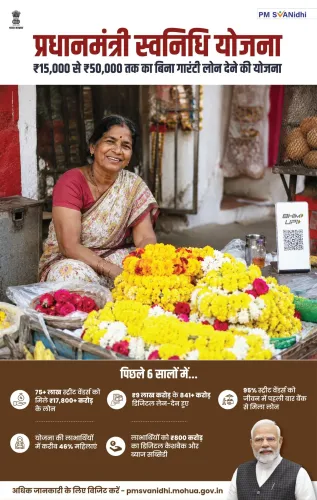
Gujarat Chief Minister Bhupendra Patel on 1 June 2026 marked six years of PM SVANidhi, the collateral-free loan scheme for street vendors. Over 75 lakh vendors have received more than Rs 17,800 crore in credit, with 95 per cent accessing formal banking for the first time.
Key Takeaways
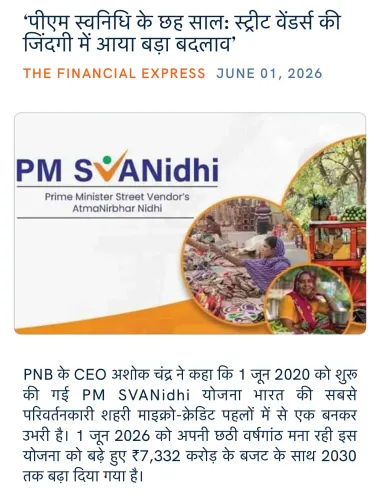
PM SVANidhi completed six years on 1 June 2026 , having launched on 1 June 2020 as part of the Atmanirbhar Bharat package.
More than 75 lakh street vendors across India have benefited from the scheme since inception.
Total loans disbursed under the scheme exceed Rs 17,800 crore , offered in tranches from Rs 10,000 to Rs 50,000 without collateral.
95 per cent of beneficiaries received a formal bank loan for the first time in their lives.
A significant number of women vendors have been empowered through the programme.
The scheme is administered by the Ministry of Housing and Urban Affairs and aligns with India's broader financial inclusion architecture including Jan Dhan accounts.
Gujarat Chief Minister Bhupendra Patel on Monday, 1 June 2026 congratulated beneficiaries of the PM SVANidhi scheme as it completed six years since its launch, crediting the programme with transforming the lives of street vendors across India through collateral-free credit access.
Context
Posting on X, CM Patel described the scheme as 'chhote vikretaon ke samman, swabhimaan aur aatmanirbharta ka sashakt aadhar' — 'a strong foundation for the dignity, self-respect and self-reliance of small vendors.' He extended greetings to all beneficiaries on the occasion of the sixth anniversary, attributing the initiative to Prime Minister Narendra Modi's leadership.
The post highlights that the scheme provides collateral-free working capital loans ranging from Rs 10,000 to Rs 50,000 in tranches, enabling rehdi-patri vikreta (street and cart vendors) to access formal credit, many for the first time in their lives.
Policy Backdrop
PM SVANidhi — formally the PM Street Vendor's AtmaNirbhar Nidhi scheme — was launched on 1 June 2020 by the Ministry of Housing and Urban Affairs as part of the Atmanirbhar Bharat package to support urban informal workers severely affected by COVID-19 lockdowns. The scheme was designed to break the cycle of dependence on informal moneylenders by linking vendors directly to scheduled banks and microfinance institutions.
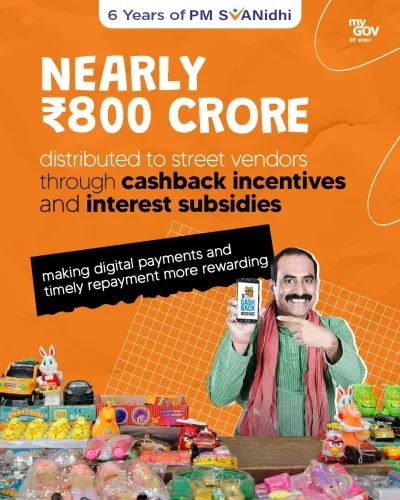
The scheme built on earlier financial inclusion pillars such as Pradhan Mantri Mudra Yojana (2015) and the Jan Dhan account network, adding digital payment incentives as a reward mechanism for timely repayment and encouraging vendors to graduate to higher loan tranches.
Scale and Impact
According to figures cited by CM Patel, more than 75 lakh street vendors have received loans totalling over Rs 17,800 crore since the scheme's inception. Notably, 95 per cent of beneficiaries accessed a formal bank loan for the first time in their lives — a figure that underscores the scheme's role as a first-contact point with the formal financial system for a large segment of the urban poor.
A significant number of women vendors have also been empowered through the programme, the Chief Minister noted, reflecting the scheme's reach into some of the most economically vulnerable urban households. States such as Gujarat have reported high participation rates among women and repeat borrowers who have graduated to higher loan limits.
What's Next
With the scheme entering its seventh year, attention will turn to updated national disbursement and repayment data expected from the Ministry of Housing and Urban Affairs. Analysts and vendor welfare groups will also watch for any announcement on further enhancement of loan ceilings or a formal extension of the scheme in the next Union Budget.
The six-year milestone reinforces the central government's broader push to integrate the urban informal workforce into the formal credit ecosystem — a project that, if sustained, could reduce the vulnerability of millions of street vendors to economic shocks similar to those of 2020.
Point of View
Using a six-year milestone to spotlight a scheme that directly touches the livelihoods of crores of informal workers. The emphasis on 95 per cent first-time bank borrowers is politically potent — it frames the party as the agent of financial inclusion for those historically excluded from formal credit. By foregrounding women vendors, the messaging also taps into a proven mobilisation constituency. The post fits a broader BJP pattern of using scheme anniversaries as occasions to reinforce governance credibility rather than announce new policy.
NationPress
20 Sept 2026
Frequently Asked Questions
What is PM SVANidhi scheme?
PM SVANidhi — PM Street Vendor's AtmaNirbhar Nidhi — is a central government scheme launched on 1 June 2020 that provides collateral-free working capital loans of up to Rs 50,000 in tranches to street vendors across India, administered by the Ministry of Housing and Urban Affairs.
How many beneficiaries has PM SVANidhi helped so far?
According to figures cited by Gujarat CM Bhupendra Patel on the scheme's sixth anniversary, more than 75 lakh street vendors have received loans totalling over Rs 17,800 crore since the scheme's launch in June 2020.
Who launched the PM SVANidhi scheme?
The scheme was launched by Prime Minister Narendra Modi's government on 1 June 2020 as part of the Atmanirbhar Bharat economic relief package to support urban street vendors affected by COVID-19 lockdowns.
What is the loan amount under PM SVANidhi?
The scheme offers collateral-free working capital loans starting from Rs 10,000, with eligible beneficiaries able to graduate to higher tranches of up to Rs 50,000 upon timely repayment.
How does PM SVANidhi help women vendors?
A significant number of women street vendors have accessed loans under PM SVANidhi, and 95 per cent of all beneficiaries — including women — received a formal bank loan for the first time, integrating them into the formal financial system.