Giriraj Singh marks 6 years of PM SVANidhi, hails vendor uplift
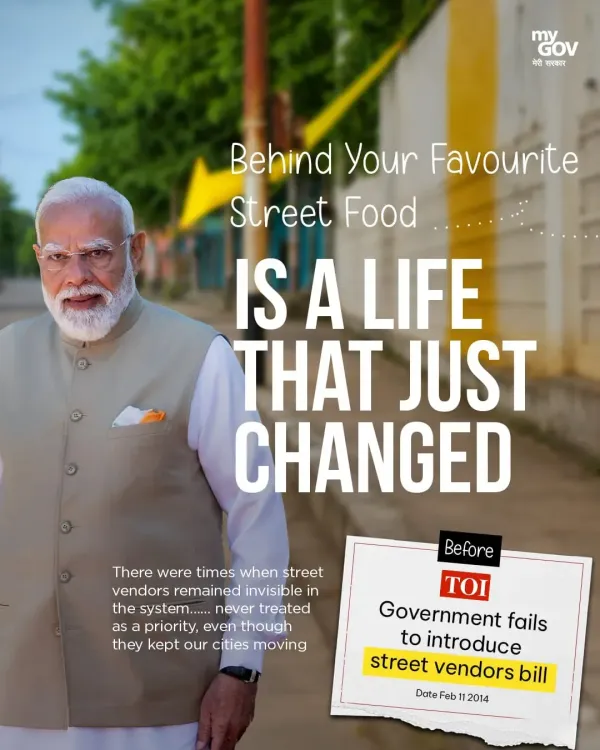
Synopsis
Union Textiles Minister Giriraj Singh on 1 June 2026 marked six years of PM SVANidhi, highlighting how the scheme has extended collateral-free loans, digital payment incentives, and social security access to street vendors previously excluded from formal banking, framing it as a pillar of the Atmanirbhar Bharat agenda.
Key Takeaways
PM SVANidhi completed six years on 1 June 2026 , having been launched on 1 June 2020 as part of the Atmanirbhar Bharat package.
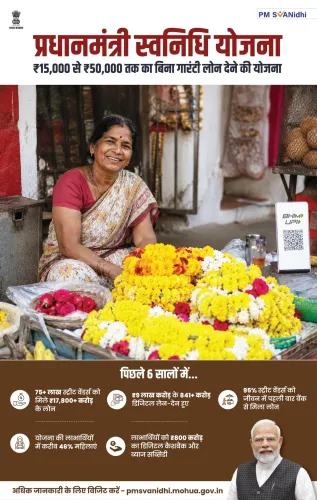
The scheme offers collateral-free working capital loans of up to Rs 50,000 to urban street vendors.
Borrowers are incentivised to adopt digital transactions through a cashback mechanism built into the scheme.
Vendors are also linked to social security schemes , broadening their formal safety net beyond credit.
The nodal ministry is the Ministry of Housing and Urban Affairs , which implements the scheme through urban local bodies.
The scheme is part of the wider Garib Kalyan framework targeting formalisation of India's urban informal economy.
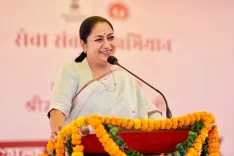
Union Textiles Minister Giriraj Singh on Monday, 1 June 2026 marked the sixth anniversary of the PM SVANidhi scheme, crediting the programme with bringing dignity, formal credit access, and economic empowerment to street vendors who were once excluded from institutional banking.
Posting on X, the minister wrote: 'Jo sadak vikreta kabhi aupcharik banking vyavastha aur sansthagatk sahayata se door the, aaj ve PM SVANidhi Yojana ke madhyam se samman, pahchan aur aarthik sashaktikaran ke saath aage badh rahe hain' — ['Street vendors who were once far from formal banking and institutional support are today moving forward with dignity, recognition, and economic empowerment through the PM SVANidhi scheme.']
Context
The PM Street Vendor's AtmaNirbhar Nidhi (PM SVANidhi) scheme was launched on 1 June 2020 as part of the Atmanirbhar Bharat relief package, originally designed to restore the livelihoods of urban street vendors whose incomes collapsed during the COVID-19 lockdowns. The scheme is administered by the Ministry of Housing and Urban Affairs (MoHUA) through urban local bodies across the country.
Singh's post specifically highlighted three pillars of the scheme's design: collateral-free working capital loans, incentives for digital transactions, and linkage to social security schemes. The minister described the programme as having become, over six years, a foundation of 'hope, confidence, and self-reliance' for lakhs of families.
Policy Backdrop
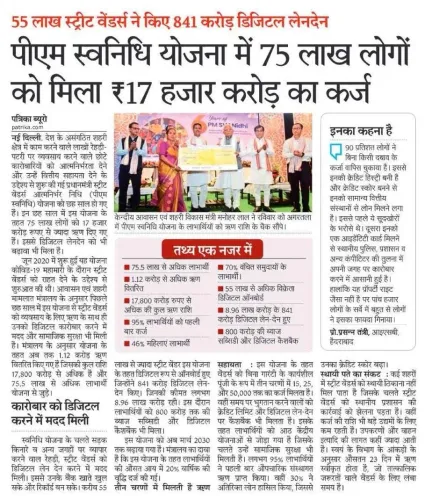
PM SVANidhi offers street vendors working capital loans starting at Rs 10,000, scalable up to Rs 50,000 for repeat borrowers with good repayment records, all without requiring collateral. Borrowers who conduct digital transactions are eligible for a cashback incentive, nudging the informal sector toward the formal payments ecosystem.
The scheme sits within the broader Garib Kalyan policy framework championed by Prime Minister Narendra Modi, which combines direct benefit transfers, insurance coverage, and skill-linked support targeting the bottom of the income pyramid. Formalisation of the urban informal economy has been a consistent policy thread both before and after the pandemic.
Stakeholders and Impact
Street vendors — a large and historically underserved segment of India's urban workforce — are the primary beneficiaries. The scheme addresses a structural gap: without collateral, credit history, or formal documentation, these micro-entrepreneurs had long been shut out of bank credit and forced to rely on high-interest informal lenders.
Beyond credit, the scheme's social security linkage connects vendors to programmes such as PM Jeevan Jyoti Bima Yojana and PM Suraksha Bima Yojana, broadening the safety net for workers in the unorganised sector. Urban local bodies play a key operational role in vendor identification and loan facilitation.
What's Next
With the scheme completing six years, attention will turn to MoHUA's periodic performance dashboards and whether the upcoming Union Budget or parliamentary session carries proposals for enhanced credit limits or an extended programme mandate. The anniversary messaging from senior ministers signals continued political commitment to the scheme's visibility. Analysts will watch whether the government uses the milestone to announce a formal expansion or upgraded credit ceiling for vendors who have completed multiple loan cycles.
Point of View
Using the milestone to reinforce the BJP government's narrative of inclusive development and financial empowerment for the urban poor. The framing — dignity, recognition, self-reliance — maps directly onto the Garib Kalyan brand that the party has cultivated since 2020. As a senior minister from Bihar, a state with a large population of migrant street vendors, Singh's endorsement carries both national and constituency-level resonance. The anniversary communication also signals that PM SVANidhi remains a live political asset ahead of any budget cycle, keeping pressure on MoHUA to demonstrate fresh impact data.
NationPress
24 Sept 2026
Frequently Asked Questions
What is PM SVANidhi scheme?
PM SVANidhi, or PM Street Vendor's AtmaNirbhar Nidhi, is a central government scheme launched on 1 June 2020 that provides collateral-free working capital loans of up to Rs 50,000 to urban street vendors, along with incentives for digital transactions and linkage to social security programmes.
When was PM SVANidhi launched?
PM SVANidhi was launched on 1 June 2020 by Prime Minister Narendra Modi as part of the Atmanirbhar Bharat economic relief package to support street vendors whose livelihoods were disrupted by COVID-19 lockdowns.
Who implements PM SVANidhi scheme?
The Ministry of Housing and Urban Affairs (MoHUA) is the nodal ministry for PM SVANidhi, and it is implemented on the ground through urban local bodies across Indian cities and towns.
What did Giriraj Singh say about PM SVANidhi?
On 1 June 2026, Union Textiles Minister Giriraj Singh posted on X marking six years of the scheme, saying street vendors once excluded from formal banking are now moving forward with dignity and economic empowerment through PM SVANidhi.
How much loan can a street vendor get under PM SVANidhi?
Under PM SVANidhi, street vendors can initially borrow Rs 10,000 without collateral, with loan amounts scalable up to Rs 50,000 for repeat borrowers who maintain a good repayment record.