Giriraj Singh marks 6 years of PM SVANidhi scheme
Synopsis
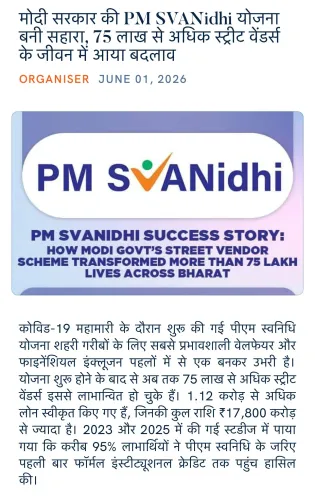
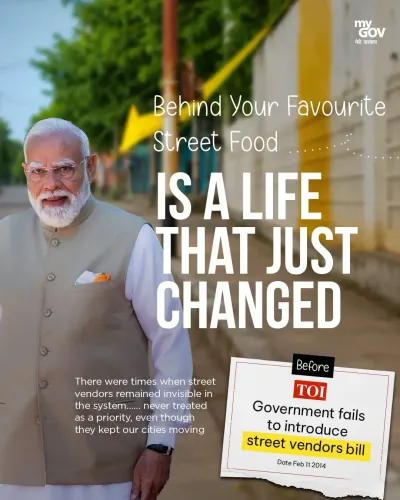
Union Textiles Minister Giriraj Singh marked the sixth anniversary of PM SVANidhi on 1 June 2026, reaffirming the BJP government's pledge to connect every citizen — especially street vendors — with dignity, opportunity, and self-reliance under PM Modi's leadership.
Key Takeaways
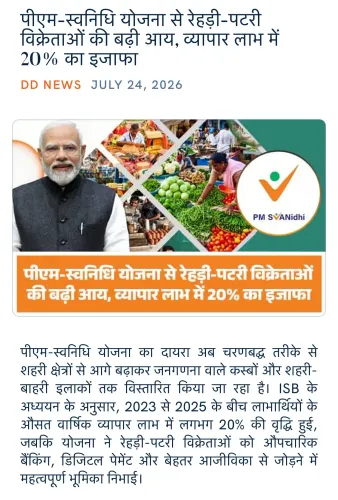
PM SVANidhi completed six years on 1 June 2026 , having been launched on the same date in 2020 to support street vendors hit by COVID-19 disruptions.
Union Textiles Minister Giriraj Singh posted on X to mark the anniversary, invoking themes of dignity, opportunity, and self-reliance.
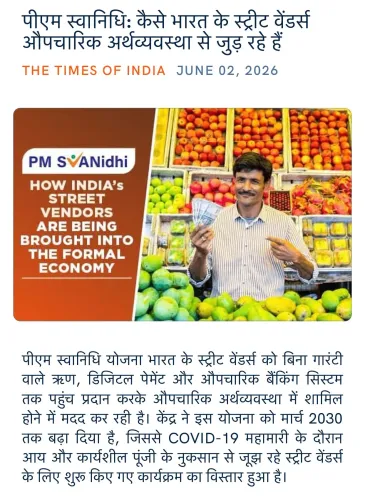
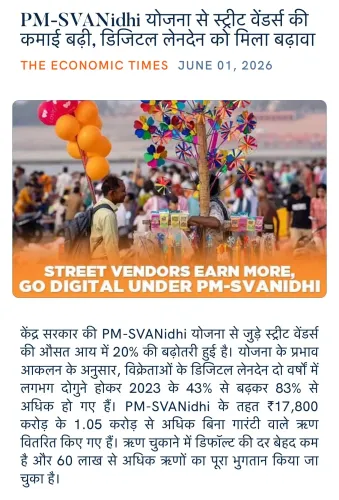
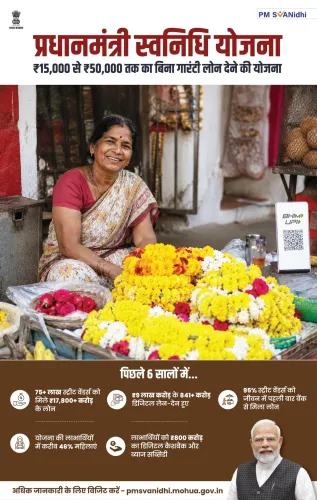
The scheme provides collateral-free working capital loans to street vendors, integrating them into formal banking and digital payment systems.
The initiative is part of the broader Atmanirbhar Bharat framework launched in 2020 to support informal-sector livelihoods.
Singh's messaging connects the scheme to the government's long-term Viksit Bharat 2047 development vision.
Union Textiles Minister Giriraj Singh on Monday, 1 June 2026 marked the sixth anniversary of the PM SVANidhi scheme, reaffirming the BJP government's commitment to inclusive development and self-reliance for every citizen under Prime Minister Narendra Modi's leadership.
Context
Posting on X, Singh wrote: 'Aadaraniya Pradhan Mantri Shri Narendra Modi ji ke netritva mein BJP sarkar ka prayas hai ki har nagarik vikas ki mukhydhara se judkar samman, avsar aur atmanirbharta ka marg prapt kare' — meaning, 'Under the respected Prime Minister Narendra Modi's leadership, the BJP government's endeavour is that every citizen connects with the mainstream of development and finds a path of dignity, opportunity, and self-reliance.' He added that this resolve is becoming the foundation of positive transformation in the lives of crores of people across the country.
The post was tagged with #6YearsofPMSVANidhi, anchoring the message explicitly to the scheme's anniversary. PM SVANidhi — Pradhan Mantri Street Vendor's AtmaNirbhar Nidhi — was launched on 1 June 2020, making this its sixth year of operation.
Policy Backdrop
The PM SVANidhi scheme was introduced in the immediate aftermath of the COVID-19 disruptions to provide collateral-free working capital loans to street vendors, a segment of the urban informal workforce that had been largely excluded from formal credit channels. The scheme sits within the broader Atmanirbhar Bharat framework launched in 2020, which sought to extend economic resilience to informal livelihoods through banking integration, digital payments, and micro-credit access.
Successive phases of the scheme have emphasised onboarding vendors into the formal banking ecosystem, with digital transaction incentives built into the loan-renewal structure. The initiative represents a consistent policy thread running through the Modi government's urban welfare architecture, linking street-level livelihoods to mainstream financial infrastructure.
Stakeholders and Impact
Street vendors and urban informal workers are the primary beneficiaries of the scheme. By providing collateral-free loans — typically starting at Rs 10,000 in the first tranche — the programme targets hawkers, pushcart operators, and roadside food sellers who previously relied on high-interest informal moneylenders for working capital.
Singh's post, framed around the themes of 'samman, avsar aur atmanirbharta' (dignity, opportunity, and self-reliance), signals the government's intent to project the scheme as a social uplift instrument rather than merely a credit product. The messaging aligns with the Viksit Bharat and New India narratives that the ruling party has consistently deployed ahead of and during electoral cycles.
What's Next
The sixth anniversary marks a natural checkpoint for the government to assess the scheme's reach and announce potential extensions or enhanced credit limits for subsequent phases. Parliamentary and ministry-level updates on cumulative loan disbursement figures and vendor enrolment numbers are expected to follow in the coming weeks.
With the Viksit Bharat goal of a developed India by 2047 serving as the government's long-term policy horizon, schemes like PM SVANidhi are likely to be highlighted as proof-of-concept for last-mile financial inclusion — making the anniversary communication a marker in a longer political and policy narrative.
Point of View
Using the PM SVANidhi milestone to reinforce the BJP's 'last-mile inclusion' narrative ahead of what remains a competitive political environment. By framing the scheme in the language of dignity and self-reliance rather than loan figures, the party signals it views urban informal workers as a key constituency to consolidate. The post also stitches together several BJP brand planks — Atmanirbhar Bharat, Viksit Bharat, and Good Governance — into a single message, suggesting coordinated anniversary outreach across the party's social media machinery. The absence of specific disbursement data keeps the communication aspirational rather than accountable, a pattern consistent with how the government has historically marked scheme anniversaries.
NationPress
17 Oct 2026
Frequently Asked Questions
What is the PM SVANidhi scheme?
PM SVANidhi — Pradhan Mantri Street Vendor's AtmaNirbhar Nidhi — is a central government scheme launched on 1 June 2020 that provides collateral-free working capital loans to street vendors to help them rebuild livelihoods and integrate into the formal banking system.
When was PM SVANidhi launched?
The scheme was launched on 1 June 2020 by the Modi government as part of the Atmanirbhar Bharat initiative to support street vendors whose incomes were disrupted by the COVID-19 pandemic.
What did Giriraj Singh say about PM SVANidhi?
On 1 June 2026, Giriraj Singh posted on X stating that under PM Modi's leadership, the BJP government's goal is for every citizen to connect with the mainstream of development and find a path of dignity, opportunity, and self-reliance — marking six years of the scheme.
Who benefits from the PM SVANidhi scheme?
Street vendors, hawkers, pushcart operators, and roadside food sellers — primarily urban informal workers — are the main beneficiaries of PM SVANidhi, which provides them access to formal credit without requiring collateral.
What is Atmanirbhar Bharat?
Atmanirbhar Bharat, or Self-Reliant India, is an economic framework launched by the Modi government in 2020 that encompasses reforms and support programmes aimed at making India self-sufficient, with a particular focus on extending formal financial services to informal-sector workers.