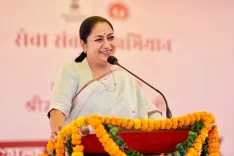
Giriraj Singh marks 6 years of PM SVANidhi for street vendors
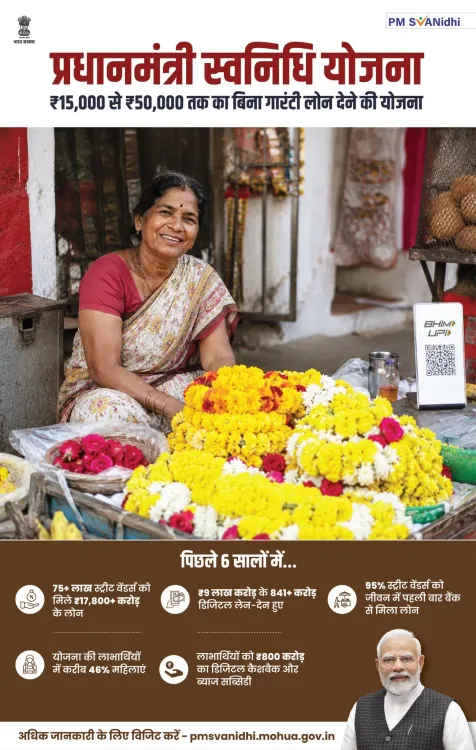
Synopsis
Union Textiles Minister Giriraj Singh marked six years of PM SVANidhi on 1 June 2026, praising the collateral-free loan scheme for street vendors as a historic step toward Atmanirbhar Bharat and dignified livelihoods for lakhs of informal workers.
Key Takeaways
PM SVANidhi completed six years on 1 June 2026 , marking its anniversary since its launch on 1 June 2020 .
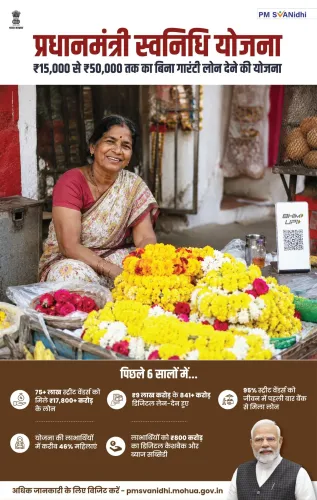
The scheme provides collateral-free working capital loans of up to Rs 50,000 to urban street vendors.
It was launched as part of India's COVID-19 economic relief package under Prime Minister Narendra Modi .
Union Textiles Minister Giriraj Singh described it as a 'historic and public-welfare initiative' advancing Atmanirbhar Bharat .
The scheme is part of a broader financial inclusion ecosystem that includes Mudra loans and Jan Dhan accounts .
Upcoming official data on loan disbursals and repayment rates will determine the scheme's future expansion or extension.
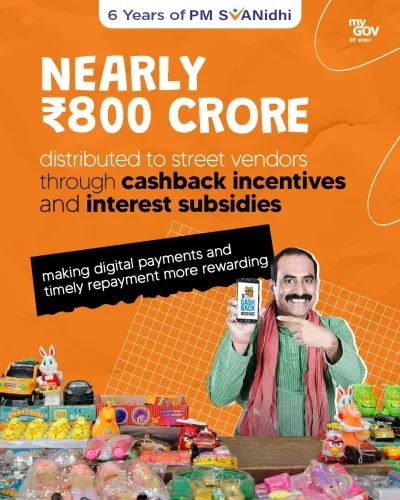
Union Textiles Minister Giriraj Singh on Monday, 1 June 2026 marked the sixth anniversary of the Pradhan Mantri Street Vendor's AtmaNirbhar Nidhi (PM SVANidhi) scheme, lauding it as a transformative initiative that has brought positive change to the lives of lakhs of street vendors and roadside sellers across India.
Context
Posting on X, Giriraj Singh wrote in Hindi: 'पिछले 6 वर्षों में पीएम स्वनिधि योजना ने देश के लाखों रेहड़ी-पटरी एवं सड़क विक्रेताओं के जीवन में सकारात्मक बदलाव लाने का सराहनीय कार्य किया है' ['In the past 6 years, PM SVANidhi has done commendable work in bringing positive change to the lives of lakhs of street and roadside vendors across the country']. The minister described the scheme as a 'powerful medium' for connecting small entrepreneurs to the mainstream of development by providing them dignity, self-reliance, and new opportunities.
Singh also framed the scheme as a step toward realising the vision of Atmanirbhar Bharat (Self-Reliant India), calling it a 'historic and public-welfare initiative.' The post carried the hashtags #6YearsofPMSVANidhi, #GaribKalyan, and #TransformingIndia, signalling a coordinated government communication effort around the anniversary.
Policy Backdrop
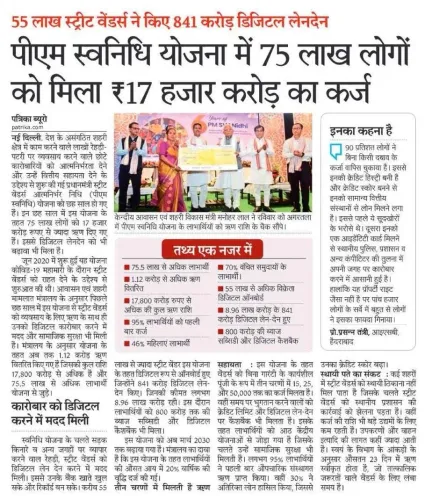
PM SVANidhi was launched on 1 June 2020 by Prime Minister Narendra Modi as part of India's COVID-19 economic relief package, with the specific aim of extending immediate credit support to urban street vendors who had been severely impacted by pandemic-era lockdowns. The scheme provides collateral-free working capital loans of up to Rs 50,000 to eligible vendors, allowing them to restart and scale their livelihoods without depending on informal moneylenders.
The scheme sits within a broader architecture of financial inclusion measures — including Mudra loans and Jan Dhan accounts — designed to integrate unorganised-sector workers into the formal financial system. Together, these instruments reflect the government's sustained focus on extending credit access to India's large urban informal workforce.
Stakeholders and Impact
The primary beneficiaries of PM SVANidhi are urban street vendors — a segment of the workforce that has historically operated outside formal credit channels. By offering collateral-free loans with a digital repayment track record, the scheme also enables vendors to build a credit history for the first time, opening pathways to larger institutional finance.
Small traders and micro-entrepreneurs in cities and towns across India stand to benefit from the scheme's continued operation. The government's framing of the anniversary as a #GaribKalyan (welfare of the poor) milestone underscores the political as well as economic significance attached to the programme, particularly in the context of upcoming electoral cycles in several states.
What's Next
With the scheme completing six years, attention will turn to official progress reports on cumulative loan disbursals, repayment rates, and beneficiary counts — data points that will determine the programme's continued relevance and funding. Any cabinet-level decision on extending or expanding the scheme beyond its initial framework will be closely watched by welfare economists and street-vendor associations alike.
The anniversary messaging from a senior Cabinet minister signals that PM SVANidhi will remain a centrepiece of the ruling party's outreach to informal-sector workers, with the Atmanirbhar Bharat narrative continuing to serve as the overarching policy frame for such micro-finance interventions.
Point of View
Street-level constituency — making it politically potent in dense urban pockets. Giriraj Singh's invocation of 'dignity' and 'self-reliance' is deliberate: it frames a credit product in the language of social uplift, insulating it from technocratic critiques about repayment rates or outreach gaps. As several state assembly elections approach, expect this narrative to intensify, with the scheme's beneficiary numbers becoming a key data point in the government's welfare communication playbook.
NationPress
24 Sept 2026
Frequently Asked Questions
What is PM SVANidhi scheme?
PM SVANidhi, or Pradhan Mantri Street Vendor's AtmaNirbhar Nidhi, is a government scheme launched on 1 June 2020 that provides collateral-free working capital loans of up to Rs 50,000 to urban street vendors to help them restart and grow their livelihoods.
When was PM SVANidhi launched?
PM SVANidhi was launched on 1 June 2020 by Prime Minister Narendra Modi as part of India's COVID-19 economic relief package to support street vendors affected by pandemic-era lockdowns.
Who benefits from PM SVANidhi?
Urban street vendors and roadside sellers — a segment of India's informal workforce — are the primary beneficiaries of PM SVANidhi, which gives them access to formal credit without requiring collateral.
What did Giriraj Singh say about PM SVANidhi?
Union Textiles Minister Giriraj Singh, on 1 June 2026, praised PM SVANidhi on its sixth anniversary, calling it a 'historic and public-welfare initiative' that has brought positive change to the lives of lakhs of street vendors and advances the vision of Atmanirbhar Bharat.
How much loan can street vendors get under PM SVANidhi?
Under PM SVANidhi, eligible street vendors can avail collateral-free working capital loans of up to Rs 50,000, enabling them to rebuild their businesses and establish a formal credit history.