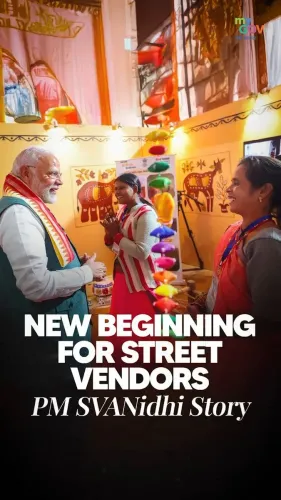
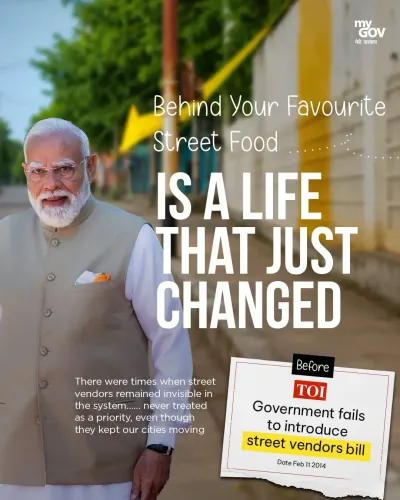
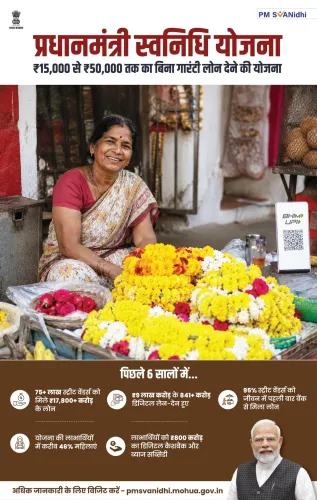
Giriraj Singh highlights PM SVANidhi formalising street vendors
Synopsis
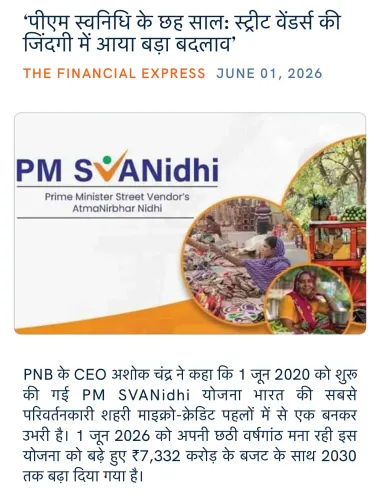
Union Textiles Minister Giriraj Singh amplified the PM SVANidhi scheme on its sixth anniversary, sharing content on how collateral-free loans and digital-payment incentives are pulling India's street vendors into the formal economy. The scheme, launched in 2020 under the Atmanirbhar Bharat package, offers graduated loans up to Rs 50,000.
Key Takeaways
Giriraj Singh shared PM SVANidhi content on 2 June 2026 , a day after the scheme's sixth anniversary.
PM SVANidhi was launched on 1 June 2020 as part of the Atmanirbhar Bharat package to support street vendors hit by pandemic lockdowns.
The scheme offers collateral-free loans in three tranches, up to a maximum of Rs 50,000 , with a 7 per cent per annum interest subsidy.
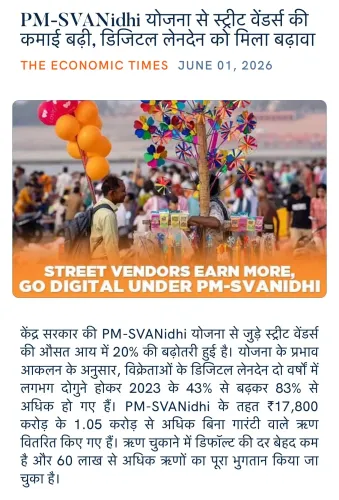
Vendors who adopt digital payments receive cashback incentives, tying financial inclusion to the broader less-cash economy push.
The nodal ministry is the Ministry of Housing and Urban Affairs , which implements the scheme through urban local bodies.
The scheme is integrated with PM Jan Dhan Yojana , PM Mudra Yojana , and the e-Shram portal to build formal credit histories for beneficiaries.
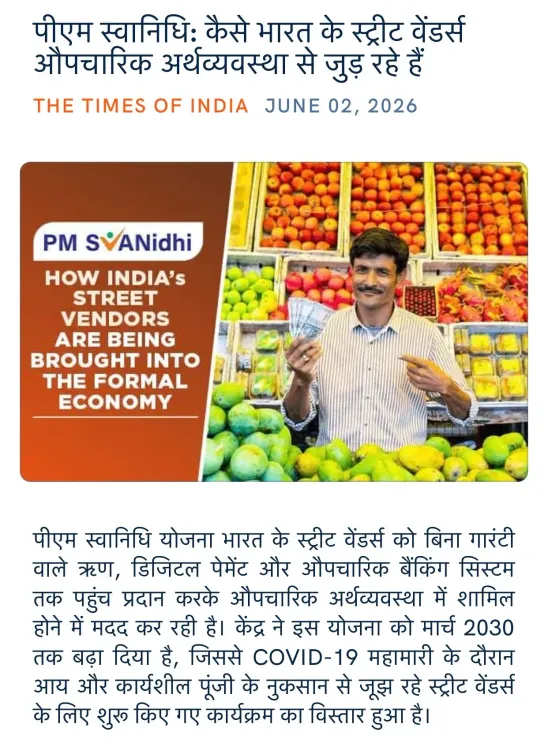
Union Textiles Minister Giriraj Singh on Tuesday, 2 June 2026 shared an article on X highlighting how the PM SVANidhi scheme is bringing India's street vendors into the formal economy, amplifying the government's narrative on urban financial inclusion ahead of the scheme's sixth anniversary.
Context
The post, shared via the NaMo App, carried the headline 'पीएम स्वानिधि: कैसे भारत के स्ट्रीट वेंडर्स औपचारिक अर्थव्यवस्था से जुड़ रहे हैं' ('PM SVANidhi: How India's street vendors are being brought into the formal economy'). Singh's decision to amplify the story comes just a day after the scheme completed its sixth year since launch on 1 June 2020.
PM SVANidhi — formally the PM Street Vendor's AtmaNirbhar Nidhi scheme — was announced by Prime Minister Narendra Modi as part of the Atmanirbhar Bharat stimulus package during the COVID-19 pandemic lockdowns, with the explicit goal of restoring the livelihoods of millions of urban street vendors who had lost income overnight.
Policy Backdrop
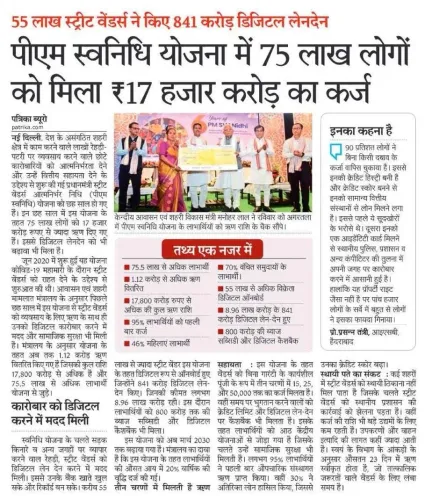
The scheme provides collateral-free working capital loans in graduated tranches: an initial loan of up to Rs 10,000, a second tranche of up to Rs 20,000, and a third tranche of up to Rs 50,000 — each unlocked upon timely repayment of the previous loan. Vendors are also incentivised through cashback rewards for adopting digital payment platforms, directly linking the scheme to the government's broader push for a less-cash economy.
The nodal implementing body is the Ministry of Housing and Urban Affairs, which works through urban local bodies to identify, certify and onboard eligible vendors. The scheme has been progressively integrated with PM Jan Dhan Yojana and the PM Mudra Yojana ecosystem, enabling beneficiaries to build a formal credit history that was previously inaccessible to them.
Stakeholders and Impact
India's street vending population — estimated in the tens of millions — has historically operated entirely outside the formal financial system, relying on moneylenders at usurious rates. PM SVANidhi targets this segment directly, offering institutional credit at subsidised interest rates with a 7 per cent per annum interest subsidy credited to beneficiary accounts.
Beyond credit access, enrolment under the scheme links vendors to the e-Shram portal and other social protection programmes, creating a layered safety net. Urban local bodies benefit from cleaner data on the informal vending economy, which in turn aids city planning and hawking zone policy.
What's Next
The Ministry of Housing and Urban Affairs is expected to publish quarterly progress reports on loan disbursal targets and repayment rates. Parliamentary scrutiny is likely during the upcoming monsoon session, with questions anticipated on coverage gaps in states with large vending populations such as Uttar Pradesh, Maharashtra, and West Bengal.
Singh's amplification of the scheme's narrative, though he heads the Ministry of Textiles rather than the nodal ministry, signals the BJP's intent to keep welfare-to-formalisation messaging prominent across its ministerial ranks as the government approaches mid-term. The scheme's trajectory — from pandemic relief to a structural formalisation tool — will be watched closely by urban economists and opposition benches alike.
Point of View
Not merely a departmental talking point. The timing — one day after the scheme's sixth anniversary — suggests a coordinated effort to refresh public recall of a pandemic-era flagship before the monsoon parliamentary session. The formalisation arc, running from the 2016 demonetisation through Jan Dhan and now SVANidhi, is the government's most consistent structural reform story, and ministers outside the nodal ministry echoing it broadens its political reach. Opposition benches are likely to counter with questions on disbursal shortfalls and vendor certification backlogs, making the next quarterly report a key battleground.
NationPress
18 Oct 2026
Frequently Asked Questions
What is PM SVANidhi scheme?
PM SVANidhi is a central government scheme launched on 1 June 2020 that provides collateral-free working capital loans to street vendors, starting at Rs 10,000 and scaling up to Rs 50,000 in three tranches upon timely repayment, along with digital-payment cashback incentives.
Who is eligible for PM SVANidhi loan?
Urban street vendors who were vending on or before 24 March 2020 and hold a vending certificate or letter of recommendation from an urban local body are eligible to apply for a PM SVANidhi loan.
What is the interest subsidy under PM SVANidhi?
Beneficiaries receive an interest subsidy of 7 per cent per annum on the loan amount, which is credited directly to their bank account on a quarterly basis.
Which ministry runs PM SVANidhi?
The Ministry of Housing and Urban Affairs is the nodal ministry for PM SVANidhi, implementing it through urban local bodies across Indian cities and towns.
Why did Giriraj Singh share PM SVANidhi content?
Union Textiles Minister Giriraj Singh shared content about PM SVANidhi on 2 June 2026, a day after the scheme completed six years, as part of the BJP government's broader effort to highlight welfare and formalisation achievements across ministerial voices.