Gadkari hails PM SVANidhi at 6-year mark, cites 75 lakh vendors aided

Synopsis
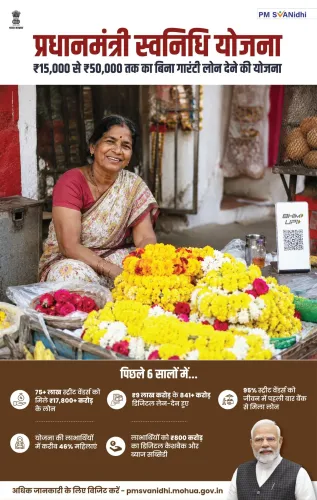
Marking six years of PM SVANidhi on 1 June 2026, Union Minister Nitin Gadkari highlighted the scheme's reach — over 75 lakh vendors empowered, Rs 17,800+ crore disbursed, and 841 crore digital transactions enabled — calling it a milestone in building an Atmanirbhar Bharat with dignity for street vendors.
Key Takeaways
PM SVANidhi completed six years on 1 June 2026 , having launched on 1 June 2020 as part of the Atmanirbhar Bharat package.
The scheme has empowered over 75 lakh street vendors across urban India with formal credit access.
Rs 17,800+ crore has been disbursed and 112 lakh loans sanctioned under the programme.
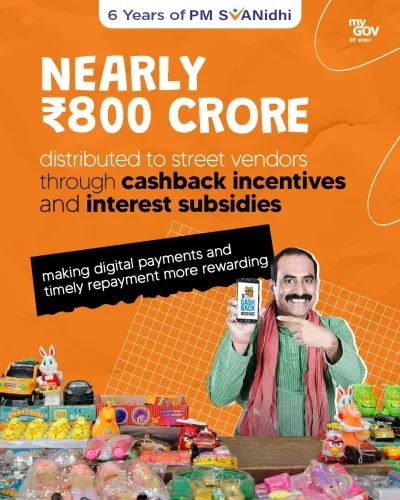
841 crore digital transactions have been enabled, reflecting significant last-mile digital adoption among informal workers.
The scheme provides collateral-free working capital loans of up to Rs 50,000 along with incentives for digital payments.
Union Minister Nitin Gadkari credited the programme's design to the 'visionary leadership' of Prime Minister Narendra Modi .
Union Road Transport and Highways Minister Nitin Gadkari on Monday, 1 June 2026 marked the sixth anniversary of the PM SVANidhi scheme by highlighting its reach, crediting the programme with extending formal credit and digital access to millions of street vendors who had long been excluded from mainstream finance.
Context
PM SVANidhi — the Pradhan Mantri Street Vendor's AtmaNirbhar Nidhi — was launched on 1 June 2020 as part of the Atmanirbhar Bharat stimulus package, designed to provide immediate relief to street vendors whose livelihoods were disrupted by COVID-19 lockdowns. The scheme offers collateral-free working capital loans of up to Rs 50,000 to urban street vendors, alongside incentives for digital transactions and credit-history building.
Gadkari's post stated that the scheme has empowered over 75 lakh vendors, disbursed Rs 17,800+ crore, sanctioned 112 lakh loans, and enabled 841 crore digital transactions. 'For decades, street vendors powered our cities but remained unseen in policy and finance,' he wrote, describing the programme as 'a true milestone in building an Atmanirbhar Bharat [self-reliant India] with dignity and opportunity for all.'
Policy Backdrop
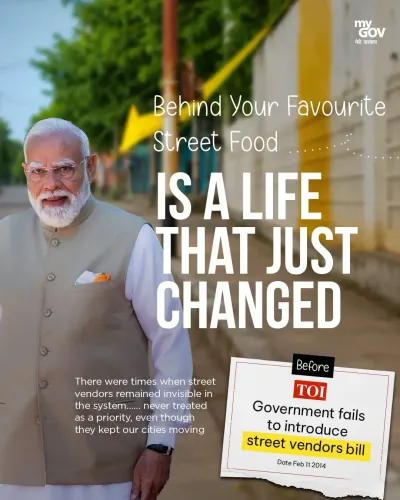
The scheme sits within a broader central government strategy of combining identity linkage, micro-credit, and digital transaction tracking to draw informal urban workers into the formal financial system. Before PM SVANidhi, street vendors largely depended on informal moneylenders for working capital, leaving them vulnerable to high interest rates and with no formal credit record.
The programme's architecture — collateral-free loans, digital-payment incentives, and graduated credit limits — mirrors the approach taken by earlier financial-inclusion drives that sought to create verifiable economic identities for previously undocumented segments of the workforce. Prime Minister Narendra Modi, under whose leadership the scheme was conceived, has consistently positioned such targeted credit platforms as instruments of both economic resilience and social dignity.
Stakeholders and Impact
The primary beneficiaries are urban informal workers — vegetable sellers, fruit vendors, street-food operators, and others who occupy the lowest rungs of city economies. Access to formal credit reduces their dependence on predatory lending and, through digital-transaction incentives, creates a financial footprint that can support future borrowing.
Local urban bodies, which are responsible for issuing vendor identity certificates under the scheme, have also been drawn into a closer administrative relationship with the informal sector. The scale of digital transactions cited by Gadkari — 841 crore — suggests that the programme has had a measurable effect on last-mile digital adoption among a demographic historically resistant or unable to participate in cashless commerce.
What's Next
With the scheme completing six years, attention in parliamentary and policy circles is likely to turn to whether credit limits will be revised upward, whether the scheme's mandate will be extended beyond its current scope, and how performance data will inform the next Union Budget's urban-welfare allocations. Questions around scheme renewal and enhanced credit ceilings are expected to feature in upcoming parliamentary sessions.
The anniversary post by a senior cabinet minister signals that PM SVANidhi will continue to be positioned as a flagship welfare achievement in the run-up to political and legislative cycles, reinforcing the government's narrative of inclusive, grassroots economic empowerment.
Point of View
Reinforcing the BJP government's welfare-delivery narrative ahead of legislative cycles by anchoring a six-year-old scheme to live impact numbers. The choice of a road minister — rather than the housing or urban affairs portfolio — to front the messaging underscores how PM SVANidhi has become a cross-cabinet symbol of the Atmanirbhar Bharat brand. The emphasis on digital transactions alongside credit disbursal reflects the government's consistent strategy of using financial inclusion as a proxy for broader modernisation. Whether the figures cited translate into sustained income gains for vendors remains a question that policy scrutiny in the next budget session will need to address.
NationPress
21 Sept 2026
Frequently Asked Questions
What is PM SVANidhi scheme?
PM SVANidhi — Pradhan Mantri Street Vendor's AtmaNirbhar Nidhi — is a central government scheme launched on 1 June 2020 that provides collateral-free working capital loans of up to Rs 50,000 to urban street vendors, along with incentives for digital transactions and credit-history building.
How many vendors have benefited from PM SVANidhi?
According to Union Minister Nitin Gadkari's post marking the scheme's sixth anniversary, over 75 lakh vendors have been empowered under PM SVANidhi, with 112 lakh loans sanctioned and Rs 17,800+ crore disbursed.
When was PM SVANidhi launched?
PM SVANidhi was launched on 1 June 2020 as part of the Atmanirbhar Bharat stimulus package to support street vendors affected by COVID-19 lockdowns.
What digital transactions have happened under PM SVANidhi?
Minister Gadkari cited 841 crore digital transactions enabled under the scheme, indicating significant adoption of cashless payments among street vendors who previously operated almost entirely in cash.
Will PM SVANidhi be extended or expanded?
No formal announcement of extension or expansion has been made as of the sixth anniversary, but parliamentary questions and upcoming budget sessions are expected to address possible credit-limit revisions and scheme renewal.