Puri Highlights PM SVANidhi's Six-Year Impact on Street Vendors

Synopsis
Union Petroleum Minister Hardeep Singh Puri has marked six years of PM SVANidhi, highlighting that over 75 lakh street vendors have received more than 1.12 crore loans worth Rs 17,800 crore, with 841 crore digital transactions worth Rs 9 lakh crore recorded under the scheme.
Key Takeaways
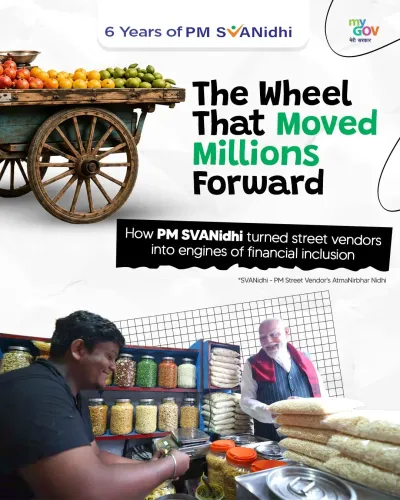
PM SVANidhi completed six years on 1 June 2026 , launched originally on 1 June 2020 under the Atmanirbhar Bharat package.
More than 75 lakh street vendors have been covered under the scheme since its inception.
Over 1.12 crore loans totalling more than Rs 17,800 crore have been disbursed to date.
The scheme's digital payment component has enabled 841 crore digital transactions valued at approximately Rs 9 lakh crore .
The scheme provides collateral-free working capital loans , targeting urban informal vendors excluded from formal credit channels.
Union Minister Hardeep Singh Puri framed the scheme as evidence of the Modi government's sensitivity toward the poor and marginalised.
Union Petroleum Minister Hardeep Singh Puri on Monday, 1 June 2026 marked six years of the PM SVANidhi scheme, crediting Prime Minister Narendra Modi with championing the welfare of street vendors who, in his words, had long been ignored by the system. The minister's post on X praised the micro-credit programme for providing a lifeline to the urban informal sector during and after the COVID-19 pandemic.
Context
Puri's post opens with a couplet — 'Jinhe kisi ne nahin poocha, unhe Modi ji ne pooja hai' ('Those whom no one ever asked after, Modi has honoured them') — framing the scheme as an act of political and moral recognition for a segment historically excluded from formal credit. The minister noted that street vendors faced acute distress during the pandemic-era lockdowns, and that the scheme was rolled out 'in very little time' under PM Modi's guidance.
The post was published on the scheme's sixth anniversary, carrying the hashtag #6YearsofPMSVANidhi, signalling a coordinated government communication effort to mark the milestone.
Policy Backdrop
PM SVANidhi — formally the PM Street Vendor's AtmaNirbhar Nidhi — was launched on 1 June 2020 as part of the Atmanirbhar Bharat relief package. It provides collateral-free working capital loans to street vendors, starting at smaller tranches and scaling up to Rs 50,000 for repeat borrowers with a clean repayment record.
The scheme is administered by the Ministry of Housing and Urban Affairs and is notable for embedding a digital-transaction incentive: vendors who conduct business through UPI and other digital payment channels earn cashback rewards, tying micro-credit delivery into India's broader financial-inclusion architecture built around direct-benefit transfers and the UPI stack developed since 2016.
According to figures cited by Puri, over the past six years the scheme has disbursed more than 1.12 crore loans to over 75 lakh street vendors, with a total loan value exceeding Rs 17,800 crore. The digital payment rails embedded in the scheme have facilitated 841 crore digital transactions worth approximately Rs 9 lakh crore.
Stakeholders and Impact
The primary beneficiaries are urban street vendors — a workforce estimated in the crores across India's cities and towns — who have traditionally been shut out of formal banking credit due to the absence of collateral, fixed addresses, or documented income streams. The scheme's collateral-free design directly addresses these structural barriers.
Beyond credit access, the digital-transaction component has drawn millions of informal vendors into the formal payments ecosystem for the first time, with potential downstream benefits for their credit histories and eligibility for other government programmes. Puri described the scheme as giving 'new wings to the dreams of lakhs of the poor' (lakhon gareebon ke sapnon ko nayi udaan).
What's Next
The anniversary communication is likely a precursor to official updates on scheme performance — including repayment rates and third-cycle loan disbursements — expected through the Ministry of Housing and Urban Affairs' annual reporting cycle and urban livelihood budget discussions. Any enhancement in loan ceilings or expansion of eligible vendor categories would require a formal policy notification.
With the government consistently citing SVANidhi as a flagship of its pro-poor urban agenda, the scheme's trajectory will remain a barometer of how effectively India's formal financial system is absorbing the urban informal workforce — a test that carries significant political as well as economic weight ahead of future electoral cycles.
Point of View
Broadening its political valence. Whether the scheme's repayment performance and third-cycle uptake match the disbursement momentum will be the harder test that policy-watchers are watching for in the months ahead.
NationPress
20 Sept 2026
Frequently Asked Questions
What is PM SVANidhi scheme and who benefits from it?
PM SVANidhi is a government micro-credit scheme that provides collateral-free working capital loans to street vendors across urban India. It was launched on 1 June 2020 to help vendors recover from COVID-19 lockdown disruptions and has since expanded to promote self-employment and digital payments in the informal sector.
How many loans have been given under PM SVANidhi so far?
According to figures cited by Union Minister Hardeep Singh Puri, more than 1.12 crore loans worth over Rs 17,800 crore have been disbursed to more than 75 lakh street vendors in the six years since the scheme launched.
What is the maximum loan amount under PM SVANidhi?
PM SVANidhi offers collateral-free working capital loans that can scale up to Rs 50,000 for vendors who repay earlier tranches on time and maintain a clean repayment record.
How does PM SVANidhi promote digital payments?
The scheme incentivises vendors to transact digitally through UPI and other platforms by offering cashback rewards, which has resulted in 841 crore digital transactions worth approximately Rs 9 lakh crore being recorded under the programme.
Which ministry runs the PM SVANidhi scheme?
PM SVANidhi is administered by the Ministry of Housing and Urban Affairs, which oversees disbursements, repayment tracking, and any proposed enhancements to the programme.