Diwali federal holiday bill reintroduced in US Congress by Grace Meng
Synopsis
For at least the second time, US Congresswoman Grace Meng is pushing to make Diwali a federal holiday — and this time the backdrop is starker: alleged mass-shooting plots, temple vandalism, and disrupted celebrations. With 19 co-sponsors including five Indian-American lawmakers, the Diwali Day Act has its broadest coalition yet, but its fate in a divided Congress is far from certain.
Key Takeaways
Grace Meng has reintroduced the Diwali Day Act in the US Congress, proposing Diwali as the country's 12th federal holiday .
The bill is co-sponsored by 19 other lawmakers , including Indian-American members Ami Bera , Ro Khanna , Raja Krishnamoorthi , Suhas Subramanyam , and Shri Thanedar .
17 civil rights, religious, and community organisations have endorsed the legislation.
CAPAC cited vandalism at Hindu places of worship, an alleged mass-shooting plot in Illinois , and a disrupted Diwali event in Washington state as motivating factors.
Meng has also separately introduced a bill to make Lunar New Year a federal holiday, reflecting a broader push for cultural recognition.
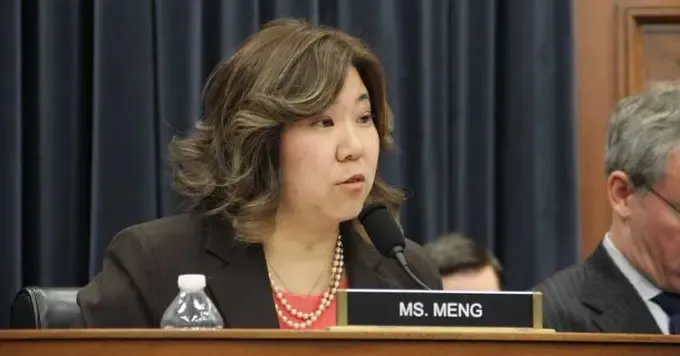
US Congresswoman Grace Meng has reintroduced legislation to designate Diwali as a federal public holiday in the United States, citing a rise in anti-Hindu and anti-South Asian hate as a key motivating factor. The Diwali Day Act, if passed, would become the country's 12th federal holiday, adding the Festival of Lights to the official federal calendar.
What the Diwali Day Act Proposes
The bill would amend Section 6103(a) of Title 5 of the US Code by inserting 'Diwali Day' into the existing list of legal public holidays. Meng, who chairs the Congressional Asian Pacific American Caucus (CAPAC), framed the proposal as an affirmation of the contributions of diverse communities — including Hindus, Sikhs, Jains, and Buddhists — to American society.
'Diwali represents the triumph of good over evil and knowledge over ignorance,' Meng said. She added that federal recognition would give communities greater opportunity to celebrate and honour their cultural traditions.
Who Is Co-Sponsoring the Bill
The legislation has the backing of 20 lawmakers in total, including Indian-American members Ami Bera, Ro Khanna, Raja Krishnamoorthi, Suhas Subramanyam, and Shri Thanedar. Other co-sponsors include Nanette Barragán, Wesley Bell, André Carson, Judy Chu, Suzan DelBene, Josh Gottheimer, Timothy Kennedy, Stephen Lynch, Deborah Ross, Lateefah Simon, Tom Suozzi, Mark Takano, Rashida Tlaib, and Bonnie Watson Coleman. Additionally, 17 civil rights, religious, and community organisations have formally endorsed the bill, according to Meng's office.
The Anti-Hate Context Behind the Bill
CAPAC linked the reintroduction directly to documented concerns about religious intimidation and violence targeting Hindu and South Asian communities. The caucus cited vandalism at Hindu places of worship, an alleged mass-shooting plot targeting a Hindu gathering in Illinois, and the recent disruption of a Diwali celebration in Washington state as incidents that underscore the urgency of federal recognition.
'At a time when anti-Hindu and anti-South Asian hate is on the rise, recognizing Diwali as a federal holiday sends a powerful message that Hindus, as well as Sikhs, Jains, and Buddhists, are valued members of our society,' Meng said. The caucus called on federal authorities to investigate such incidents, though its statement described the trend as rising without providing statistical evidence.
Meng's Broader Push for Cultural Recognition
This is not Meng's first effort to place South and East Asian cultural milestones on the federal calendar. She has separately introduced legislation to make Lunar New Year a federal holiday, reflecting a wider legislative agenda around cultural inclusion. 'Here in Queens, I see firsthand how meaningful Diwali is to so many families and communities,' she said, adding that the act would help educate Americans about the significance of the festival.
The bill's prospects in a divided Congress remain to be seen, but its reintroduction — backed by a cross-partisan coalition — signals sustained political momentum for the cause among South Asian and Asian Pacific American communities across the United States.
Point of View
Lending it an urgency that prior versions lacked. With five Indian-American co-sponsors, the bill reflects the growing electoral weight of South Asian communities in key US districts. Yet the same partisan gridlock that has stalled it before has not changed, and without a Senate companion bill or a clear floor strategy, symbolic legislation can remain exactly that. The real question is whether this coalition can convert cultural momentum into legislative traction before the congressional session ends.
NationPress
10 Nov 2026
Frequently Asked Questions
What is the Diwali Day Act introduced by Grace Meng?
The Diwali Day Act is a bill introduced by US Congresswoman Grace Meng that would add Diwali to the list of US federal public holidays, making it the country's 12th. It would amend Section 6103(a) of Title 5 of the US Code to include 'Diwali Day' as a legal public holiday.
Who are the co-sponsors of the Diwali Day Act?
The bill is co-sponsored by 19 lawmakers, including Indian-American members Ami Bera, Ro Khanna, Raja Krishnamoorthi, Suhas Subramanyam, and Shri Thanedar, as well as Nanette Barragán, Rashida Tlaib, André Carson, and others. Seventeen civil rights, religious, and community organisations have also endorsed it.
Why is Grace Meng pushing for Diwali to be a federal holiday?
Meng and CAPAC have cited a rise in anti-Hindu and anti-South Asian hate, including alleged temple vandalism, an alleged mass-shooting plot targeting a Hindu gathering in Illinois, and the disruption of a Diwali celebration in Washington state. She argues that federal recognition would affirm the place of Hindu, Sikh, Jain, and Buddhist communities in American society.
How many federal holidays does the US currently have?
The US currently has 11 federal public holidays. If the Diwali Day Act passes, Diwali would become the 12th, according to Meng's office.
Has Grace Meng introduced similar legislation before?
Yes, this is a reintroduction, meaning the bill has been proposed in previous congressional sessions. Meng has also separately introduced legislation to make Lunar New Year a federal holiday, as part of a broader effort to include Asian and South Asian cultural milestones on the federal calendar.