Shekhawat shares Modi's Diwali with armed forces tribute
Synopsis
Union Culture and Tourism Minister Gajendra Singh Shekhawat marked Diwali 2026 by sharing PM Modi's celebration with armed forces personnel, anchoring the post in a stirring patriotic verse honouring soldiers' sacrifice for the motherland.
Key Takeaways
Minister Gajendra Singh Shekhawat posted on 9 November 2026 sharing PM Modi's Diwali event with Indian troops.
The post opened with the patriotic verse: 'Tera gaurav amar rahe maa, hum din chaar rahein na rahein' — 'May your glory live forever, Mother, whether we endure or not.' PM Modi has consistently observed Diwali with armed forces personnel at forward locations, a tradition maintained across his tenure.
The post included a video of the Prime Minister's celebration with soldiers, described as 'bravehearts.' Shekhawat represents Jodhpur, Rajasthan — a constituency with strong historic links to India's military community.
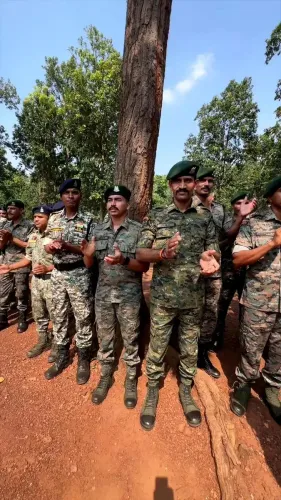
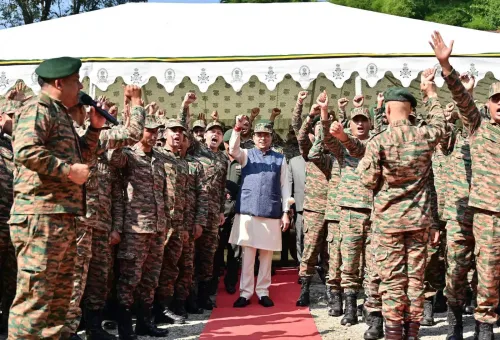
Four words of Urdu poetry, a tricolour, and a video — Union Culture and Tourism Minister Gajendra Singh Shekhawat distilled the spirit of Diwali with the armed forces into a single post on Monday, 9 November 2026, sharing Prime Minister Narendra Modi's festival celebration with India's soldiers on the front lines.
The post opens with a verse that has echoed across Indian patriotic expression for generations: 'Tera gaurav amar rahe maa, hum din chaar rahein na rahein' — 'May your glory live forever, Mother, whether we endure for a few days or not.' The lines, addressed to the motherland, set the register instantly: not celebration for its own sake, but service, sacrifice, and something larger than the individual.
A tradition Modi has kept at every Diwali
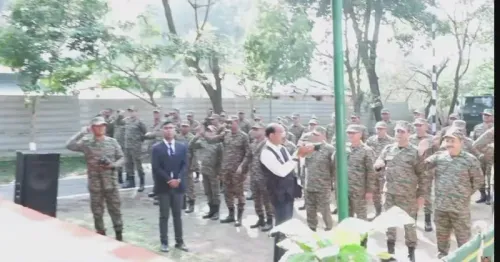
Prime Minister Modi has made it a consistent practice to spend Diwali with troops stationed at forward or remote locations rather than at the seat of government in New Delhi. The gesture — combining the most luminous festival in the Hindu calendar with a direct visit to the men and women who guard the country's borders — carries unmistakable symbolic weight. It signals, year after year, that the state does not forget its soldiers when the rest of the country lights diyas at home.
The broader tradition is well established in Indian public life. Heads of government and senior ministers have long marked national festivals at military bases and border posts, blending cultural observance with an explicit message about defence morale. What social media has changed is the reach: a cabinet minister's repost carries the moment from a remote cantonment to millions of feeds within seconds.
Shekhawat's post and what it carries
Gajendra Singh Shekhawat, who represents Jodhpur in Rajasthan — a city with deep historical and cultural ties to the Indian military — added no editorial commentary beyond the verse and the flag. The restraint is itself a choice. The poetry does the heavy lifting: it invokes the motherland, acknowledges mortality, and frames a soldier's service as an act of quiet permanence against a backdrop of impermanence.
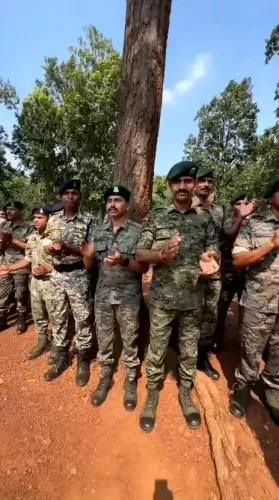
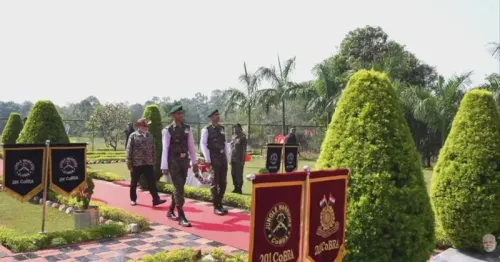
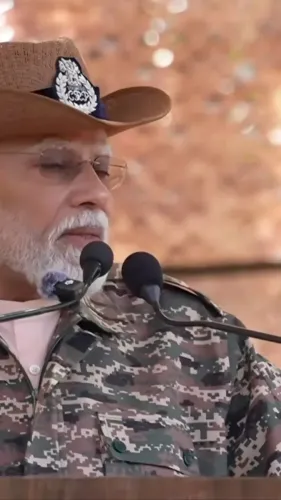
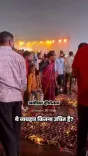
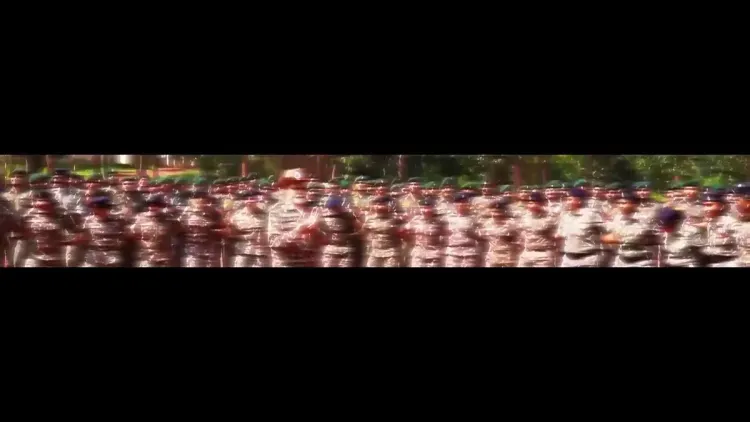
The video attached to the post, shared from the Prime Minister's Diwali event with the bravehearts, extends that moment beyond the room where it happened — turning a ceremonial visit into a national image.
When a nation's festival finds its most resonant expression not in fireworks over a capital city but in a Prime Minister sitting with soldiers far from home, the message writes itself. India's Diwali, the post argues without arguing, belongs to them first.
Point of View
Amplifying that image reinforces alignment with the central leadership narrative while also speaking directly to constituencies — like Jodhpur — where military service is a lived reality for many families. The choice of verse is notable: it frames the soldier not as a warrior but as a quietly selfless guardian, which softens the political edge without diluting the patriotic charge. Ceremonial as it appears, this kind of post is part of a carefully tended ecosystem of national sentiment that the ruling dispensation has built, festival by festival, over more than a decade.
NationPress
9 Nov 2026
Frequently Asked Questions
Does PM Modi celebrate Diwali with soldiers every year?
Yes, Prime Minister Modi has maintained a consistent practice of spending Diwali with armed forces personnel at forward or remote locations rather than in New Delhi , using the occasion to acknowledge the service of troops stationed away from their families.
What does the verse in Shekhawat's post mean?
The Hindi-Urdu verse 'Tera gaurav amar rahe maa, hum din chaar rahein na rahein' translates to 'May your glory live forever, Mother (the motherland), whether we last for a few days or not' — a patriotic expression of selfless service and sacrifice.
Who is Gajendra Singh Shekhawat?
Gajendra Singh Shekhawat is India's Union Minister of Culture and Tourism and a senior BJP leader. He is a Lok Sabha MP from Jodhpur, Rajasthan .
Why do Indian politicians visit soldiers on Diwali?
Visiting armed forces personnel on major festivals like Diwali is a long-standing tradition in Indian public life, designed to acknowledge the sacrifice of troops posted far from home and to signal national solidarity with the defence forces.
What is the significance of Diwali celebrations at border posts?
Celebrating Diwali at border posts and forward military locations highlights the service of soldiers who cannot be with their families during India's most widely observed festival, combining cultural observance with a public message about defence morale and national gratitude.