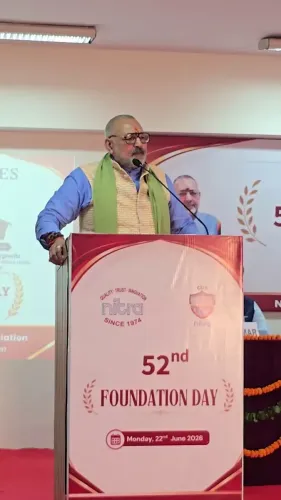
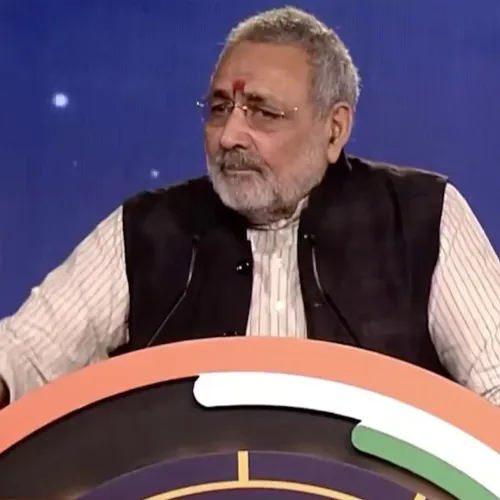
Giriraj Singh Hails Modi on FTAs, Hits Back at Opposition
Synopsis
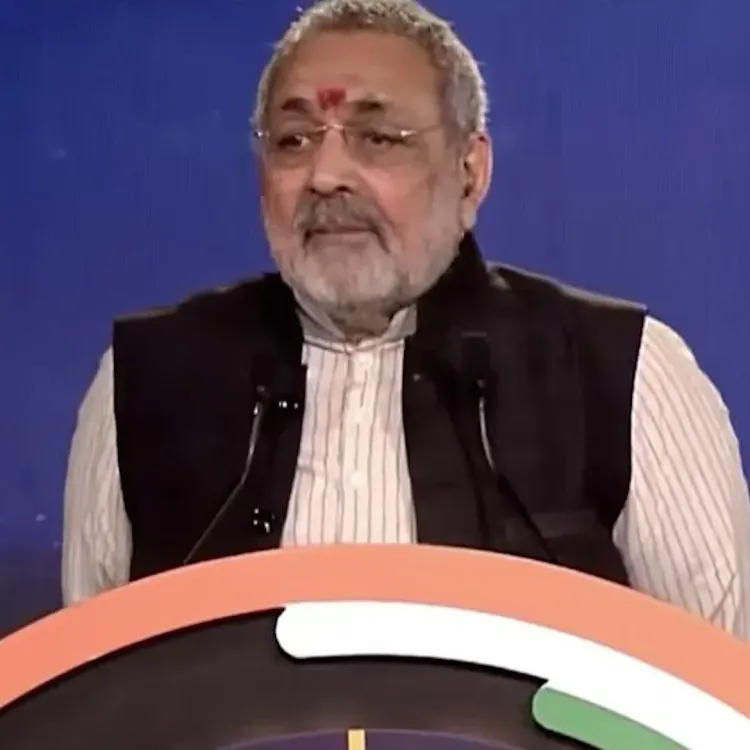
Union Textiles Minister Giriraj Singh on 26 May 2026 defended PM Modi's trade record on X, crediting him with FTAs with 56 countries and accusing opposition leaders of imagining crises to spread unrest, invoking the Viksit Bharat 2047 vision.
Key Takeaways
Giriraj Singh posted on 26 May 2026 defending PM Modi's trade diplomacy and attacking opposition criticism as deliberate fear-mongering.
Singh claimed India has signed free trade agreements with 56 countries under the Modi government.
India's landmark post-pandemic FTAs include deals with the UAE (February 2022) and Australia (December 2022) .
The Foreign Trade Policy 2023 made FTAs a core instrument of India's export-growth strategy.
Ongoing India-EU and India-UK FTA negotiations remain key milestones to watch for India's trade architecture.
Singh's remarks align trade expansion with the government's Viksit Bharat 2047 developed-nation vision.
Union Textiles Minister Giriraj Singh on Tuesday, 26 May 2026, took to X to defend Prime Minister Narendra Modi's trade diplomacy, asserting that India has now concluded free trade agreements with 56 countries and dismissing opposition criticism as deliberate fear-mongering aimed at spreading unrest.
Context
Posting in Hindi, Singh wrote: 'विपक्षी नेता केवल संकट की कल्पना करते हैं ताकि देश में अशांति फैला सकें' ['Opposition leaders only imagine crises so they can spread unrest in the country']. He added that PM Modi 'begins thinking from where others stop,' invoking the popular '56-inch chest' idiom to link the Prime Minister's resolve directly to India's expanding trade footprint.
Singh's post carried the hashtags #56FTA, #NewIndia, #ViksitBharat2047, and #GlobalLeader, signalling an intent to frame trade agreements as a flagship achievement of the current government ahead of the Viksit Bharat 2047 milestone.
Policy Backdrop
India's push to expand bilateral and regional trade pacts accelerated after 2014. The India-UAE Comprehensive Economic Partnership Agreement, signed in February 2022, was the country's first major post-pandemic FTA, followed by the India-Australia Economic Cooperation and Trade Agreement, which entered into force in December 2022. The Foreign Trade Policy 2023 formally enshrined FTAs as a central instrument for export growth and global value-chain integration.
The broader strategy pairs market-access deals abroad with domestic production-linked incentive schemes at home — a dual track designed to boost manufacturing, reduce dependence on single-source imports, and support the government's stated goal of a developed economy by 2047.
Stakeholders and Impact
For sectors such as textiles — Singh's own ministerial portfolio — and MSME manufacturing, FTAs carry direct commercial significance by lowering tariff barriers in partner markets and making Indian exports more competitive. Textile exporters in particular have long sought preferential access to major consumer markets in Europe, the Gulf, and Southeast Asia.
Singh's post arrives at a moment when ongoing negotiations with the European Union and the United Kingdom are being closely tracked by industry bodies. A successful conclusion of either deal would mark a significant expansion of India's formal trade architecture.
What's Next
The government's trade agenda will be tested by the pace of the India-EU FTA and India-UK FTA negotiations, both of which have seen multiple rounds of talks. Any mid-term review of the Foreign Trade Policy 2023 in Parliament would also offer a formal accounting of how many agreements have been operationalised and their measurable impact on export volumes. Singh's post, while political in tone, underscores that trade diplomacy is increasingly being positioned as a core electoral and governance narrative by senior BJP leaders heading into the Viksit Bharat 2047 campaign cycle.
Point of View
The minister attempts to make an abstract diplomatic achievement viscerally relatable to a mass audience. The Viksit Bharat 2047 framing is increasingly serving as an all-purpose policy umbrella, allowing ministers across portfolios to claim credit for incremental progress toward a single aspirational target. For the textiles sector specifically, Singh has a direct stake in ensuring FTA outcomes translate into export growth, making his advocacy here both political and professionally motivated.
NationPress
11 Oct 2026
Frequently Asked Questions
How many free trade agreements has India signed under PM Modi?
The government's claim, as echoed by Union Minister Giriraj Singh, is that India has concluded FTAs with 56 countries, though established public records confirm a smaller number of comprehensive bilateral agreements, with the UAE and Australia deals being the most prominent post-2022 examples.
What is Viksit Bharat 2047?
Viksit Bharat 2047 is the Modi government's vision to transform India into a fully developed nation by 2047 , the centenary of independence, with trade liberalisation and manufacturing growth as key pillars.
What did Giriraj Singh say about the opposition on 26 May 2026?
Singh accused opposition leaders of imagining crises solely to spread unrest in the country, contrasting what he called their negativity with PM Modi's forward-looking approach to trade and global engagement.
What is India's Foreign Trade Policy 2023?
The Foreign Trade Policy 2023 is a framework released by the Indian government that positions free trade agreements as a central tool for boosting exports, integrating Indian manufacturers into global value chains, and achieving long-term economic growth targets.
Which India FTA negotiations are currently ongoing?
India is currently in active negotiations for free trade agreements with the European Union and the United Kingdom , both of which are considered high-value deals for Indian exporters, including those in the textiles and MSME sectors.