Giriraj Singh marks 12 years of Modi govt, cites Viksit Bharat vision
Synopsis
Union Textiles Minister Giriraj Singh marked 12 years of the Modi government on June 9, 2026, citing unprecedented progress in welfare, infrastructure, digital transformation, and India's global standing, anchored by the Viksit Bharat 2047 vision.
Key Takeaways
Giriraj Singh posted on June 9, 2026 , marking what the BJP calls 12 years of the Modi government under the hashtag #12YearsOfSeva .
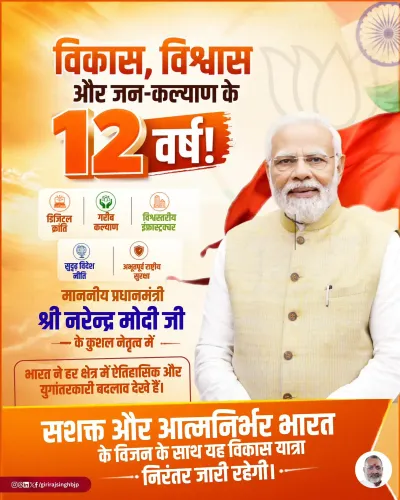
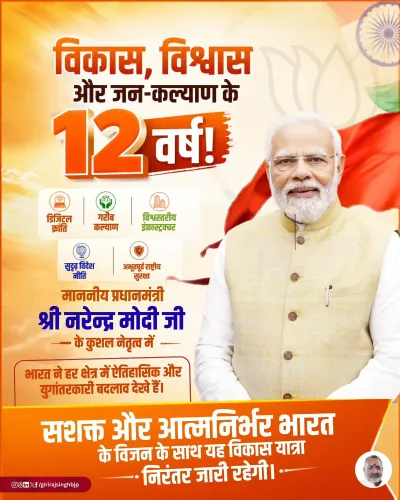
Singh credited Prime Minister Narendra Modi with establishing new benchmarks in development, self-reliance, and global prestige.
The post invokes three flagship policy pillars: Make in India (2014), Digital India (2015), and the Aatmanirbhar Bharat package (2020).
The Viksit Bharat 2047 vision — targeting developed-nation status by India's centenary of independence — serves as the long-term policy anchor referenced in the post.
Key stakeholders named in the research include Indian citizens and the MSME sector , central to both the welfare and self-reliance narratives.
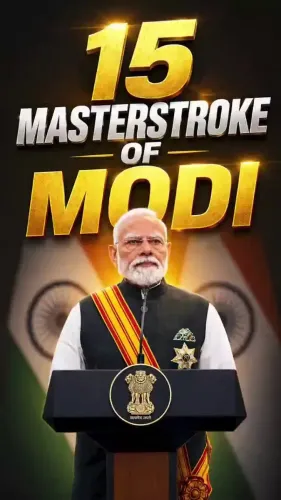
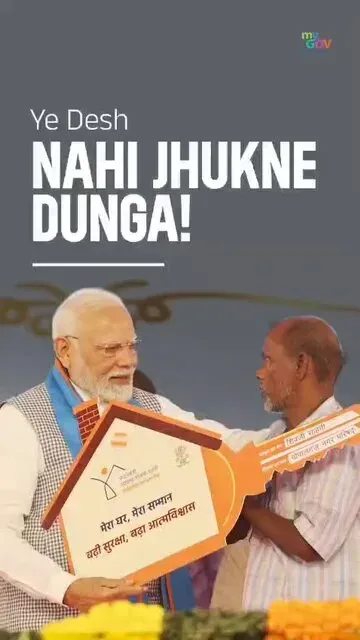
Union Textiles Minister Giriraj Singh on Tuesday, June 9, 2026, took to X to mark what the ruling BJP describes as 12 years of the Modi government, asserting that India is establishing new benchmarks in development, self-reliance, and global standing under Prime Minister Narendra Modi.
Context
Posting under the hashtags #12YearsOfSeva [12 years of service], #ViksitBharat2047, and #AatmanirbharBharat, Singh wrote: 'माननीय प्रधानमंत्री श्री नरेंद्र मोदी जी के नेतृत्व में भारत आज विकास, आत्मनिर्भरता और वैश्विक प्रतिष्ठा के नए आयाम स्थापित कर रहा है' — 'Under the leadership of honourable Prime Minister Shri Narendra Modi, India today is establishing new dimensions of development, self-reliance, and global prestige.' The post was accompanied by a video and reflects coordinated messaging across BJP leadership marking the anniversary of the government's return to power in June 2014.
Singh further stated that the country has experienced 'unprecedented progress in every sector — from welfare of the poor to modern infrastructure, from the digital revolution to India's growing role on the world stage.'
Policy Backdrop
The three pillars invoked by Singh — welfare, infrastructure, and digital transformation — map directly onto flagship programmes rolled out since 2014. The Make in India initiative, launched in 2014, aimed to position India as a global manufacturing hub, while the Digital India programme, announced in 2015, sought to expand e-governance and digital public infrastructure across the country.
The Aatmanirbhar Bharat package, unveiled in 2020 as a response to pandemic-era economic stress, became the government's overarching framework for reducing import dependence and boosting domestic production across sectors including textiles — Singh's own ministerial portfolio. The Viksit Bharat 2047 vision, which seeks to make India a fully developed nation by the centenary of independence, now serves as the long-horizon anchor for these programmes.
Stakeholders and Impact
The messaging directly addresses Indian citizens and the MSME sector, both of whom are central to the government's welfare and self-reliance narrative. For the textiles sector specifically, Aatmanirbhar Bharat has translated into production-linked incentive schemes and efforts to expand India's share in global apparel and technical textiles exports.
The post's reference to 'welfare of the poor' also signals continuity with programmes such as direct benefit transfers, housing schemes, and food security initiatives that the BJP has consistently highlighted as electoral and governance achievements over the past decade.
What's Next
The Viksit Bharat 2047 framework is expected to feature prominently in upcoming NITI Aayog reviews and future Union Budget presentations, with sectoral milestones serving as measurable markers of progress. State-level implementation of related welfare and infrastructure programmes will be a key indicator of how the central vision translates on the ground. As India approaches the 2047 target, the government's ability to demonstrate concrete, verifiable gains across health, manufacturing, and digital access will determine how the '12 years of seva' narrative holds up to scrutiny.
Point of View
Designed to consolidate the party's governance narrative ahead of future electoral cycles. By weaving together welfare, infrastructure, digital growth, and global prestige into a single frame, the messaging attempts to make the government's record feel comprehensive and cross-sectoral rather than tied to any single scheme. The invocation of Viksit Bharat 2047 is strategically significant — it shifts the conversation from what has been done to what is promised, giving the BJP a forward-looking anchor that is difficult to contest in the short term. For Singh specifically, amplifying this narrative also reinforces his alignment with the Modi leadership at a moment when the textiles sector's export performance and MSME health remain closely watched by industry and policymakers alike.
NationPress
23 Sept 2026
Frequently Asked Questions
What is the significance of #12YearsOfSeva trending in June 2026?
The hashtag marks the BJP-led government completing 12 years in power since Narendra Modi was first sworn in as Prime Minister in May 2014, with party leaders using the occasion to highlight governance achievements across welfare, infrastructure, and digital sectors.
What is Viksit Bharat 2047?
Viksit Bharat 2047 is the Indian government's long-term vision to transform India into a fully developed nation by 2047, the centenary of independence, serving as an overarching framework for policy planning across sectors.
What is Aatmanirbhar Bharat and how does it relate to textiles?
Aatmanirbhar Bharat, launched in 2020, is the government's self-reliance initiative aimed at boosting domestic production and reducing import dependence; in textiles, it has been implemented through production-linked incentive schemes targeting apparel and technical textiles exports.
Who is Giriraj Singh and what is his current role?
Giriraj Singh is a senior BJP leader, Lok Sabha MP from Begusarai in Bihar, and currently serves as Union Minister of Textiles in the Modi government.
What are the main flagship programmes referenced in the BJP's 12-year governance narrative?
The key programmes include Make in India (2014), Digital India (2015), and the Aatmanirbhar Bharat economic package (2020), alongside the Viksit Bharat 2047 long-term development vision.