Giriraj Singh: India now in 18 FTAs, garments reach 180 nations
Synopsis
Union Textiles Minister Giriraj Singh has countered opposition criticism by citing India's FTA expansion from 10 to 18 agreements covering 56 countries since 2014, and the garment sector's reach across 180 nations, anchoring his defence in the Atmanirbhar Bharat framework.
Key Takeaways
Union Textiles Minister Giriraj Singh posted on 26 May 2026 rebutting opposition claims about the textile sector.
India has expanded its FTA network from 10 agreements in 2014 to 18 FTAs today , covering 56 countries .
The Indian garment sector now exports to 180 countries , up from a narrower base a decade ago.
The growth is linked to the Atmanirbhar Bharat Abhiyan launched in May 2020 , which includes production-linked incentives for textiles.
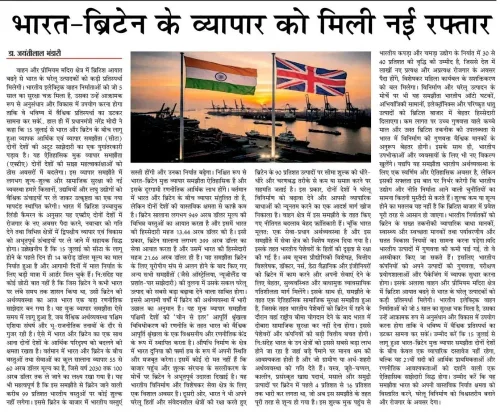
Pending India-EU and India-UK FTAs remain key watchpoints for further textile export growth.
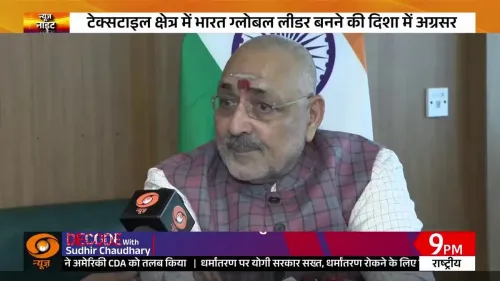
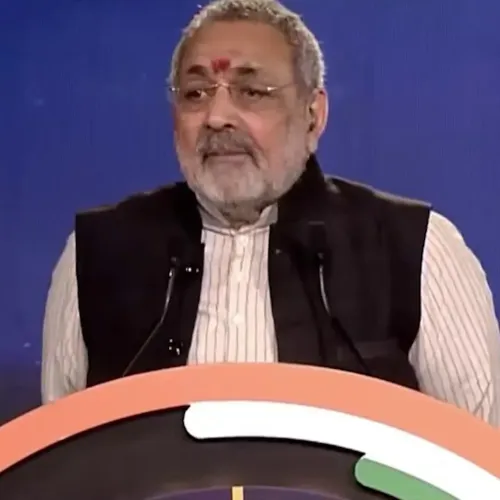
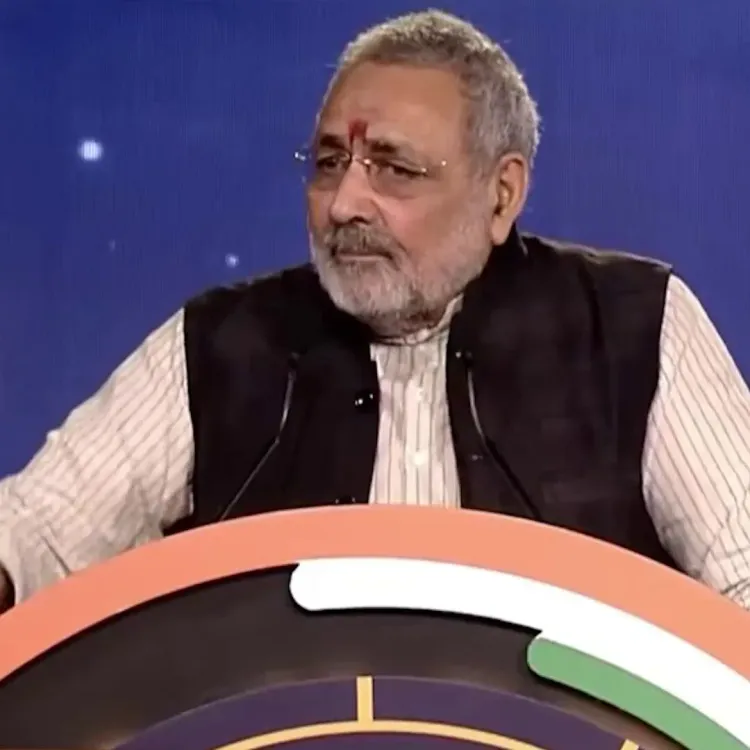
Union Textiles Minister Giriraj Singh on Tuesday, 26 May 2026 pushed back sharply against opposition criticism of India's textile sector, asserting that the country has expanded its Free Trade Agreement network from 10 FTAs at the time of the 2014 general elections to 18 FTAs today, connecting India with 56 countries, and that the garment sector now has a presence in 180 countries.
Context
Posting on X, Giriraj Singh said: 'वैश्विक चुनौतियों के बीच विपक्ष ने टेक्सटाइल सेक्टर को लेकर सिर्फ भ्रम फैलाया।' ['Amid global challenges, the opposition has only spread confusion about the textile sector.'] He argued that the numbers tell a different story, citing the expansion of India's FTA network and the widening global footprint of Indian garment exports as evidence of a deliberate trade-diversification strategy.
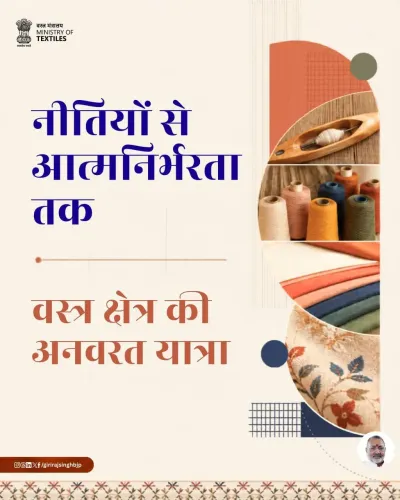
The minister framed the growth as the direct result of what he called 'Diversification', connecting it to the broader Atmanirbhar Bharat framework — the self-reliance initiative launched in May 2020 — which has positioned textiles and apparel as a priority export sector.
Policy Backdrop
India's FTA journey predates the current government: the India-ASEAN FTA, signed in 2009 and operationalised in 2010, was among the country's earliest significant regional trade agreements. Since 2014, the pace of new agreements has accelerated, with deals concluded with partners including the UAE and Australia, aimed at reducing tariff barriers and opening new export corridors for labour-intensive sectors like textiles and garments.
The Atmanirbhar Bharat Abhiyan, announced in 2020, added production-linked incentive schemes for textiles and apparel, designed to strengthen domestic value chains while simultaneously making Indian manufacturers more competitive in global markets. The combination of PLI support and expanded FTA access has been the government's stated twin-track approach for the sector.
Stakeholders and Impact
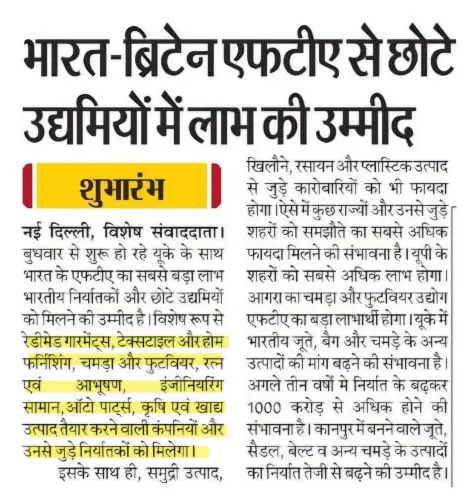
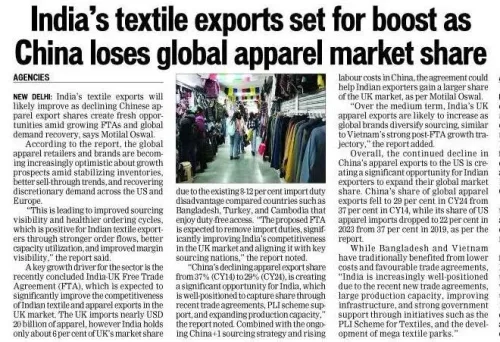
The primary beneficiaries of this trade expansion are textile exporters and garment manufacturers, particularly those in export-oriented clusters across states such as Tamil Nadu, Gujarat, Maharashtra, and Uttar Pradesh. A wider FTA network reduces tariff costs for Indian exporters competing against rivals from Bangladesh, Vietnam, and Cambodia in markets such as the European Union, the United Kingdom, and the United States.
The minister's claim that Indian garments now reach 180 countries signals a broadening of the export base beyond traditional high-value markets, which industry bodies have long advocated as a risk-mitigation strategy against demand shocks in any single geography. Opposition parties have questioned whether export volumes and unit realisations have kept pace with the expansion of destination markets.
What's Next
Attention in the trade policy space is on the progress of pending FTA negotiations, particularly the India-EU and India-UK agreements, both of which carry significant implications for the textile and apparel sector given the size and purchasing power of those markets. Quarterly export data from the Commerce Ministry will be closely watched to assess whether the diplomatic gains from expanded FTAs are translating into measurable export growth. Giriraj Singh's post signals that the government intends to make the FTA expansion a central plank of its defence of its economic record heading into the next political cycle.
Point of View
Using trade statistics to shift the narrative on textiles from vulnerability to achievement at a time of global supply-chain uncertainty. By anchoring the argument in FTA numbers and export geography rather than rupee values, the minister sidesteps the more contested question of whether export revenues have grown commensurately. The move fits a broader BJP pattern of framing economic governance through the lens of diplomatic and institutional milestones — FTAs signed, countries reached — which are harder for the opposition to dispute in the short term. The sharpness of the rebuttal also suggests the government anticipates textiles will be a contested issue in upcoming political discourse, particularly given job-creation sensitivities in major textile states.
NationPress
14 Sept 2026
Frequently Asked Questions
How many FTAs does India have in 2026?
According to Union Textiles Minister Giriraj Singh, India has 18 Free Trade Agreements as of 2026, connecting it with 56 countries , compared to 10 FTAs at the time of the 2014 general elections.
How many countries does India export garments to?
Minister Giriraj Singh stated that India's garment sector now has a presence in 180 countries , reflecting the diversification of export destinations under the current government's trade policy.
What is Atmanirbhar Bharat and how does it relate to textiles?
Atmanirbhar Bharat Abhiyan is a self-reliance initiative announced in May 2020 that includes production-linked incentive schemes for textiles and apparel, aimed at strengthening domestic manufacturing while boosting exports.
Which new FTAs has India signed since 2014?
Since 2014 , India has concluded notable FTAs with partners including the UAE and Australia , expanding its trade network beyond earlier agreements such as the India-ASEAN FTA of 2009.
What are the next major FTAs India is negotiating for textiles?
The India-EU and India-UK Free Trade Agreements are the most closely watched pending negotiations, as both markets are large buyers of textile and garment products and their conclusion could significantly boost Indian exports.