Giriraj Singh Pegs India Fashion Market at Rs 11.4 Lakh Crore
Synopsis
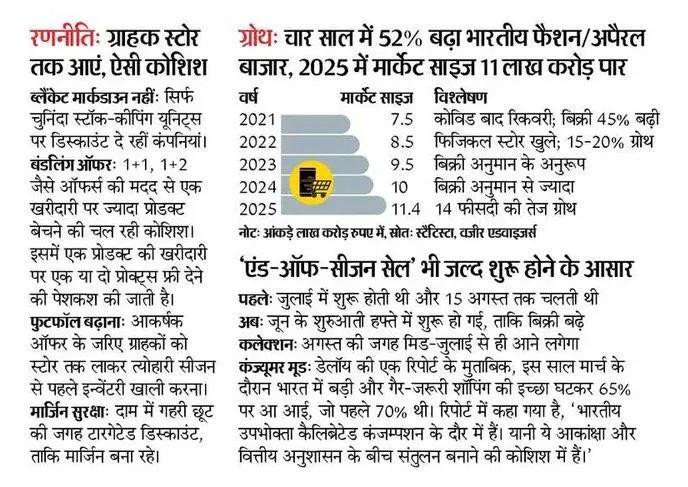
Union Textiles Minister Giriraj Singh said on X that India's fashion market reached Rs 11.4 lakh crore in 2025, marking a 52 per cent jump in four years. He credited the BJP government's ease-of-business reforms and manufacturing push, situating the gain within the Vocal for Local and Atmanirbhar Bharat policy arc.
Key Takeaways
Giriraj Singh pegged India's fashion market at Rs 11.4 lakh crore in 2025.
The minister claimed a 52 per cent expansion over the past four years.
He linked the growth to BJP-led ease-of-business and manufacturing reforms.
The post invoked Vocal for Local, aligning with the Atmanirbhar Bharat agenda.
The textiles PLI Scheme carries an outlay of Rs 10,683 crore since 2021.
Watchpoints include the National Textiles Policy rollout and next Budget allocations.
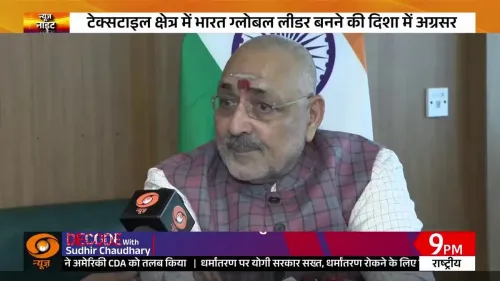
Union Textiles Minister Giriraj Singh on 3 June 2026 said India's fashion market has expanded to Rs 11.4 lakh crore in 2025, registering what he described as a 52 per cent jump in just four years. In a post on X, the senior Bharatiya Janata Party leader credited ease-of-doing-business measures and a manufacturing push by the Union government for the surge.
'In just 4 years, recording an unprecedented growth of 52%, our fashion market has reached Rs 11.4 lakh crore in 2025,' the minister wrote, translating from the original Hindi. He added that 'it is the result of the BJP government's efforts to ease business and boost the country's manufacturing sector that Indian brands and markets are touching new heights today.' The post carried the hashtags #VocalForLocal, #TextileGrowth and #IndianEconomy.
Context
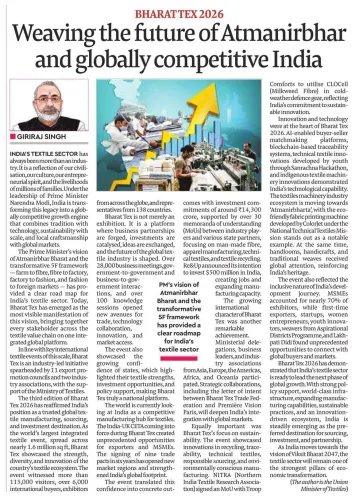
Giriraj Singh, the Lok Sabha member from Begusarai in Bihar, has held the textiles portfolio since 2021 and routinely uses social media to spotlight gains in domestic manufacturing. His latest claim frames the apparel and fashion sector as a headline indicator of the broader Atmanirbhar Bharat agenda that the Union government has pursued since 2020.
The figures cited in the post — a 52 per cent rise over four years and a market size of Rs 11.4 lakh crore — have not been accompanied by a source citation in the tweet. The minister positions the numbers as a direct outcome of policy choices rather than as standalone market data.
Policy backdrop
The Centre's textile push rests on several overlapping schemes. The Production Linked Incentive (PLI) Scheme for Textiles, cleared in 2021 with an outlay of Rs 10,683 crore, targets man-made fibre apparel, fabrics and technical textiles. The National Technical Textiles Mission, approved in 2020 with a Rs 1,480 crore corpus, aims to seed a high-value segment that has historically been import-dependent.
Export competitiveness has been addressed through the RoSCTL (Rebate of State and Central Taxes and Levies) scheme introduced in 2019, which refunds embedded taxes on garment and made-up shipments. These instruments sit alongside the Make in India programme launched in 2014, which set the template of fiscal incentives combined with import-substitution messaging.
Stakeholders and impact
If the trajectory described by the minister holds, the principal beneficiaries would be apparel MSMEs, branded fashion retailers and contract manufacturers supplying both domestic chains and export markets. A larger home market typically widens the runway for emerging Indian labels and provides scale economies that feed into export pricing.
The Vocal for Local campaign, promoted by the central government since 2020, has been the consumer-facing companion to these supply-side measures. Industry bodies have been pressing for further rationalisation of GST rates on man-made fibre garments and for a larger second tranche of PLI allocations to bring smaller players into the incentive net.
What's next
Attention will turn to the rollout of the upcoming National Textiles Policy and whether the next Union Budget carves out an additional PLI window for the sector. Apparel export figures and the share of man-made fibre products in India's global trade basket will be the metrics by which the minister's growth narrative is tested in the coming quarters.
For now, the 3 June post sets a high benchmark of Rs 11.4 lakh crore against which subsequent ministry communications and industry data releases are likely to be measured.
Point of View
A familiar move from a portfolio holder who has long championed Vocal for Local. By foregrounding fashion — a consumer-visible segment — rather than dry export numbers, the messaging seeks to make the Atmanirbhar Bharat arc tangible to urban shoppers. The headline figures, however, sit ahead of independent verification, and the credibility of the claim will hinge on whether ministry dashboards and industry surveys converge around similar numbers. Expect this datapoint to recur in BJP economic communications running into the next Budget cycle.
NationPress
27 Sept 2026
Frequently Asked Questions
What is the size of India's fashion market in 2025 according to Giriraj Singh?
Union Textiles Minister Giriraj Singh said India's fashion market has reached Rs 11.4 lakh crore in 2025. He shared the figure in a post on X on 3 June 2026.
How much has India's fashion market grown in the last four years?
Giriraj Singh claimed the market has grown by 52 per cent over the past four years. The minister described the rise as unprecedented.
What is the PLI Scheme for Textiles?
The Production Linked Incentive Scheme for Textiles is a 2021 central government programme with an outlay of Rs 10,683 crore. It incentivises production of man-made fibre apparel, fabrics and technical textiles.
What is the Vocal for Local campaign?
Vocal for Local is a campaign promoted by the Union government from 2020 onward. It urges consumers and businesses to prefer Indian-made goods as part of the Atmanirbhar Bharat framework.
Which constituency does Giriraj Singh represent?
Giriraj Singh represents Begusarai in Bihar in the Lok Sabha. He has held the Union Textiles portfolio since 2021.